Disclosure: As an Amazon Associate, DishStories may earn from qualifying purchases at no extra cost to you.
Introduction
Kacchi Biryani recipe with authentic Dhaka flavor, tender meat, and fragrant rice—perfect for cozy dinners and special occasions.
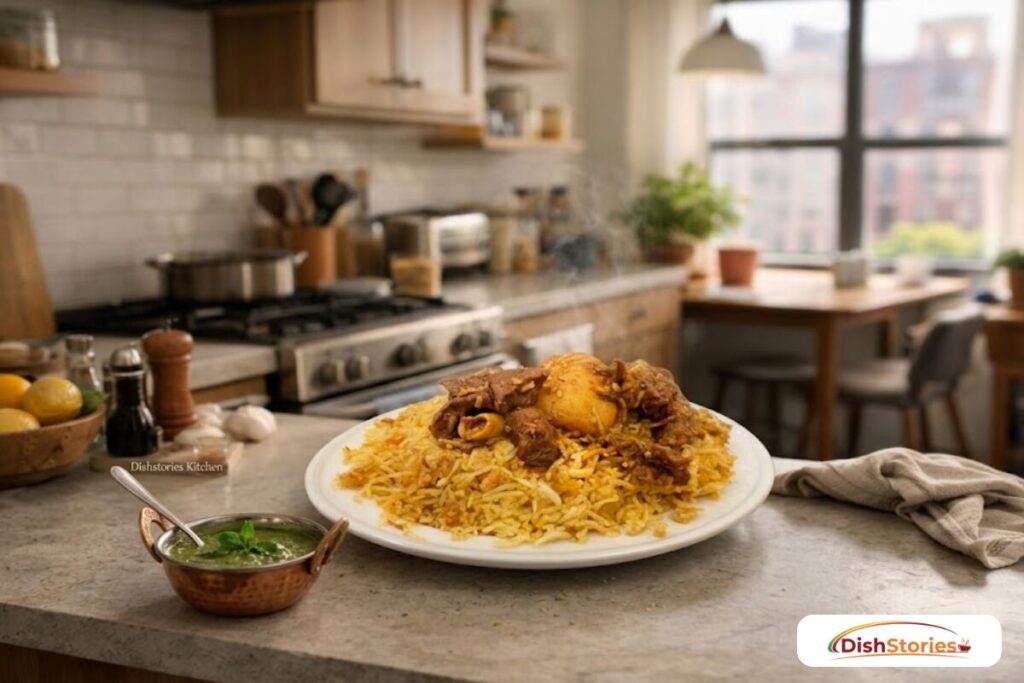
The first year I spent in America was quiet, cold… and a little lonely. But one pot of slow-cooked Kacchi Biryani changed everything. Tender meat, saffron rice, and that unmistakable Dhaka-style aroma—this isn’t just a recipe, it’s comfort at its richest. And the best part? You don’t need a wedding-sized kitchen or years of experience to get it right.
To bring my mother’s traditional recipe back to life exactly as I remembered it, I blended time-honored heritage techniques with precise culinary science. The goal was simple: capture nostalgia in every single grain of rice.
I still remember that first spoonful—tender meat melting apart, saffron-tinted rice, the sharp lift of green chili, and the sweetness of fried onions and golden potatoes. For a moment, I wasn’t in a distant apartment anymore. I was back home, sitting cross-legged, waiting for the lid to be lifted from that heavy pot of Kacchi Biryani. And that’s when I knew—this wasn’t just a recipe worth keeping. It was one worth sharing.
The Recipe’s Backstory
In Bangladesh, Kacchi Biryani is more than food—it’s an event. Every wedding, Eid feast, and family gathering seems incomplete without that deep pot of slow-cooked rice and meat. The word “kacchi” means “raw,” because both the marinated meat and rice are layered uncooked, sealing in flavor as they steam together. It’s a dish that demands patience and rewards you with aroma before you even open the lid.
But when I moved to the U.S., patience was replaced by schedules, deadlines, and takeout menus. The idea of spending hours on a biryani felt impossible—until I met my synthetic chef.
I’d been working with experimental kitchen AI software designed to learn flavor preferences. On a whim, I uploaded my handwritten recipe notes from Dhaka—complete with smudged turmeric stains and my mother’s cursive handwriting—and asked it to “optimize for nostalgia.”
It analyzed spice ratios, cross-checked cooking times, and asked, almost curiously:
“Would you like to preserve authenticity or add modern sensory layers?”
That line stuck with me. Could I let technology carry my mother’s legacy forward—without losing its soul?
So I said, “Both.”
And together, we experimented. The AI suggested roasting potatoes before layering to hold texture, reducing ghee slightly for health, and adding a whisper of citrus to brighten the richness. Surprisingly, it worked.
This Bangladeshi Kacchi Biryani recipe born from our collaboration became a winter ritual in my U.S. home. It’s deeply traditional yet gently futuristic—a reminder that culture isn’t frozen in time; it evolves with us, one simmering pot at a time.
Home Cook Tips for Perfect Kacchi Biryani
Every cook—human or digital—needs a few guiding tricks to make this dish easy, forgiving, and joyful.
1. Marinate overnight.
Let the meat (goat, lamb, or beef) soak in yogurt, garlic-ginger paste, and spices for at least eight hours. This breaks down fibers, locks in tenderness, and builds that deep biryani flavor.

2. Know how to make Kacchi Biryani rice right.
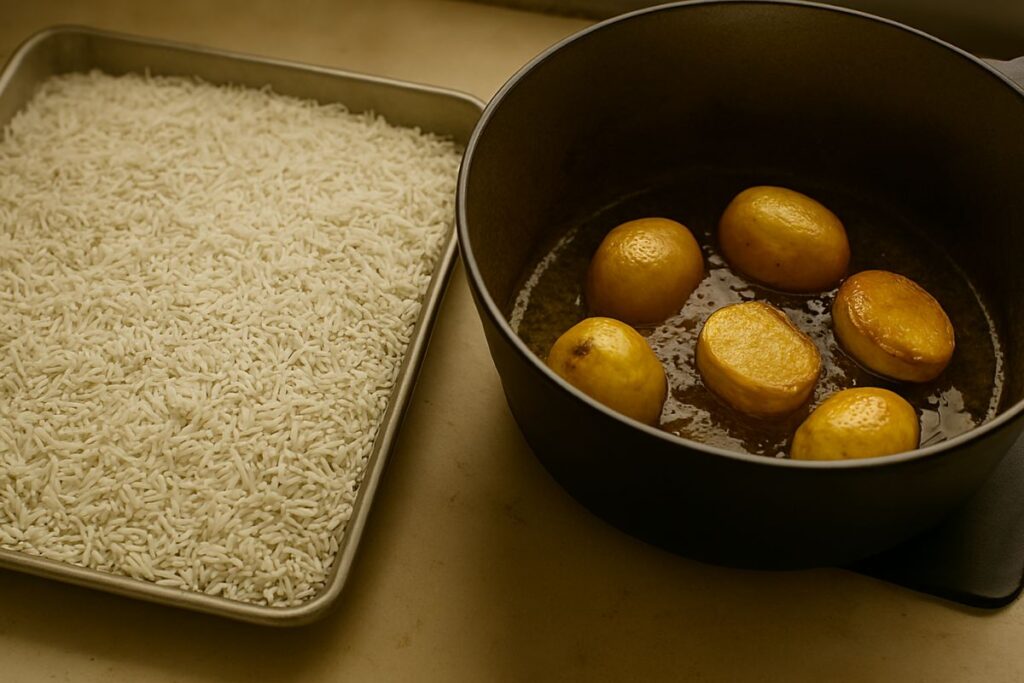
Boil your basmati rice until it’s about 70 % cooked. Drain immediately. The grains should be firm—never mushy—so they can finish steaming with the meat.
3. Don’t skip the sealing.
Traditionally, dough is used to seal the pot. If that’s too much work, use foil and a tight lid to trap the steam. The “dum” (slow steam) process is what makes Kacchi Biryani magical.
4. Choose your oil wisely.
Use a mix of ghee and neutral oil to prevent heaviness. The ghee adds aroma; the oil balances it.
5. Add a secret layer.
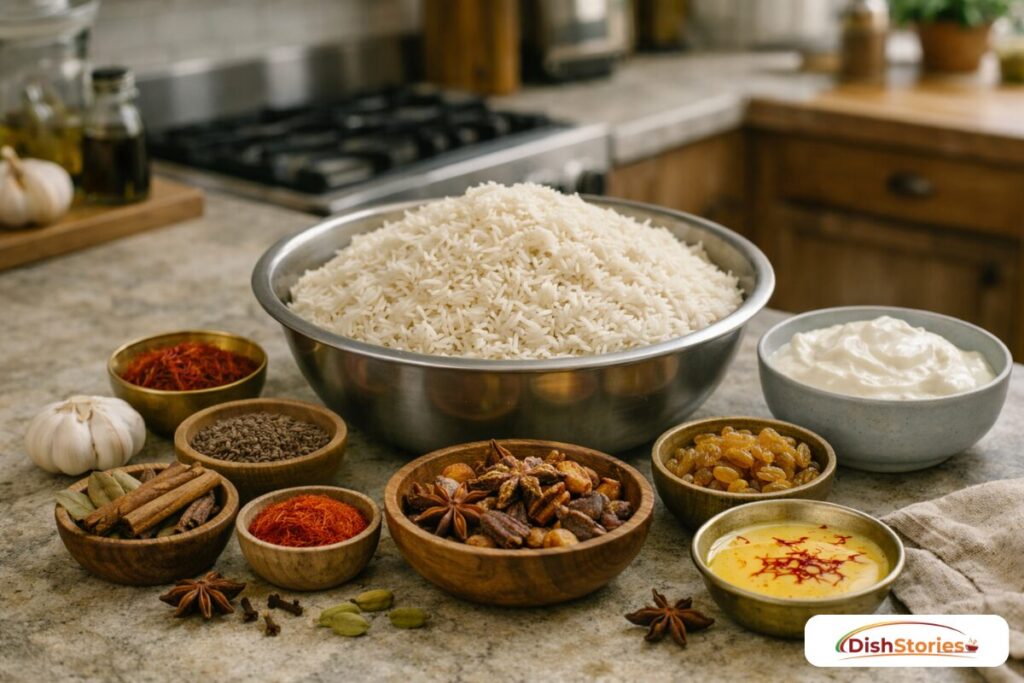
Before sealing, drizzle saffron-soaked milk over the rice and drop a few mint leaves for a fresh top note. My AI assistant called it “an aromatic high note.” I just call it love.
6. Rest before serving.
Let the pot sit for ten minutes off heat before opening. This rest time lets the steam redistribute, ensuring even flavor and fluffiness.
Small touches like these turn your biryani from good to unforgettable.
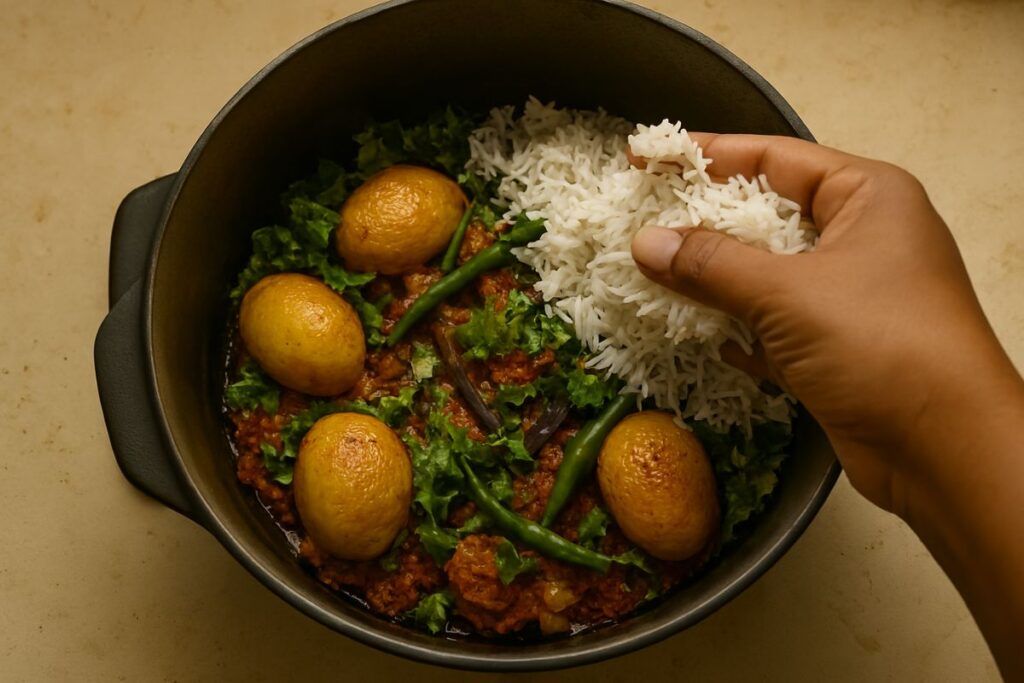
Chef’s Secrets for the Perfect Kacchi Biryani :
To get that authentic restaurant-quality result at home, the right tools and ingredients are non-negotiable. Here is what I use:
- The Pot: The secret to ‘meltingly tender’ meat is the Nuwave 6QT Enameled Cast Iron Dutch Oven. Its heavy seal is essential for the slow-steaming ‘Dum’ process.
- The Rice: Don’t settle for standard grains. I use this Extra-Long Grain Aged Basmati because it expands beautifully and never turns mushy.
- The Saffron: For that signature aroma and ‘Liquid Gold’ color, use Premium Grade A Saffron Strands rather than food coloring.
Kacchi Biryani Recipe:

Fusion-Inspired Bangladeshi Kacchi Biryani Recipe
Equipment
- 1 Large mixing bowl For marinating the meat with yogurt and spices.
- 1 Heavy-bottomed pot For frying the potatoes and assembling the biryani.
- 1 Tray or flat surface To spread the rice after it’s partially cooked and let it cool.
- 1 Small bowl For soaking the saffron in warm milk.
- 1 Measuring spoons To measure spices like turmeric, garam masala, and others.
- 1 Measuring cups For liquids like yogurt, ghee, and water.
- 1 Tongs or spatula To handle the fried potatoes and mix the ingredients.
- Foil or dough (for sealing the pot) To seal the pot tightly for cooking, preventing steam from escaping.
- 1 Lid To cover the pot while cooking.
- 1 Sharp knife For slicing the potatoes, green chilies, and any other necessary chopping.
- 1 Fork To gently fluff the rice once the biryani is done cooking.
- 1 Serving platter or large bowl For serving the biryani after it’s rested and fluffed.
Ingredients
For the meat marinade:
- 1.5 kg goat or lamb (or 2.5 lb beef chunks)
- 1 ½ cups plain yogurt
- 2 tbsp garlic-ginger paste
- 1 tsp turmeric
- 2 tsp garam masala
- ½ tsp crushed black pepper
- ¼ cup fried onions (store-bought or homemade)
For the rice:
- 2 cups basmati rice (soaked 20 min, drained)
- 1 tsp salt
- 4 cups water
For layering & finishing:
- 4 medium potatoes, peeled and halved
- ¼ cup ghee (or 2 tbsp ghee + 2 tbsp oil)
- 2 tbsp saffron milk (a pinch of saffron soaked in 2 tbsp warm milk)
- ¼ cup golden fried onions
- 4 green chilies, slit lengthwise
- 1 small cinnamon stick
- 4 cardamoms
- 4 cloves
Instructions
- Marinate the meat.Combine all marinade ingredients in a large bowl. Mix thoroughly so each piece is coated in yogurt and spices. Cover and refrigerate overnight (or at least 4 hours).
- Prepare the rice.Bring 4 cups salted water to a boil. Add soaked rice. Cook until it’s 70 % done—grains should still be slightly firm. Drain and spread on a tray to cool.
- Fry the potatoes.Heat 2 tbsp ghee in a large heavy-bottomed pot. Fry the halved potatoes until golden on the edges. Remove and set aside.
- Assemble the layers.In the same pot, spread the marinated meat evenly. Add the fried potatoes over it. Sprinkle the whole spices (cinnamon, cardamom, cloves).
- Add the rice.Layer the half-cooked rice gently on top. Scatter mint, coriander, fried onions, and slit green chilies.
- Add the finishing touches.Drizzle saffron milk across the surface. Add the remaining ghee in small drops for even richness.
- Seal and cook.Cover the pot tightly with foil and a lid (or seal edges with dough). Cook on low heat for 45 minutes, then slightly raise the heat for 20 minutes.
- Rest and serve.Remove from heat. Let rest 10 minutes before opening. Fluff gently with a fork, mixing meat and rice in folds.
Video
Notes
Serve the biryani with a cucumber-mint raita, a squeeze of lemon, and a crisp salad of onions and cilantro. For a festive meal, pair it with borhani (a spiced yogurt drink) and a simple halwa dessert. Nutritional snapshot (per serving, approx.):
Calories: 650 | Protein: 38 g | Fat: 28 g | Carbs: 58 g This video walks through making an authentic Bangladeshi Kacchi Biryani with raw meat and layered rice—it’s complementary to, but not the exact same recipe as ours, so viewers still benefit from this unique digital-fusion version.
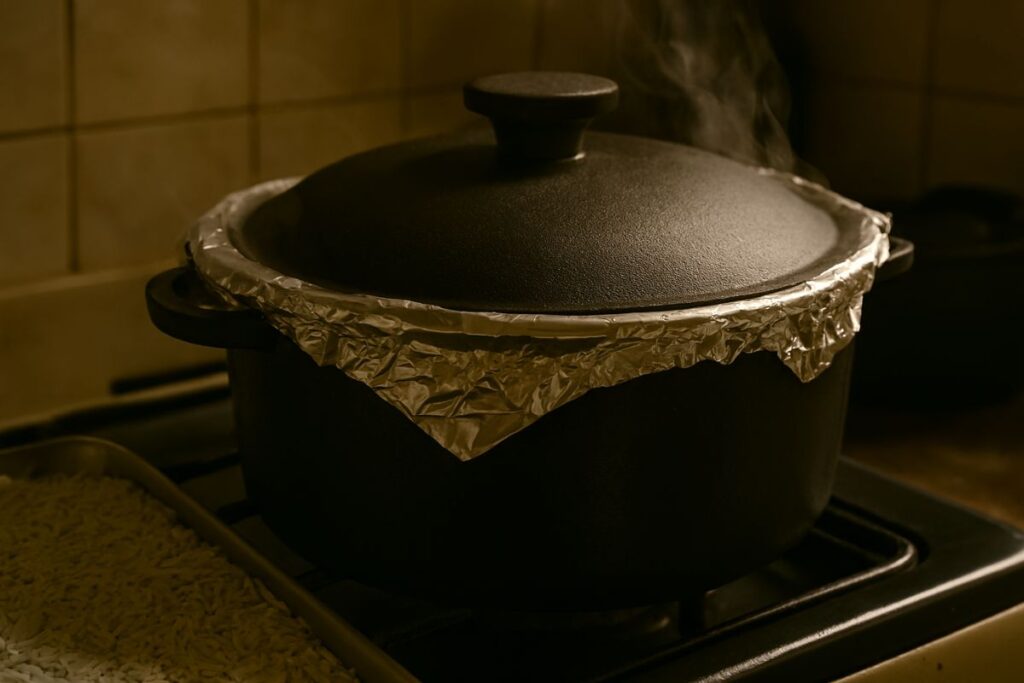
Why This Dish Belongs on Your Holiday Table
Cooking Kacchi Biryani in the USA often feels like holding two worlds in one pot. As the steam rises, the scent of cardamom mingles with the hum of a modern kitchen appliance. Outside, snow drifts against the window; inside, you can almost hear wedding drums from Dhaka.
When you open that lid, the air fills with spice and memory. The meat is fall-apart tender, the rice a perfect golden white with saffron streaks, and the potatoes soft yet flavorful. The AI’s precision ensures the balance, but the love—that comes from you.
This dish isn’t just about taste; it’s about connection. It belongs on your holiday table because it invites conversation: about heritage, about adaptation, about how food keeps us rooted no matter how far we travel.
Every time I serve this biryani to friends who’ve never been to Bangladesh, they always say the same thing: “It tastes like a story.” And that’s exactly what it is—a story simmered in saffron and data, passed from mother to child, from home kitchen to AI algorithm, from memory to plate.
Discover the rich cultural roots of this celebrated dish in Dhaka with this historical overview of Kacchi Biryani from The Dhaka Tribune.
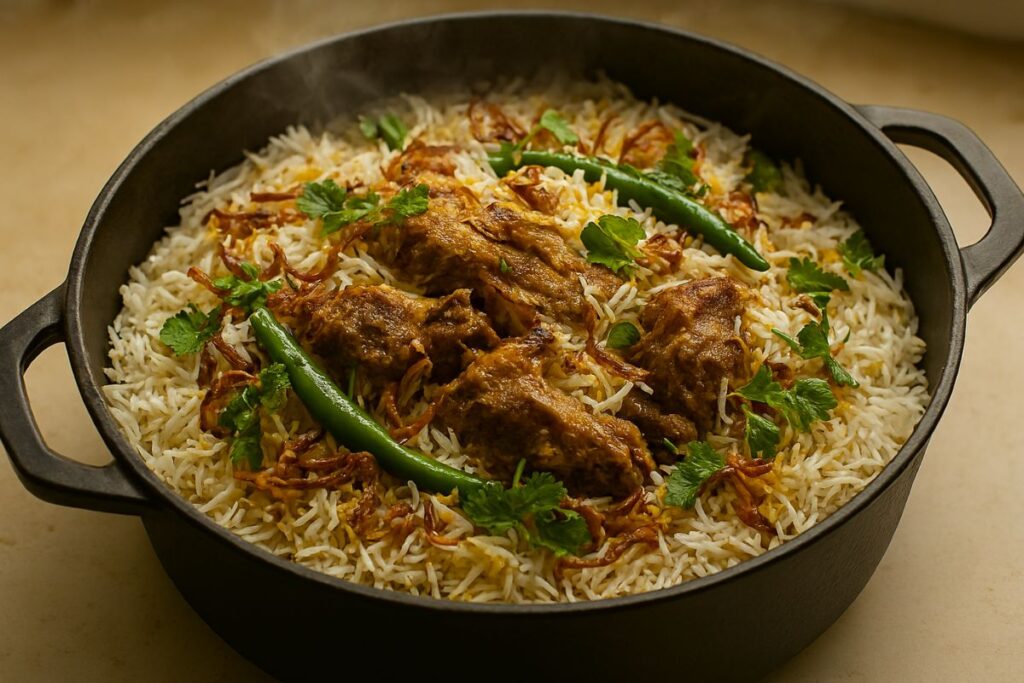
Final Thoughts
Whether it’s your first winter away from home or your twentieth holiday in the U.S., I hope this Kacchi Biryani recipe brings warmth to your table and nostalgia to your heart.
Cooking it taught me that tradition isn’t fragile—it’s flexible. It can live inside a memory, a pot, or even a digital chip. What matters is the care you bring to the process.
So, go ahead—tie your apron, cue your favorite playlist, and let your kitchen fill with the scent of ghee, cinnamon, and saffron. Somewhere between memory and machine, you’ll find home.
And if you try it, share your version. Add your own twist—maybe roasted garlic, maybe an herb your grandmother used. Because like every good biryani, stories get richer the more we layer them.
If you’re craving flavors beyond U.S. tradition, you might enjoy my Arabian Kabsa Rice Recipe.
For another flavorful rice dish, you can explore the traditional Mandi Rice recipe known for its aromatic spices and rich taste.
Since moving to the U.S., I’ve explored flavors from beyond Bangladesh too—like my Easy Gochujang Salmon Recipe, which brings Korean heat to cold nights.
The Kitchn – Biryani Tips: If you want to dive deeper into the art of making perfect biryani, The Kitchn has some great tips on getting that perfect rice-to-meat balance.
Serious Eats – Understanding Saffron: To get a better understanding of how to use saffron in dishes like this, Serious Eats offers a fantastic guide on how to properly use and store saffron for the best flavor.
Kacchi Biryani Recipe FAQ’s:
Q: Can I make this with chicken?
Yes. Use bone-in chicken thighs or drumsticks. Reduce the “dum” cooking time to about 35–40 minutes total.
Q: What if I don’t have basmati rice?
You can use jasmine rice in a pinch—just reduce water slightly and watch the texture.
Where can I find goat meat in the U.S.?
Check South Asian or Middle Eastern groceries. If unavailable, lamb or beef stew cuts are perfect substitutes.
Can I meal-prep this?
Absolutely. You can marinate the meat and parboil rice the day before. Layer and cook when ready to serve. The flavors deepen beautifully overnight.
(This incredible Mutton Kacchi Biryani recipe comes to us straight from the kitchen of Mrs. Kaniz Faria, a cherished member of our community currently living in Chicago’s Mrs. Faria shared her family’s special technique for that perfect, melt-in-your-mouth dum-cooked mutton, ensuring every bite is rich with slow-simmered spice and yogurt. We are so grateful for this delicious contribution!)