The Two Comfort Recipes I Am Completely Obsessed With in 2026
I’ll admit it: the phrase “Marry Me” makes me roll my eyes—until I’m standing barefoot in my kitchen at 8:47 p.m., starving, craving something indulgent, creamy, and emotionally supportive. That was the night these recipes were born.
I wanted comfort food that felt reckless—velvet sauces, caramelized edges, umami depth—but I also wanted to wake up the next morning feeling energized, not foggy. This tension defines how we’re eating in 2026. The era of “sad salads” is officially over. What’s replacing it is high-protein, indulgent veganism: food that satisfies on a primal level while still aligning with sustainability, macros, and performance nutrition.
The Creamy Marry Me Chickpeas (Vegan) came first. Inspired by the internet-famous Tuscan chicken dish, I wondered: could chickpeas—humble, affordable, plant-powered—deliver the same “drop everything and commit” energy? The answer surprised me. When simmered just right and paired with sun-dried tomatoes, garlic, and a cashew-based cream, chickpeas transform. They become buttery, rich, and deeply savory. This is the kind of dish you make for someone you’re trying to impress, then realize you’d rather eat it alone on the couch with a spoon.
The Korean Gochujang Tofu Tacos arrived a week later, after a brutal workout and an even more brutal craving for street food. I wanted blistered edges, chew, and heat—fast. That’s when I leaned into the frozen tofu texture secret, a technique I’ve tested obsessively. Paired with gochujang’s fermented funk and a hot skillet, tofu becomes something else entirely: meaty, sponge-like, and dangerously snackable.
These two dishes represent where plant-based cooking is headed:
- Bold flavors
- Intentional texture engineering
- Protein-forward satisfaction
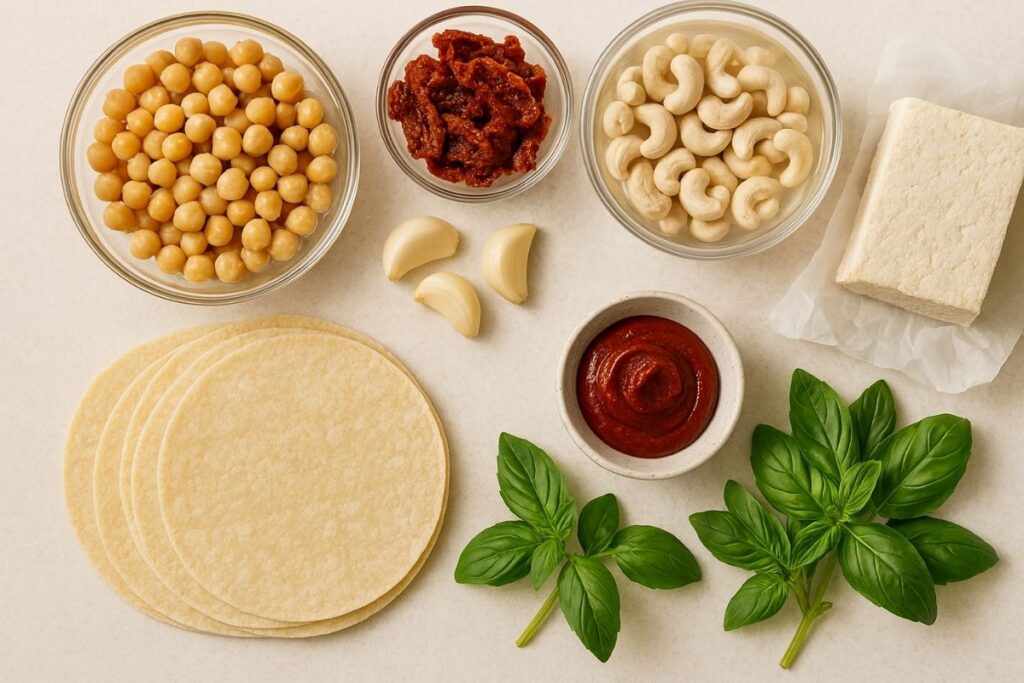
This isn’t vegan food pretending to be meat. It’s vegan food finally owning its power.
The Science of Texture: Why Frozen Tofu Changes Everything
If flavor is emotional, texture is neurological. Our brains are wired to associate chew, resistance, and juiciness with satiety. That’s why texture—not protein count alone—is often what’s missing in disappointing vegan meals.
Enter the Frozen Tofu Technique.
What Actually Happens When You Freeze Tofu
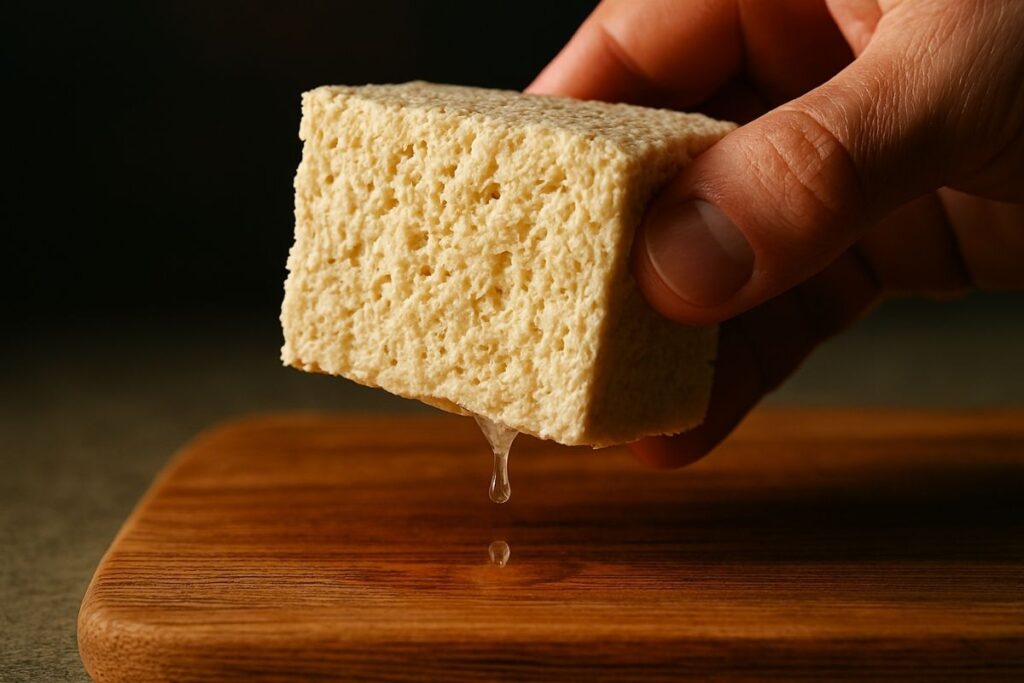
Tofu is mostly water trapped in a protein network. When you freeze it, that water forms ice crystals. Ice expands. Expansion punctures the protein structure. When you thaw and press the tofu, those melted crystals leave behind micro-tunnels—a sponge-like matrix that:
- Absorbs marinades aggressively
- Develops a chewy, fibrous bite
- Browns faster and deeper in a skillet
This is not culinary folklore; it’s basic food science.
How to Do It Properly (No Shortcuts)
- Freeze the tofu in its original package or drained in an airtight container for at least 12–24 hours.
- Thaw completely (overnight in the fridge or 2–3 hours at room temp).
- Press gently but thoroughly—don’t crush it. You want structure intact.
- Tear, don’t cut. Irregular edges = more browning = more flavor.
The result? Tofu that behaves less like custard and more like pulled meat. When coated in gochujang and hit with high heat, those tunnels fill with sauce, steam internally, and crisp externally. It’s textural sorcery.
Why Chickpeas Work Differently (and Just as Well)
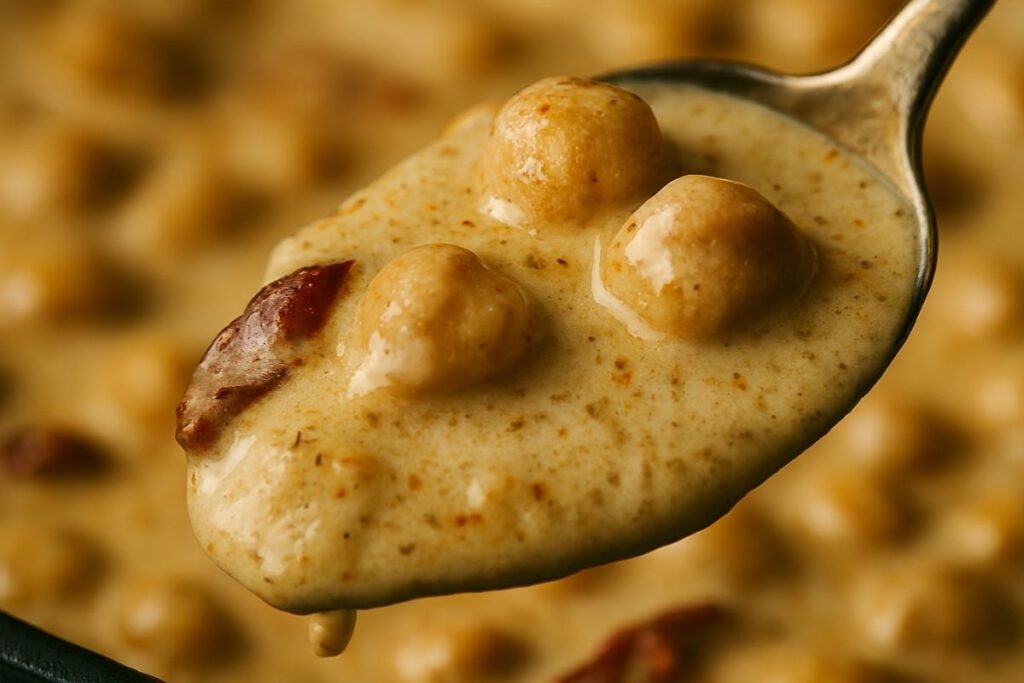
Chickpeas don’t need freezing—but they benefit from controlled simmering. When cooked in a creamy sauce just below boiling, their starches soften without splitting, creating a buttery interior with intact skins. This contrast is what makes the Creamy Marry Me Chickpeas feel indulgent instead of mushy.
Texture isn’t accidental. It’s engineered.
Umami Ingredient Deep-Dive: Why These Dishes Crush Meat Cravings
Gochujang: Fermentation, Heat, and Sweetness in One Spoon
Gochujang isn’t just spicy. It’s fermented complexity. Made from gochugaru (Korean chili flakes), fermented soybeans, rice, and salt, it delivers:
- Glutamates (natural umami compounds)
- Gentle sweetness that rounds heat
- A lingering savory finish that mimics meat broths
In the Korean Gochujang Tofu Tacos, gochujang acts as both marinade and glaze. When heated, its sugars caramelize while its fermented notes deepen—creating that crave-worthy, slightly sticky coating you usually associate with Korean BBQ.
Sun-Dried Tomatoes: The Secret Weapon of Vegan Creaminess
Sun-dried tomatoes are umami bombs. Drying concentrates their natural glutamates and sugars, giving them a flavor density similar to aged cheese.
In Creamy Marry Me Chickpeas (Vegan), they do three critical things:
- Add chew and contrast to creamy sauces
- Infuse oil with tomato umami when sautéed
- Replace the “aged dairy” note found in traditional Tuscan dishes
Paired with garlic and nutritional yeast, they create a savory backbone that convinces even skeptics.
These ingredients don’t imitate meat—they activate the same pleasure pathways.
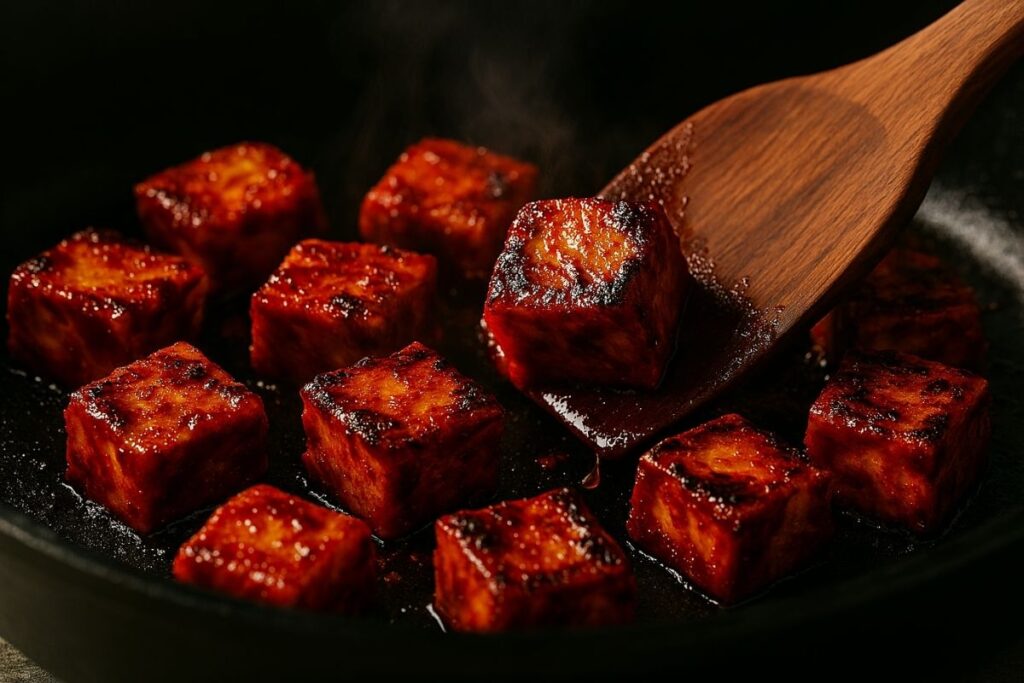
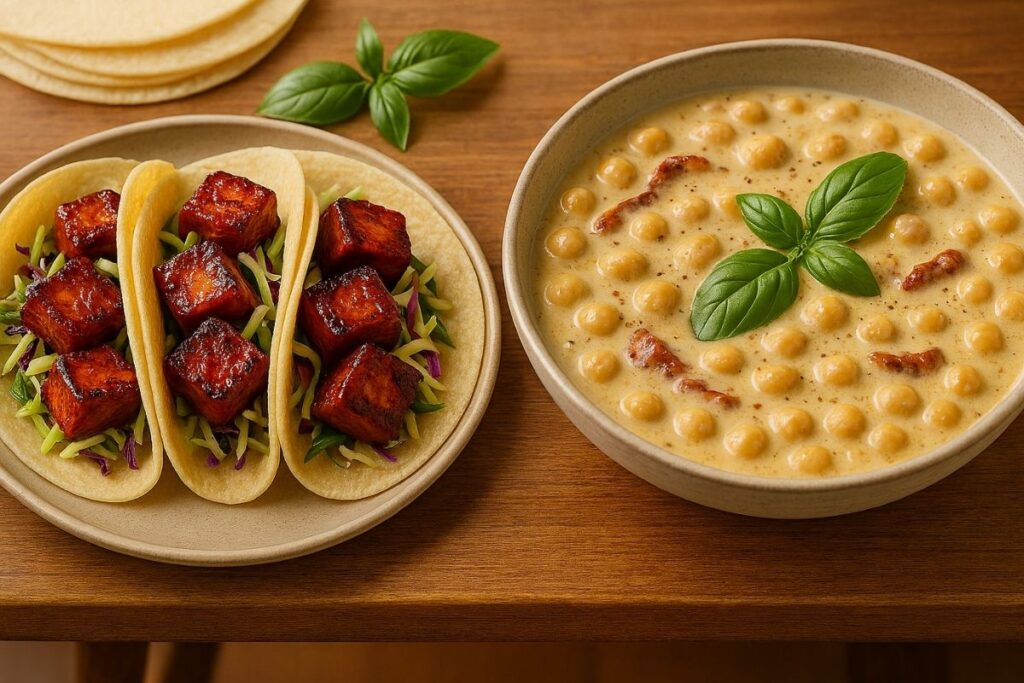
This is the moment where frozen tofu transforms—high heat creates blistered edges while the inside stays juicy.
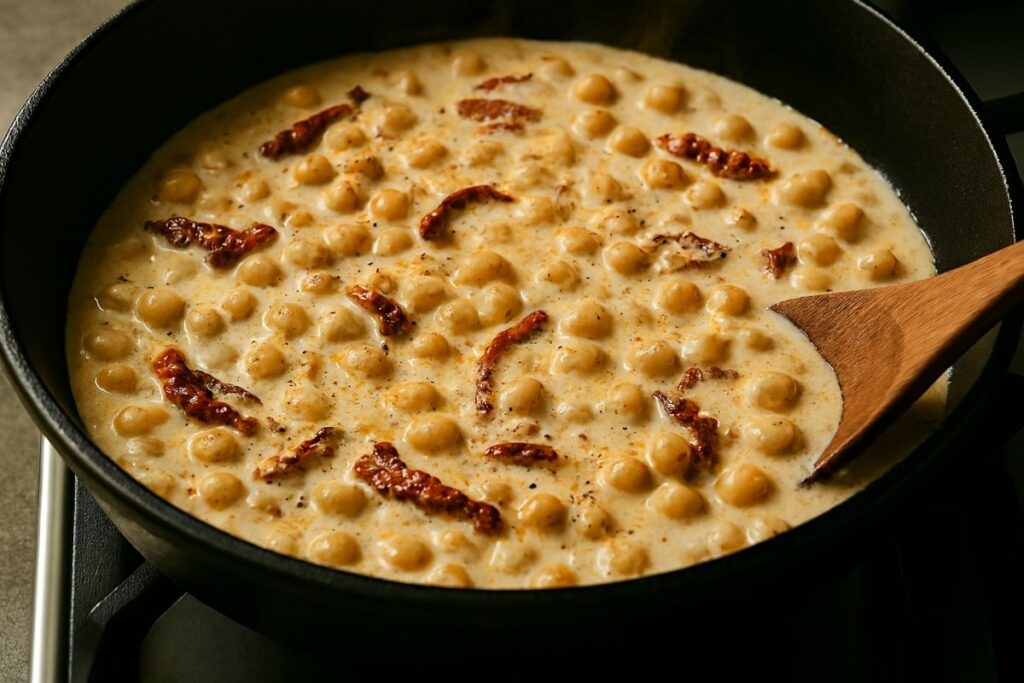
As the cashew cream gently simmers, the chickpeas turn buttery and rich without breaking apart.
The Recipes
Creamy Marry Me Chickpeas (Vegan)
Equipment
- 1 Large skillet
- 1 Blender
- 1 – Wooden spoon
Ingredients
- 2 can chickpeas 15 oz / 425 g each, drained
- 1 tbsp olive oil 15 ml
- 4 cloves garlic minced
- ½ cup sun-dried tomatoes 75 g, sliced
- 1 cup cashews 150 g, soaked
- 1 cup vegetable broth 240 ml
- 2 tbsp nutritional yeast
- 1 tsp smoked paprika
- Salt to taste
- Fresh basil
Instructions
- Blend cashews, broth, nutritional yeast until silky.
- Heat oil in skillet; sauté garlic until aromatic.
- Add sun-dried tomatoes; bloom for 1 minute.
- Stir in chickpeas and paprika.
- Lower heat, pour in sauce, simmer gently 8–10 minutes.
- Finish with basil and salt.
Video
Notes
• Sauce too thick? Add broth 2 tbsp at a time.
• Sauce separated? Heat was too high—whisk and reduce gently. For a visual step-by-step guide on mastering vegan texture techniques, check out this helpful video demonstration.
What the Sauce Should Look Like
Pantry Swap Table: Traditional vs. Plant-Based Power
| Traditional Ingredient | Vegan Swap Used Here | Why It Works |
|---|---|---|
| Heavy cream | Cashew cream | Emulsifies naturally, high protein |
| Chicken | Chickpeas | Fiber + protein + starch |
| Beef | Frozen tofu | Meat-like chew |
| Parmesan | Nutritional yeast | Glutamates |
Sustainability & Macros: Why These Meals Matter
Chickpeas and tofu deliver protein-per-gram efficiency with a fraction of the carbon footprint of animal products. Chickpeas average ~0.6 kg CO₂e/kg versus beef’s ~60 kg. Tofu? Roughly 1/10th the footprint of chicken.
Macros-wise, both dishes balance:
- High protein
- Low saturated fat
- High fiber, improving glycemic response
This is indulgence without compromise.
The Next-Day Guide: Reheating Without Ruining Texture
- Chickpeas: Reheat gently on stovetop with 2 tbsp water or broth. Avoid microwave if possible.
- Tofu Tacos: Re-crisp tofu in a dry skillet. Never microwave—it collapses the sponge structure.
For a festive twist on creamy desserts, try my No-Bake Cranberry Orange Cheesecake — an easy holiday dessert that’s perfect for gatherings.
If you love bold twists on classic dishes, don’t miss the Best Marry Me Shrimp Pasta, a flavorful Bangladeshi fusion recipe.
For a deeper look at the environmental impact of legumes and soy, the life-cycle analysis from Our World in Data clearly shows why plant-based proteins dramatically reduce carbon emissions compared to meat
FAQ & Closing Thoughts
Why did my sauce separate?
Too much heat breaks emulsions. Cashew cream loves patience.
Can I skip freezing tofu?
You can, but you lose the chew. Texture is the point.
Are these truly high protein vegan dinners?
Yes—balanced amino profiles, high satiety, no protein anxiety required.
I come back to these recipes when I want food that feels like a decision, not a compromise. They’re comforting, bold, and deeply intentional—exactly how vegan cooking should feel in 2026.
If you make one of them, don’t be surprised if someone asks for the recipe… or your hand in marriage.