A Walk Through Park Circus, One Aroma at a Time
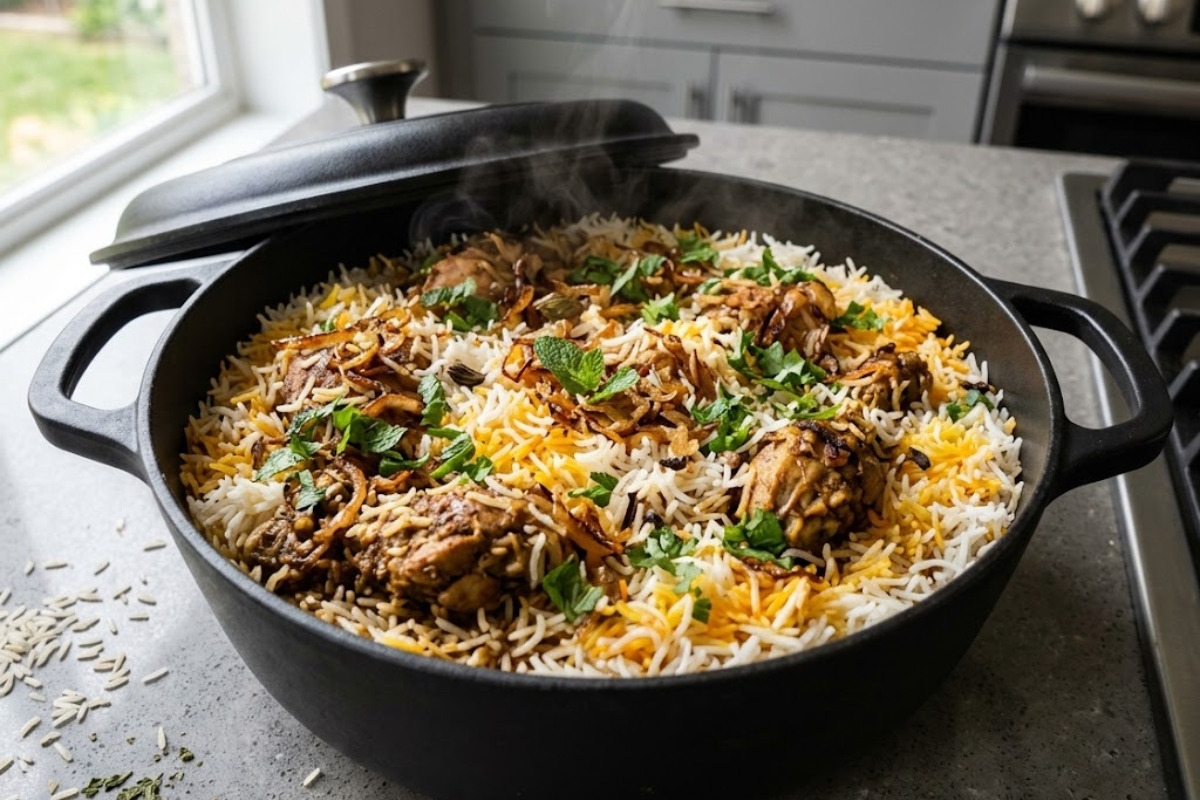
There’s a very specific food memory from Kolkata that still comes back to me whenever I make Kolkata Chicken Dum Biryani at home.
It’s late afternoon around Park Circus. The traffic is loud, the streets are busy, and then, somehow, the smell of biryani cuts through everything. You catch the warm aroma of ghee, a little kewra, and that unmistakable floral note of meetha atar coming from a nearby kitchen.
You follow the smell without even thinking about it.
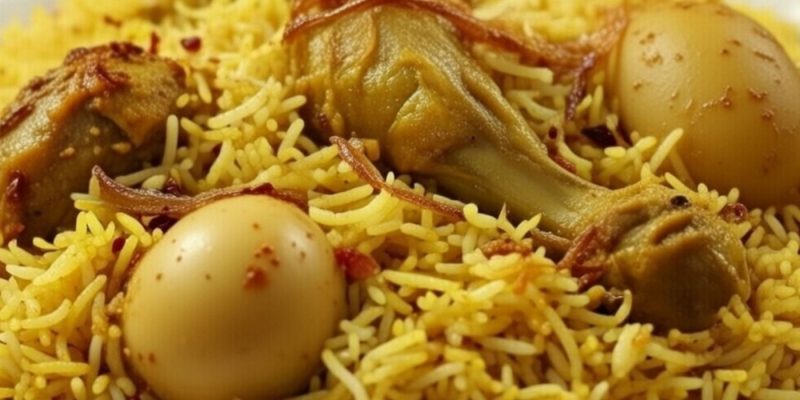
Then the biryani arrives: tender chicken, fragrant basmati rice, a buttery potato, and a boiled egg tucked into the layers. It’s not the kind of biryani that needs to shout with heat or heavy spices. Its charm is in the aroma, the gentle seasoning, and the way every layer comes together.
That’s the feeling I wanted to capture when developing this Kolkata Chicken Dum Biryani Recipe for my own kitchen—fragrant, comforting, and unmistakably Kolkata.
Recipe Snapshot
Recipe: Kolkata Chicken Dum Biryani
Cuisine: Bengali / Indian
Prep Time: 30 minutes
Cook Time: About 1 hour
Total Time: About 1 hour 30 minutes
Servings: 4–6
Main Protein: Chicken
Rice: Aged basmati rice
Cooking Method: Marination + stovetop dum cooking
Signature Ingredients: Potato, egg, kewra, ghee, meetha atar
Best Served With: Raita, salad, cucumber and onion salad
Long grains of fragrant basmati rice, each one separate, lightly stained with saffron. Melt-in-the-mouth chicken that doesn’t shout with spice but hums softly with flavor. A hard-boiled egg tucked into a corner like a surprise. And then—your spoon hits it—the legendary aloo. Soft, golden, soaking up every drop of that aromatic gravy. That potato isn’t an afterthought. It’s the soul of Kolkata biryani.
This Kolkata Chicken Dum Biryani recipe is special to me—and to dishstories.com—because it’s not just food. It’s heritage. It’s the gentle elegance of Nawabi kitchens adapted to a city that made it its own. No aggressive heat. No overpowering masala. Just balance, restraint, and fragrance.
I’ve cooked this biryani for friends who swore loyalty to Hyderabadi biryani. I’ve watched them pause mid-bite, surprised. That’s the magic of Kolkata biryani—it doesn’t compete, it charms.
If you’ve been chasing that authentic taste at home, this recipe is for you. Take your time. Trust the process. Let the dum do its quiet work.
Why Kolkata Biryani Is Different
Kolkata biryani has strong roots in Awadhi cooking, and the style that developed in Kolkata over time took on its own distinct character. The influence is often connected to Nawab Wajid Ali Shah, who settled in Kolkata after being exiled from Lucknow in the 19th century. From there, the city’s own ingredients, cooking habits, and food culture helped shape the biryani we know today.
One of the most recognizable additions is the potato. What may have started as a practical way to stretch a meat-based dish eventually became one of the defining features of Kolkata biryani. The boiled egg is another element that makes a plate instantly recognizable.
What I love about Kolkata chicken dum biryani is how restrained it feels compared with more heavily spiced styles. The focus is on:
- Fragrant basmati rice
- Tender, well-seasoned chicken
- Buttery potatoes
- Aromatic ghee
- Gentle whole spices
- Subtle floral notes from kewra and meetha atar
- Slow dum cooking that allows everything to come together
Unlike the bolder, often spicier profile associated with Hyderabadi biryani, Kolkata biryani is more about fragrance, balance, and gentle seasoning. The potato and boiled egg aren’t extras added at the end—they’re part of what gives this regional style its identity.
Kolkata biryani draws heavily from Awadhi cuisine, a refined culinary tradition known for slow cooking, subtle spices, and aromatic dishes that emphasize balance rather than simply adding heat.
If you enjoy regional South Asian rice dishes, you may also want to try our comforting Kacchi Biryani recipe
What I’ve Learned Making Kolkata Biryani
After making Kolkata biryani several times, I’ve learned that the best version isn’t about adding more spices or making the masala heavier. It’s about getting the small details right and giving each ingredient enough room to do its job.
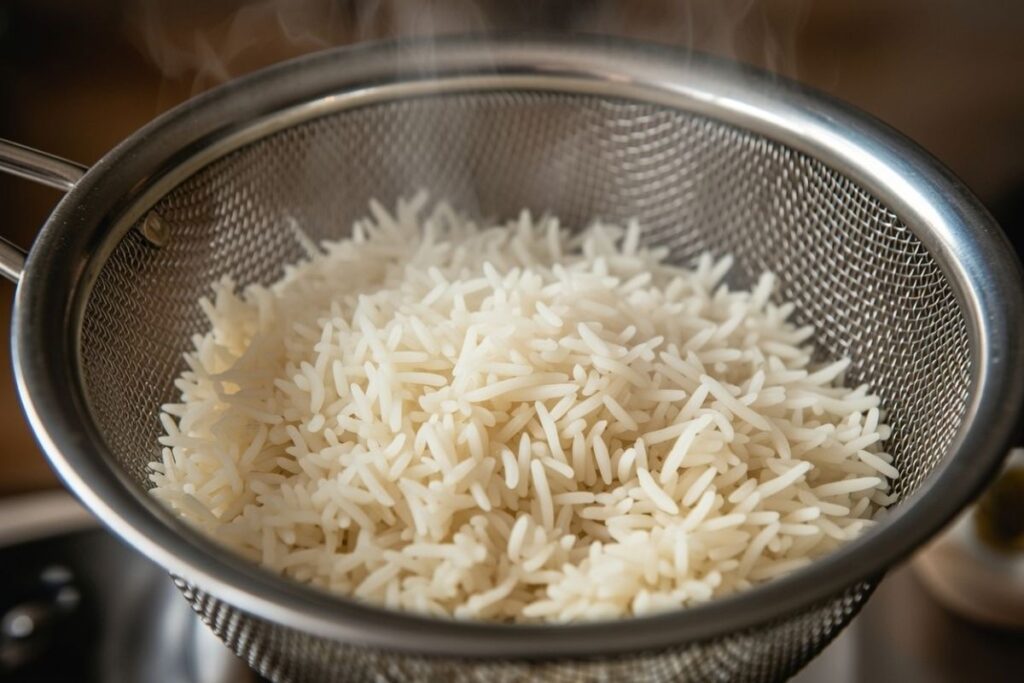
The first thing I pay attention to is the rice. I don’t rush the parboiling stage because slightly undercooked rice is much easier to finish during dum than overcooked rice is to rescue. The grains should still have a little firmness in the center before they go into the pot.
I also look for a well-seasoned chicken marinade rather than simply letting the chicken sit in spices. The chicken should taste flavorful on its own, because that seasoning will carry through the rice as everything cooks together.
The potatoes deserve just as much attention. I like them large enough to stay intact during cooking and soft enough to absorb the ghee and biryani juices. They aren’t an afterthought in Kolkata biryani—they’re one of the things I look forward to most.
I’ve also learned to keep the spice level restrained. Kolkata biryani has a gentler, more fragrant personality than some heavily spiced biryanis. Too much chili or garam masala can easily cover up the aroma of the rice, ghee, and chicken.
Kewra and meetha atar are another place where less is definitely more. I use them carefully because their fragrance should be something you notice when you lift the lid, not something that dominates every bite.
Finally, once the pot is sealed for dum, I leave it alone. Opening the lid repeatedly releases the trapped steam and makes it harder for the rice and chicken to finish evenly. I used to be tempted to check on it; now I trust the process and let the gentle heat do its work.
The biggest lesson for me has been that Kolkata biryani rewards patience and restraint. You don’t need to make it louder—you need to let the rice, chicken, potato, ghee, and delicate aromatics come together.
Key Ingredients for Kolkata Chicken Dum Biryani
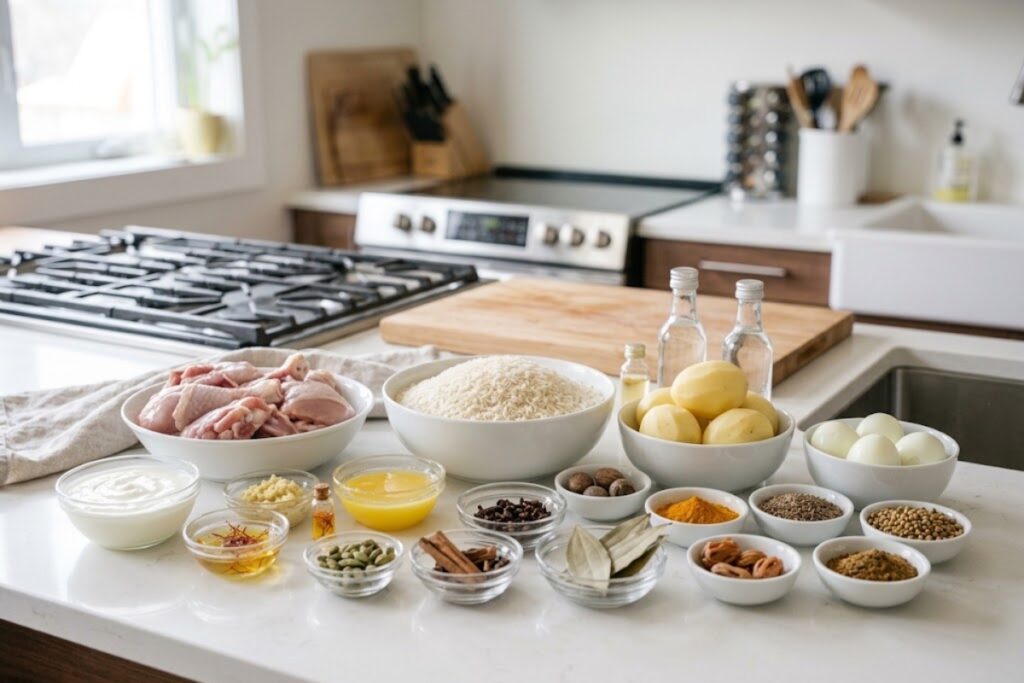
Kolkata chicken dum biryani doesn’t need a long list of complicated ingredients. What matters is using the right ingredients in the right balance. Each one contributes something different, from the fluffy basmati rice to the buttery potato and delicate floral aroma.
Aged Basmati Rice
I prefer aged basmati rice because the grains stay long and separate when the biryani finishes cooking on dum. The rice should be parboiled rather than completely cooked so it can absorb the flavors without becoming soft or mushy.
Chicken
Bone-in chicken pieces work especially well because they stay juicy during the dum cooking and add more depth to the biryani. I like using larger pieces so the chicken remains tender instead of drying out.
Potatoes
The potato is one of the ingredients that makes Kolkata biryani instantly recognizable. I keep the pieces fairly large so they hold their shape while cooking and soak up the flavorful ghee and chicken juices.
Boiled Eggs
Hard-boiled eggs are another classic element of Kolkata-style biryani. They add a mild richness and make the finished dish feel complete without competing with the delicate spices.
Ghee
Ghee gives the biryani its characteristic richness and helps carry the aroma of the whole spices, saffron, and floral ingredients through the rice.
Kewra Water & Meetha Atar
These are used for fragrance rather than heat. Both are very potent, so I use them sparingly. The finished biryani should smell gently floral when you lift the lid—not overwhelmingly perfumed.
Whole Spices
Cardamom, cinnamon, cloves, bay leaf, mace, and other whole spices provide warmth and depth. Kolkata biryani benefits from a restrained hand here; too many spices can hide the subtle character that makes this style special.
Saffron
A little saffron adds a beautiful aroma and warm color to the rice. Blooming it in warm milk helps distribute its flavor more evenly through the layers.
Before You Start
A little preparation makes this biryani much easier to cook. I like to marinate the chicken first and get the potatoes and eggs ready while the rice is soaking. Before I start cooking the rice, I have all of the spices, ghee, saffron milk, and floral ingredients measured and within reach.
The most important thing is to avoid fully cooking the rice at the boiling stage. It should be partially cooked with a little firmness left in the center because it will continue cooking when the biryani is sealed for dum.
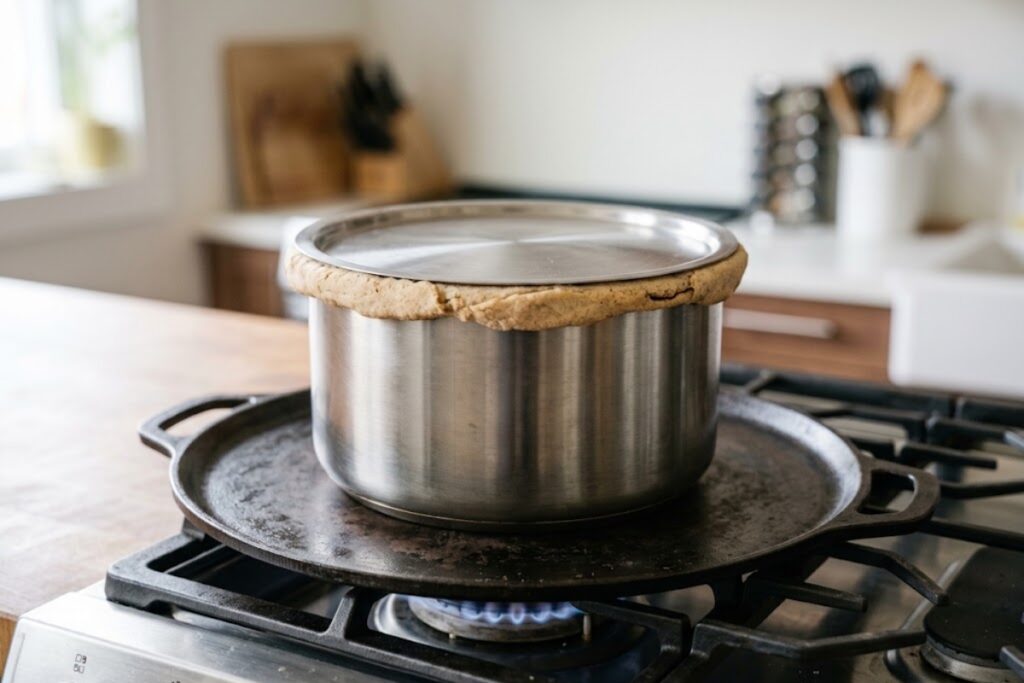
Have a heavy-bottomed pot ready as well. If your pot tends to get very hot on the bottom, keep a flat skillet or tawa underneath it during the final cooking stage. This helps distribute the heat more gently and reduces the chance of scorching the bottom layer.
How to Make Kolkata Chicken Dum Biryani
Step 1: Marinate the Chicken
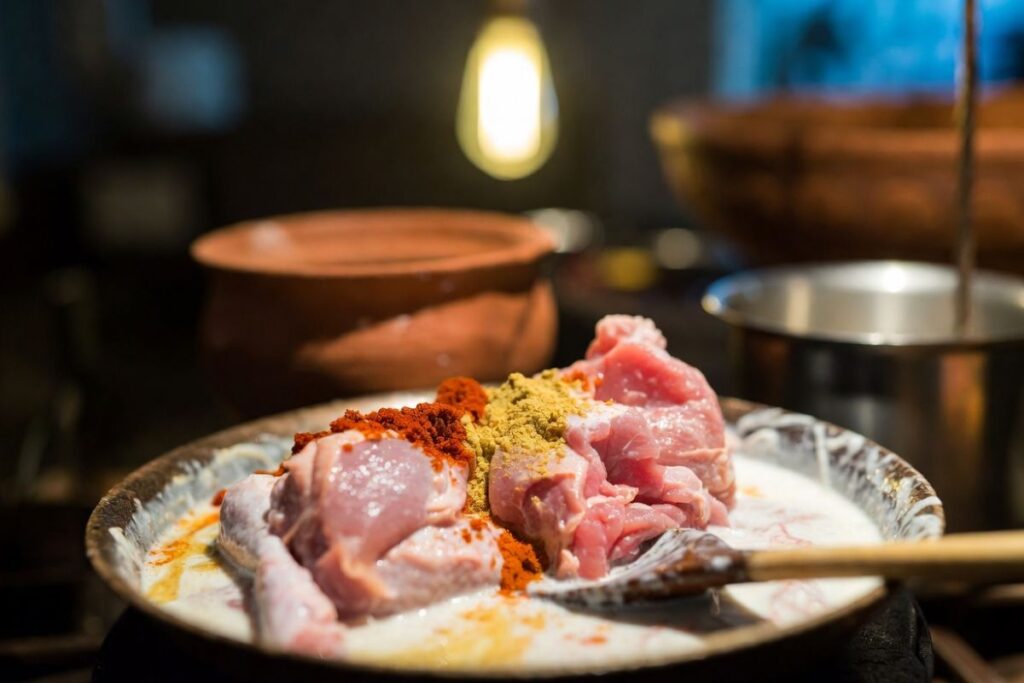
Add the chicken to a large bowl with the yogurt, ginger-garlic paste, salt, chili powder, turmeric, and lime juice. Mix everything thoroughly so each piece is well coated.
I prefer to give the chicken enough time to absorb the marinade rather than rushing straight into cooking. The yogurt helps tenderize the chicken while the spices build the foundation of flavor for the biryani.
Keep the marinated chicken refrigerated while you prepare the remaining ingredients.
Step 2: Prepare the Potatoes and Eggs
Peel the potatoes and cut them into large pieces. Boil the eggs until cooked through, then peel them carefully.
The potatoes are important here, so don’t cut them too small. You want them tender enough to absorb the biryani flavors but firm enough to remain recognizable after the dum cooking.
If your recipe calls for browning the potatoes, do that before assembling the biryani. A little color on the outside gives them even more flavor.
Step 3: Parboil the Basmati Rice
Rinse the basmati rice until the water runs mostly clear, then cook it in plenty of salted water with the whole spices.
Don’t wait for the rice to become completely tender. It should be roughly 70–80% cooked, with the center of each grain still slightly firm.
Drain the rice immediately once it reaches that stage. This is one of the steps where timing matters most because overcooked rice can turn the finished biryani soft and heavy.
Step 4: Build the Biryani Base
Place the marinated chicken into your heavy-bottomed pot and arrange the potatoes around it. Allow the chicken to begin cooking gently so the marinade and chicken juices form the flavorful base of the biryani.
Add the ingredients called for in your recipe, including the ghee and aromatics. Keep the heat controlled—you want the chicken to cook gently rather than aggressively fry.
Step 5: Layer the Chicken and Rice
Once the chicken has developed its base of flavor, spread the partially cooked basmati rice over the chicken in an even layer.
Add the saffron-infused milk, ghee, and the remaining aromatics according to the recipe. Place the boiled eggs into the layers as directed.
This is the point where I resist the temptation to stir everything together. Keeping the layers intact allows the rice to absorb the chicken juices and aromatics without becoming a heavy, uniform mixture.
Step 6: Seal and Cook on Dum
Cover the pot tightly so the steam stays inside. Cook over gentle heat until the chicken is completely tender and the rice finishes cooking.
If your pot is thin, place it over a tawa or skillet to soften the direct heat underneath.
Try not to keep lifting the lid to check on the biryani. The trapped steam is doing important work, and opening the pot repeatedly can interfere with the cooking.
Step 7: Rest, Open, and Serve
Once the biryani is cooked, turn off the heat and let it rest for several minutes before opening the lid.
When you finally lift the lid, you should get that first burst of ghee, saffron, and floral aroma. Gently fluff the rice from the sides rather than aggressively mixing the entire pot.
Serve the chicken with plenty of fragrant rice, a tender potato, and boiled egg in each portion.
Recipe Card
Kolkata Chicken Dum Biryani Recipe
Equipment
- Large heavy-bottomed handi (or deg / Dutch oven)
- Long-grain basmati rice strainer
- Mixing bowls for marination
- A flat tawa (griddle) for the dum process
- Tight-fitting lid or aluminium foil / atta dough for sealing
- That heavy base and tight seal? Non-negotiable for proper dum cooking.
Ingredients
For the Rice
- 3 cups high-quality aged basmati rice
- Water for boiling
- 2 pcs green cardamoms
- 1 pcs bay leaf
- Salt generous—rice should taste seasoned
For the Chicken
- 1 kg chicken large pieces, on the bone
- 1 cup thick yogurt whisked
- 2 tbsp ginger-garlic paste
- Salt to taste
- 1 tsp red chili powder mild
- ½ tsp turmeric powder
- Juice of ½ lime
The Kolkata Stars
- 4 pcs large potatoes peeled and halved
- 4 pcs hard-boiled eggs
Aromatics (This Is Where the Magic Lives)
- 4 tbsp ghee
- ¼ cup warm milk + a pinch of saffron
- 1 tbsp kewra water
- 1 tsp rose water
- ½ tsp Meetha Atar do not skip—this is essential
Whole Spice Biryani Masala
- 1 tsp shahi jeera
- 4 pcs green cardamoms
- 2 pcs black cardamoms
- 1 inch cinnamon stick
- 4 pcs cloves
- 1 blade mace javitri
- A tiny pinch of freshly grated nutmeg
Instructions
Let’s Cook: Step-by-Step Kolkata Chicken Dum Biryani
1. Marination: Time Is Flavor
- Mix chicken with yogurt, ginger-garlic paste, salt, turmeric, chili powder, and lime juice.Cover and refrigerate at least 4–6 hours. Overnight is even better.Why this matters:Yogurt tenderizes the chickenTime lets the spices sink inYou get that melt-in-the-mouth texture Kolkata biryani is known for
2. The Potato Secret (Don’t Rush This)
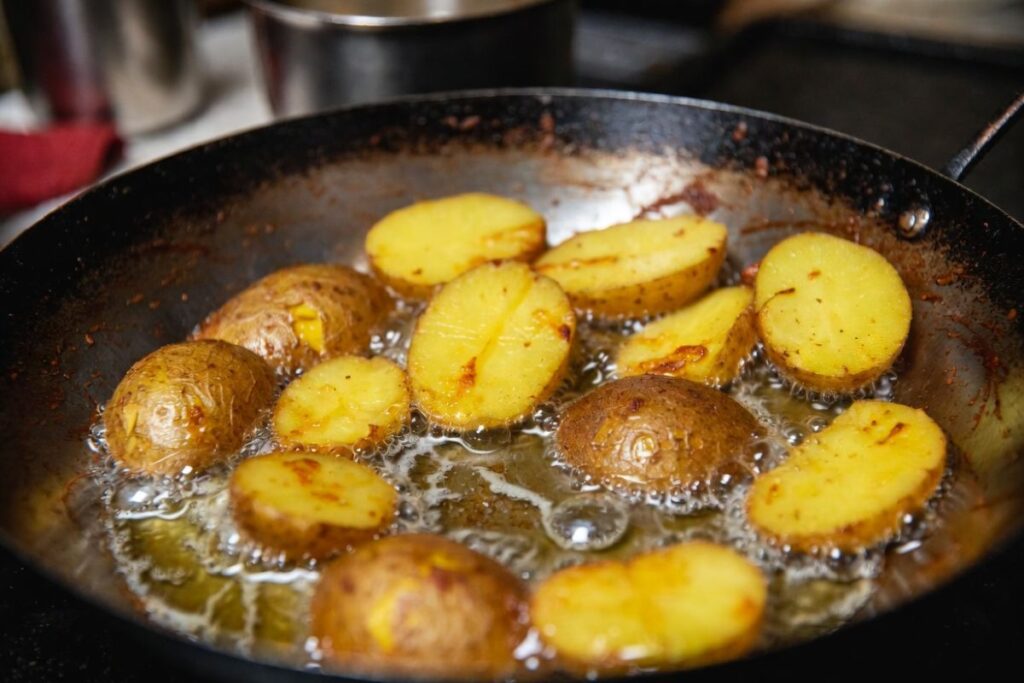
- Par-boil the potatoes in salted water until just tender—knife should go in but not crumble.Heat 1 tbsp ghee in a pan. Lightly fry the potatoes with:A pinch of turmericA pinch of saltYou’re not browning them heavily—just sealing the surface so they hold shape during dum.Trust me, this step makes that potato.
3. Cooking the Rice (70–80% Rule)
- Bring a large pot of water to a rolling boil. Add salt, bay leaf, cardamoms.Add soaked basmati rice.Cook until 70–80% done.Test it this way: press a grain between fingers—it should snap with a white core.Drain immediately. Overcooked rice is the fastest way to heartbreak.
4. Layering: The Art of Biryani
- Now we build flavor, gently.In your handi:Marinated chicken at the bottomFried potatoes and boiled eggsA layer of partially cooked riceDrizzle saffron milk, kewra water, rose waterDot generously with gheeFinish with a whisper of Meetha AtarRepeat rice + aromatics if needed. End with rice.
5. The Dum Process (Slow Fire, Big Reward)
- Seal the pot tightly with foil or atta dough.Place the handi on a tawa, then on low heat.Let it cook for 20–25 minutes.No peeking. No stirring. Let the steam do the work.When you finally open it, that first rush of aroma? That’s Kolkata welcoming you home.
How to Serve
- Serve hot with:Simple onion-cucumber raita (you’ll find my go-to recipe on dishstories.com)Or a light, spicy salanFinish the meal with Mishti Doi—I’ve shared a traditional version on the site that pairs beautifully.
Notes
- Serving Size: ~450g
- Calories: 650–750 kcal
- Protein: ~35g
- Carbs: ~85g
- Fats: ~25g
Kolkata vs Hyderabadi Biryani (Quick Note)
If you’ve ever debated Hyderabadi vs Kolkata biryani, here’s the heart of it:
- Hyderabadi: Bold, spicy, intense
- Kolkata: Fragrant, subtle, refined
Both are legendary. They’re just speaking different languages.
Kolkata Chicken Dum Biryani Recipe FAQ’s
Why does Kolkata Biryani have a potato?
It started during times when meat was scarce. Potatoes filled the pot—and eventually became the star. Today, that aloo is non-negotiable.
What rice is best for Kolkata Biryani?
Always use aged long-grain basmati rice. The fragrance and texture matter more than anything else.
Can I make this in a pressure cooker?
You can, but dum cooking gives unmatched aroma. If using a cooker, layer everything, cook on very low heat without whistle for 15 minutes.
What is Meetha Atar?
It’s a floral distillate traditionally used in Kolkata biryani. Think of it as the soul of the dish—use sparingly, but don’t skip it.
How do I prevent the bottom from burning?
Always place the handi on a tawa during dum. It diffuses heat and protects the chicken.
Final Thoughts from My Kitchen to Yours
This Kolkata chicken biryani recipe isn’t about speed or shortcuts. It’s about patience, fragrance, and respect for tradition. Cook it once with care, and it becomes part of your own food story.
And if you want to explore the roots further, the history of Awadhi cuisine is beautifully documented on high-authority sites like Britannica’s Indian Cuisine section—a fascinating read if food history excites you as much as cooking does.
When you finally find that perfect potato on your plate, soft and soaked in flavor, you’ll know—you’ve done it right.
( Updated 14 August 2026 )