There are countless recipes for asparagus, but very few explain why one pan turns out crisp and savory while another comes out limp and grey.
This guide is about mastering oven roasted asparagus at 425°F with intention — understanding heat, spacing, timing, and seasoning so the result is consistent every single time.
This isn’t just a recipe.
It’s a system you can trust.
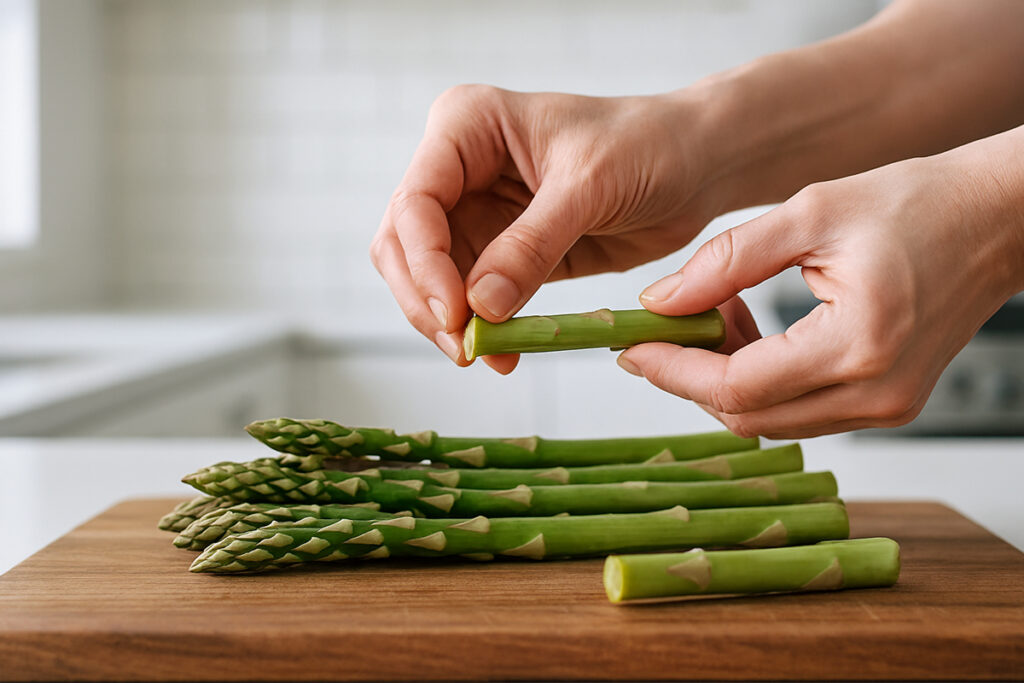
Step 1: The Nuance of Roasting — A Cook’s First-Hand Story
The first lesson asparagus ever taught me had nothing to do with seasoning.
It happened in the produce aisle.
I picked up a bundle and bent one stalk gently. Instead of snapping cleanly, it folded. That soft bend was my first real introduction to woody ends — the fibrous lower portion that no amount of roasting can soften.
Now, I never skip the snap test.
A fresh spear breaks decisively, almost with a quiet crack. A tired one tells you immediately that it’s past its prime.
At home, roasting asparagus is where details matter:
- I always use a heavy-duty rimmed baking sheet, never a thin pan
- Thin pans buckle, lose heat, and cause uneven browning
- I line the pan with parchment paper, not foil — parchment allows moisture to escape while preventing scorching
The oven goes to 425°F, fully preheated. No shortcuts.
When garlic hits hot oil at that temperature, the aroma changes fast — sharp at first, then mellow, nutty, and savory within seconds. That smell is your first signal that the oven is doing its job.
Every step builds toward contrast:
blistered tips, lightly charred edges, and a center that’s fork-tender but never mushy.
That contrast is what separates roasted asparagus from asparagus that was merely… heated.
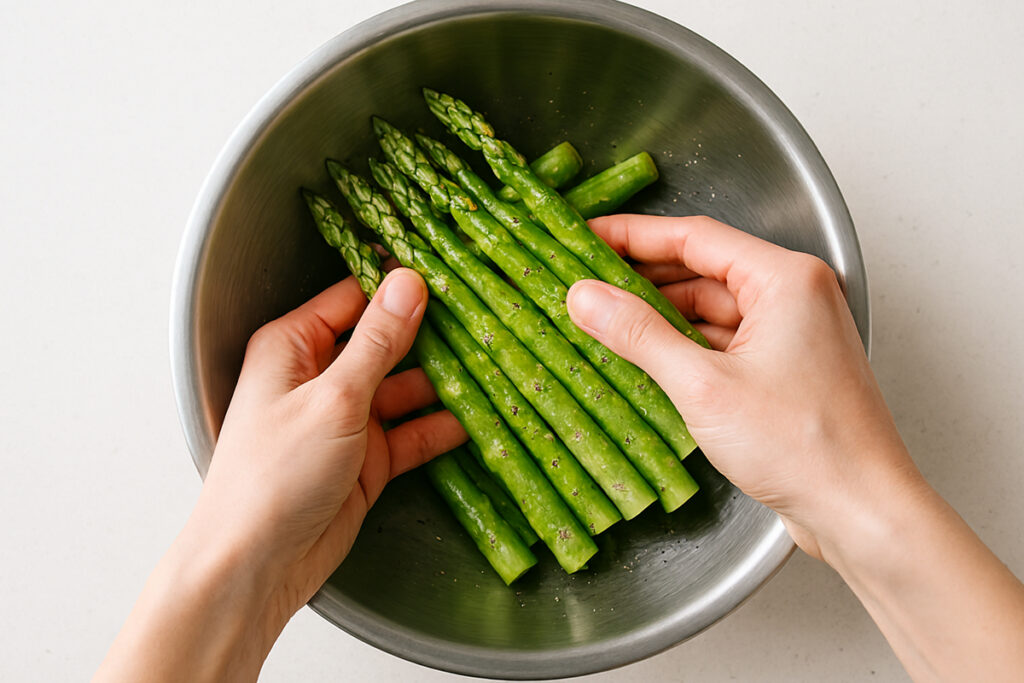
The Best Way to Cook Asparagus in the Oven
The Science of High-Heat Roasting
Think of asparagus roasted at 350°F as steaming in its own sweat.
At that lower temperature, surface moisture doesn’t evaporate quickly enough. Instead of browning, the spears soften, collapse, and turn dull green. The flavor stays grassy. The texture goes limp.
At 425°F, everything changes.
High heat triggers the Maillard reaction — the same browning process responsible for seared steak and toasted bread. Natural sugars and amino acids react, creating hundreds of new flavor compounds.
That’s why oven roasted asparagus tastes nutty, savory, and complex instead of vegetal.
Why Spacing Matters
Spacing is just as important as temperature.
When spears touch, they trap steam.
Steam kills browning.
Each spear needs room — about ¼ inch of space on all sides — so hot air can circulate and moisture can escape.
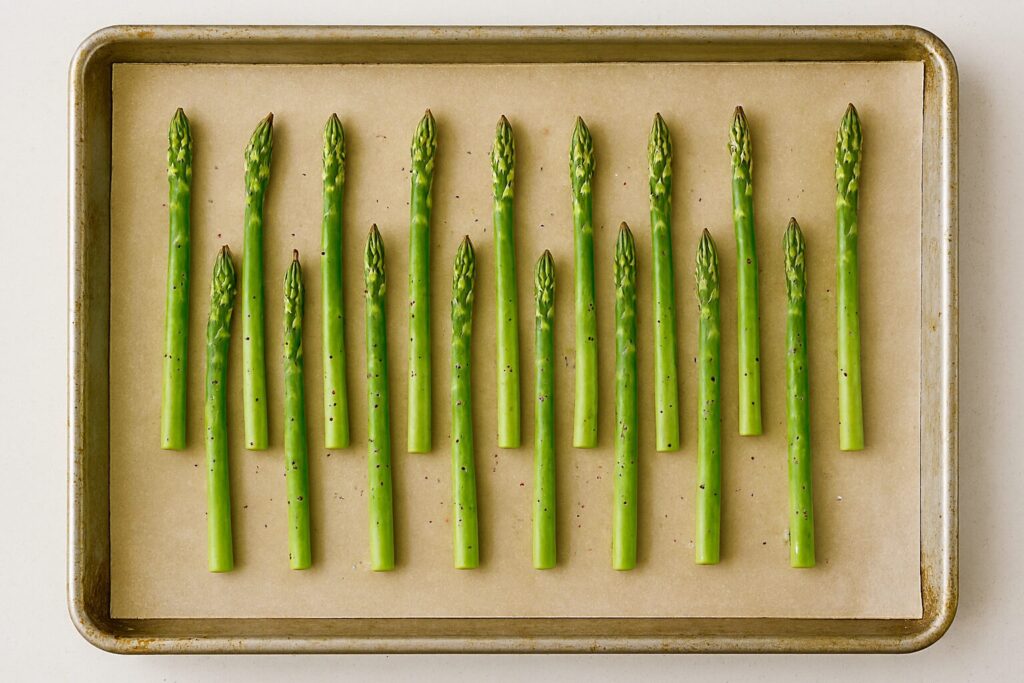
Thickness Matters More Than You Think
- Pencil-thin asparagus cooks quickly and can overcook in minutes
- Medium spears (most grocery bundles) are the most forgiving
- Jumbo asparagus roasts beautifully — charred outside, creamy inside
Asparagus Cook Time in the Oven (By Thickness)
| Spear Thickness | Oven Temp | Cook Time | Final Texture |
|---|---|---|---|
| Pencil-thin | 425°F | 7–9 minutes | Light blistering, crisp |
| Medium | 425°F | 10–13 minutes | Fork-tender, browned |
| Jumbo | 425°F | 14–16 minutes | Charred edges, creamy center |
Kitchen Tip:
Jumbo asparagus often roasts better than thin spears because the interior stays tender while the outside develops deep char.
Ingredient Breakdown (Why Each One Matters)
Asparagus
Look for tight, compact tips and smooth stalks. Avoid wrinkled skins or splayed tips — signs the asparagus has aged.
Always snap, never cut. The stalk naturally breaks where tenderness ends.
Oil
At 425°F, oil choice matters.
Avoid extra virgin olive oil — it can turn bitter under high heat.
Use instead:
- Avocado oil (neutral, very high smoke point)
- Refined olive oil (stable and lightly flavored)
Salt
Kosher salt distributes evenly and won’t dissolve into brine mid-roast. Season confidently — asparagus can handle it.
Pepper
Always grind fresh. Pre-ground pepper scorches and turns acrid at high heat.
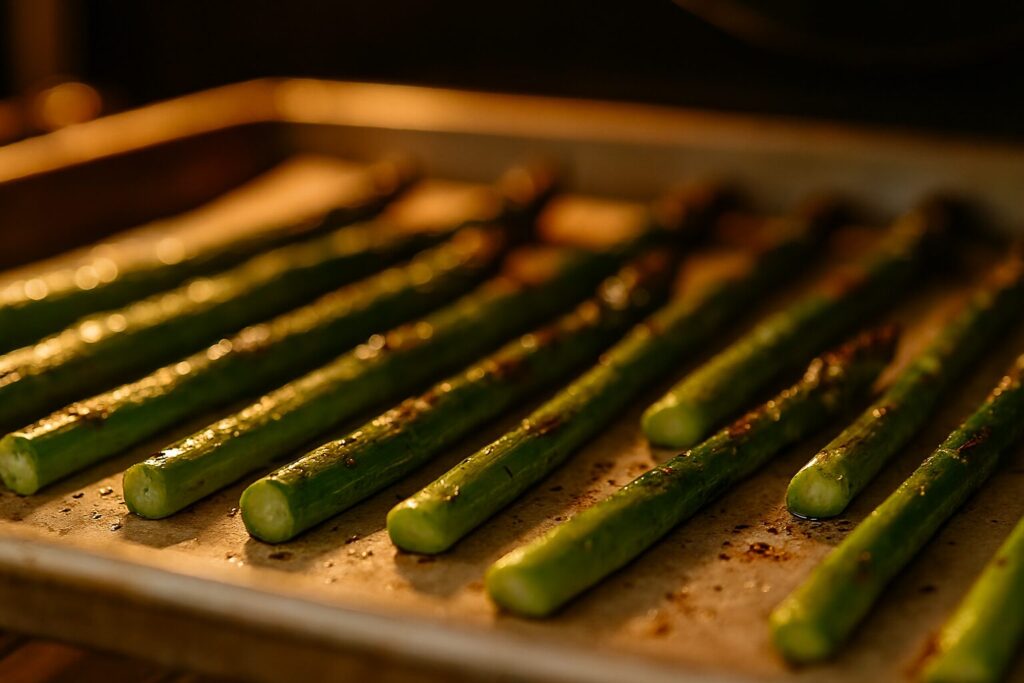
Pro-Level Asparagus Seasoning Ideas
Mediterranean
- Lemon juice
- Citrus zest
- Crumbled feta
Savory
- Garlic
- Parmesan
- Black pepper
Spicy
- Red pepper flakes
- Honey drizzle
- Flaky sea salt
Important:
Add delicate ingredients after roasting. Cheese and citrus burn at 425°F.
The Recipe: Oven Roasted Asparagus (425°F)
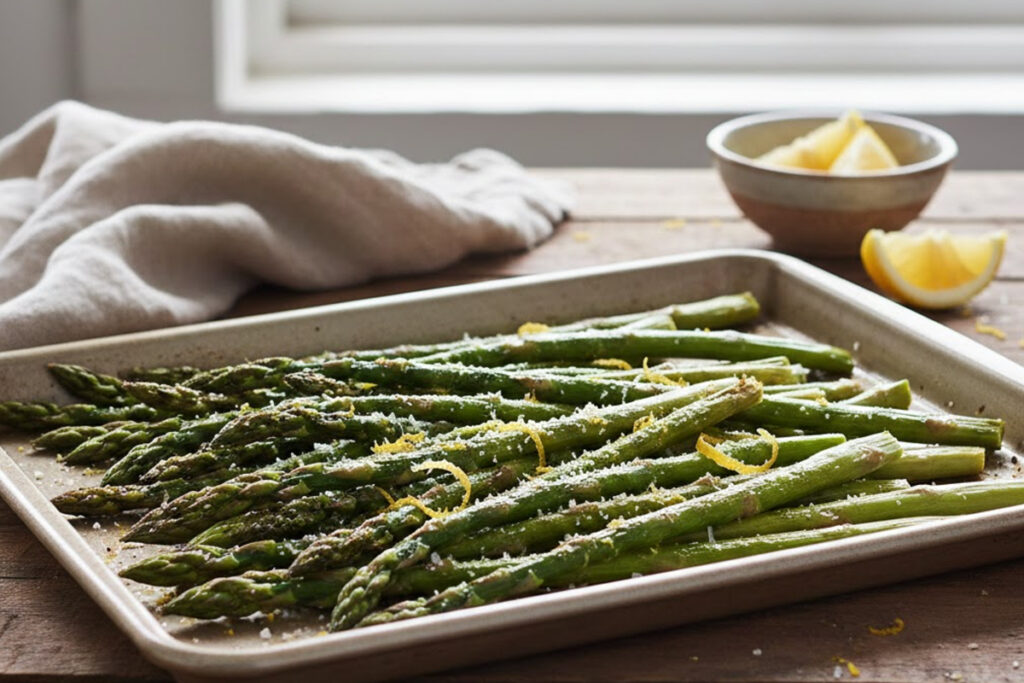
Oven Roasted Asparagus
Equipment
- 1 Heavy-duty rimmed sheet pan
- 1 Parchment paper
Ingredients
- 1 lb fresh asparagus woody ends removed
- 1½ Tbsp avocado oil or refined olive oil
- ¾ tsp kosher salt
- ¼ tsp freshly ground black pepper
Instructions
- Preheat oven to 425°F and line a sheet pan with parchment paper.
- Rinse asparagus thoroughly and pat bone-dry — moisture is the enemy of the crunch.
- Toss spears with oil, salt, and pepper until lightly coated.
- Arrange in a single layer, leaving space between each spear.
- Roast until fork-tender with browned tips, 10–15 minutes depending on thickness.
Video
Notes
Serve alongside grilled salmon, steak, or tossed into lemon pasta for a complete meal. This video shows how to make a variation of oven roasted asparagus — it’s complementary to, but not the exact same as ours, offering extra inspiration.
Oven Roasted Asparagus Nutrition Information (Per Serving)
This nutrition estimate is for 1 serving (¼ of the recipe). Values are approximate and based on standard USDA ingredient data.
Oven Roasted Asparagus (425°F)
| Nutrient | Amount |
|---|---|
| Calories | ~80 kcal |
| Total Fat | 6 g |
| Saturated Fat | 0.8 g |
| Cholesterol | 0 mg |
| Sodium | ~440 mg |
| Total Carbohydrates | 6 g |
| Dietary Fiber | 2.5 g |
| Total Sugars | 2 g |
| Protein | 2.5 g |
Key Vitamins & Minerals
- Vitamin K: ~55% Daily Value
- Vitamin A: ~15% Daily Value
- Vitamin C: ~12% Daily Value
- Folate: ~17% Daily Value
- Potassium: ~7% Daily Value
Nutrition Notes
- Naturally low-calorie
- High in fiber, supporting digestion
- Rich in vitamin K for bone health
- Healthy fats improve absorption of fat-soluble vitamins (A & K)
Pairing and Variations
Roasted asparagus and lemony grilled salmon are a natural pairing — richness meets brightness. For heartier meals, serve roasted asparagus and pan-seared steak with a mustard vinaigrette. It also shines tossed into lemon pasta with Parmesan and reserved pasta water.
Variations
• Finish with balsamic reduction
• Add toasted almonds for crunch
• Toss with miso butter for umami depth
Explore More from the Kitchen
If you enjoyed this guide, you might also like:
• How to Make Crispy Bacon in the Oven (Easy Method)— another high-heat favorite
• The Ultimate Guide Futuristic Best Sushi Rice Recipe.
For readers interested in the nutritional side of this dish, Harvard T.H. Chan School of Public Health provides a clear overview of asparagus nutrition and health benefits, including its fiber content and micronutrient profile.
Oven Roasted Asparagus FAQ’s
Why did my asparagus turn grey green instead of bright green?
Overcooking. Chlorophyll dulls when exposed to prolonged heat. Remove asparagus as soon as it’s fork-tender.
How do I reheat it without it getting limp?
Use an air fryer or toaster oven at 375°F for 3–4 minutes. Never microwave — it reintroduces steam.
Can I prep this 24 hour in advance?
Yes. Trim and dry asparagus, then store wrapped in a towel in the fridge. Oil and season just before roasting.
Why are my tips burnt but stalks undercooked?
Uneven thickness. Sort spears by size or roast thicker ones slightly longer.
Should I flip the asparagus halfway through?
Not necessary if the pan is hot and uncrowded. Flipping releases steam and can slow browning.
Author Bio
I recently joined DishStories as part of the cooking team. I’m a classically trained home cook who’s spent 15+ years testing vegetable techniques on busy weeknights and special-occasion meals alike. I specialize in turning restaurant-level heat control and timing into practical, one-pan recipes that work at home.