If you’ve ever relied on a kitchen timer to decide when your steak or pork is ready, you’re not alone—and you’re also taking a gamble. Cooking time alone can’t account for differences in meat thickness, pan material, grill temperature, or heat fluctuations. That’s why even experienced home cooks sometimes end up with dry steaks or overcooked pork. The real key to consistent, restaurant-quality results is learning to cook by internal temperature, not by the clock. Understanding steak doneness temp and other target temperatures makes cooking meat predictable, repeatable, and far less stressful.
This guide breaks down steak doneness temperatures, explains modern pork safety standards, and shows you how to use a meat thermometer with confidence—no guesswork required.
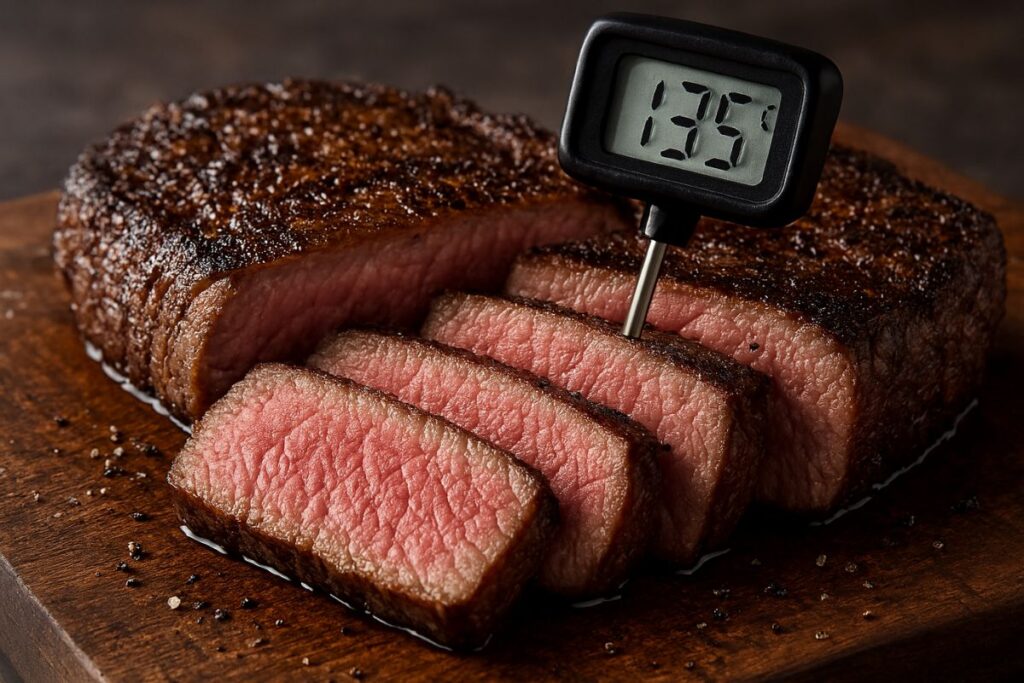
Steak Doneness Temperatures Explained
Beef is unique because it can be safely enjoyed at different levels of doneness, each offering a distinct texture and flavor. Hitting the right internal temperature ensures your steak turns out exactly the way you want it.
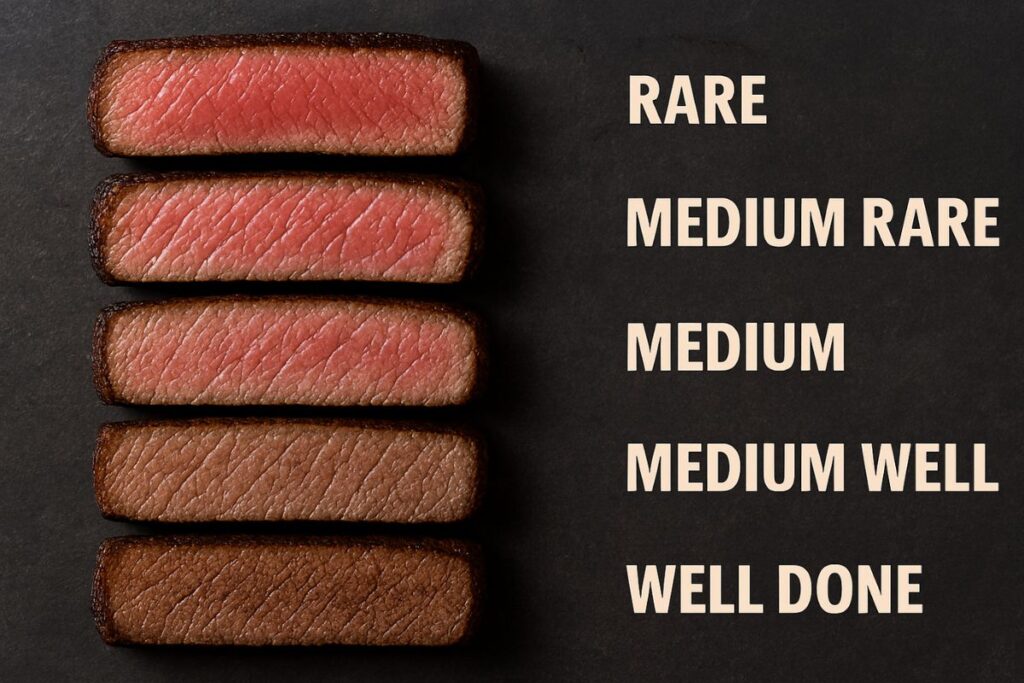
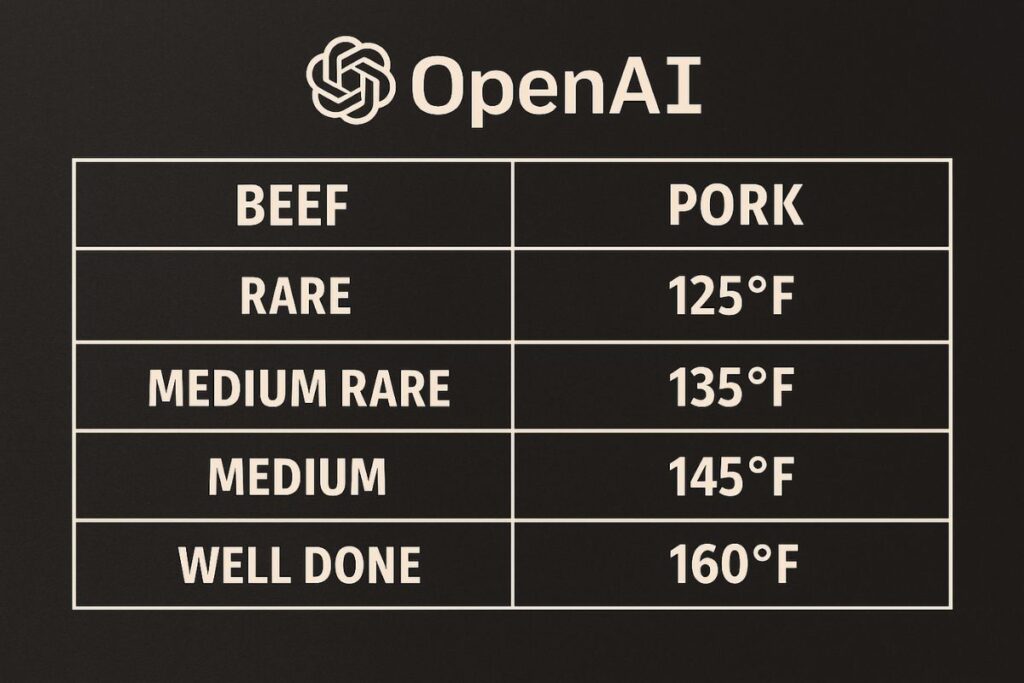
Rare (115°F–120°F)
A rare steak has a cool, deep red center and an exceptionally soft texture. It retains the most moisture and delivers a bold beef flavor. This doneness is best suited for those who enjoy very tender meat with minimal firmness.
Medium-Rare (130°F–135°F)
Often considered the ideal doneness, medium-rare balances tenderness, juiciness, and flavor. At this temperature, the center is warm and pink, and the fat has begun to render without drying out the meat. This is the preferred range for premium cuts like ribeye, strip steak, and filet mignon.
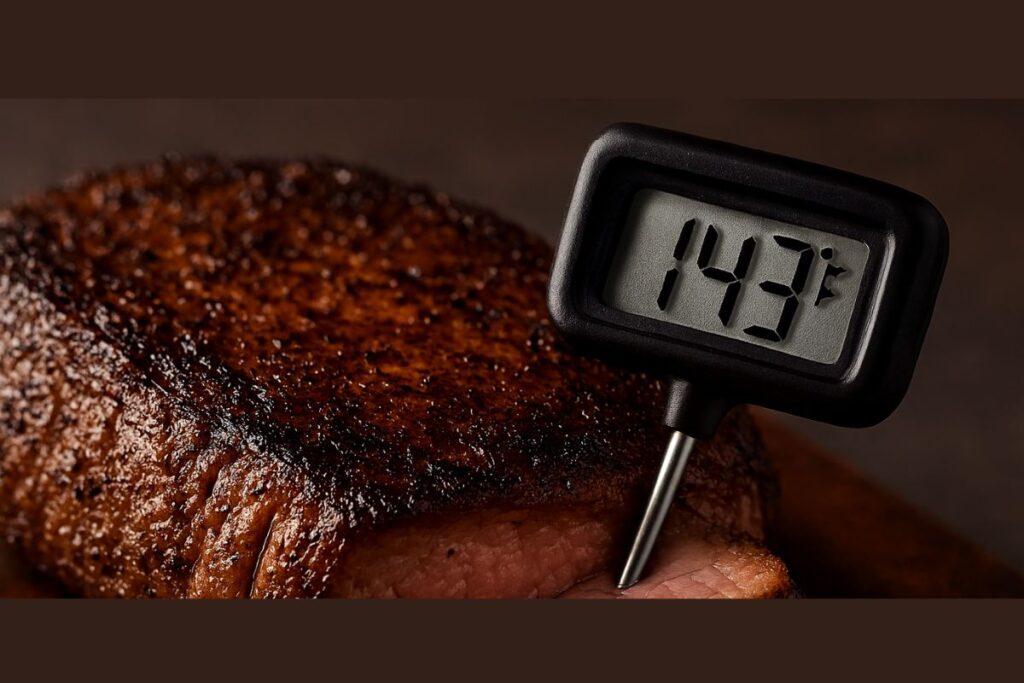
Medium (140°F–145°F)
A medium steak has less pink and a firmer bite while still holding onto some juiciness. This option works well for cooks who want a noticeable cook-through without sacrificing all moisture.
Medium-Well (150°F–155°F)
Only a small trace of pink remains at this stage. The meat becomes significantly firmer, and moisture loss increases. Careful temperature monitoring is essential to avoid toughness.
Well-Done (160°F and above)
A well-done steak has no pink and a dense, fully cooked texture. If this is your preference, resting the meat properly after cooking is crucial to preserve as much juiciness as possible.
The Truth About Pork Safety Today
For many years, pork was routinely cooked to 160°F or higher due to safety concerns. However, this guidance has changed. Advances in farming and food safety standards have made it possible to safely enjoy pork at lower temperatures.
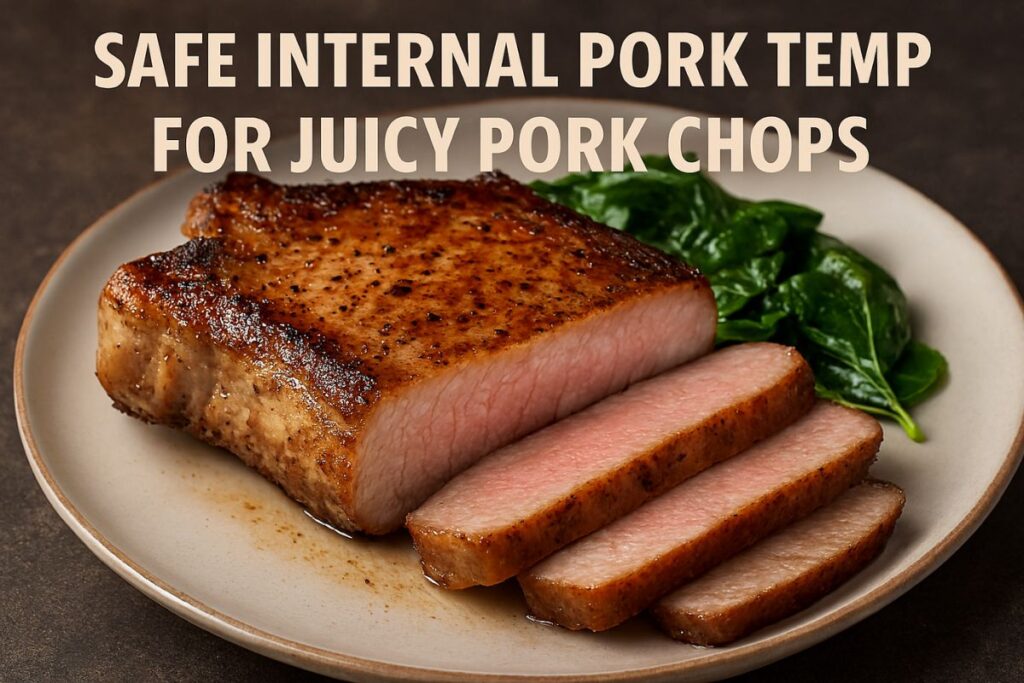
Whole cuts of pork—such as chops, tenderloin, and loin roasts—are now considered safe at 145°F, as long as the meat rests for three minutes after cooking.
This update allows pork to remain tender, juicy, and lightly pink rather than dry and tough.
Why the Updated Pork Temperature Matters
Modern pork is leaner and raised under stricter safety controls than in the past. Cooking whole cuts to 145°F effectively eliminates harmful bacteria while preserving the meat’s natural moisture. The short resting period completes the cooking process and ensures safety without sacrificing quality.
Pork Temperature Guide by Cut
Cooking pork to the correct internal temperature ensures it’s safe, juicy, and flavorful. Use a food thermometer and measure at the thickest part of the meat for best results.
Safe Internal Cooking Temperatures for Pork
| Pork Cut | Safe Internal Temperature | Rest Time | Notes |
|---|---|---|---|
| Pork Chops | 145°F (63°C) | 3 minutes | Resting allows juices to redistribute and finish cooking |
| Pork Tenderloin | 145°F (63°C) | 3 minutes | Lean cut—avoid overcooking to prevent dryness |
| Pork Loin Roast | 145°F (63°C) | 3 minutes | Check temperature in the center of the roast |
| Ground Pork | 160°F (71°C) | None | Must be fully cooked due to bacteria being mixed throughout |
The USDA provides up-to-date guidelines on safe cooking temperatures for all types of meat, including steaks and pork. This is the go-to source for food safety.
Why a Meat Temperature Chart Is Essential
Keeping a meat temperature chart in your kitchen removes uncertainty and saves time. Instead of memorizing numbers or searching online mid-cook, you can quickly confirm the correct temperature and focus on cooking with confidence.
A reliable thermometer paired with a clear chart helps prevent overcooking, reduces food waste, and ensures every meal is both safe and satisfying.
Two Techniques That Make the Biggest Difference
- Carryover Cooking
Meat continues to cook after it’s removed from heat. This temperature rise—usually about 5°F—can push your food past its ideal doneness if you wait too long to remove it.
Tip: Take meat off the heat when it’s about 5°F below your final target temperature.
- Resting the Meat
Cutting into meat immediately after cooking causes juices to escape, leaving it dry. Resting allows the fibers to relax and the juices to redistribute evenly.
Rest times:
• Steaks and chops: 5–10 minutes
• Larger roasts: 10–15 minutes
Final Thoughts
Cooking meat well isn’t about intuition or timers—it’s about temperature control. Once you trust your thermometer and understand doneness targets, you’ll consistently serve steak and pork that are juicy, flavorful, and safely cooked.
So, which side are you on: medium-rare or well-done?
Share your preference and join the discussion below!
Craving comfort food? Discover the heartwarming recipe that brought home flavors to my first winter in America in our Kacchi Biryani guide
Steak Doneness Temp FAQ’s
Is pork safe if it’s slightly pink?
Yes. If whole cuts of pork reach 145°F and rest for three minutes, a light pink color is completely safe and often more flavorful.
Where should I insert the thermometer in a steak?
Insert it into the thickest part of the steak, avoiding bone or fat. For best accuracy, slide the probe in from the side so it reaches the center.
Does meat really keep cooking after it’s removed from heat?
Yes. Internal temperature typically rises by about 5°F during resting due to retained heat.
Why does ground pork need a higher temperature?
Grinding distributes surface bacteria throughout the meat, so ground pork must be cooked to 160°F to ensure safety.