A Low-and-Slow Precision Method for the Best Corned Beef and Cabbage
The Unlikely Midnight Feast
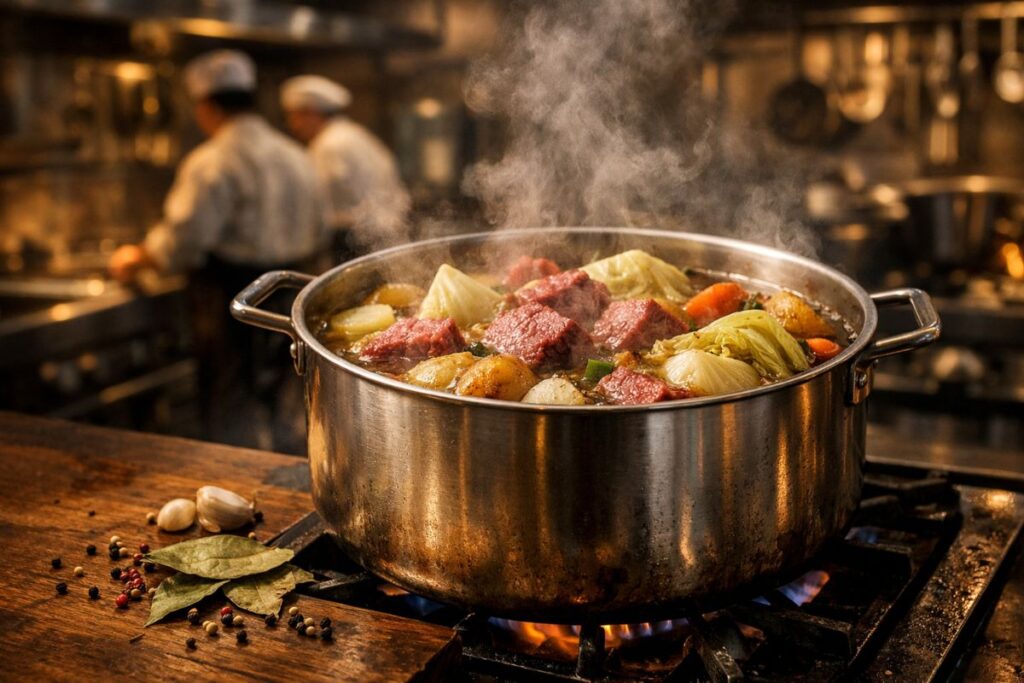
It was well past midnight in a vast, stainless-steel hotel kitchen—one of those international places where the lobby smells faintly of polished marble and expensive cologne, but the back-of-house tells a different story. The last guests had long since retired, elevators hushed, carpets absorbing footsteps like secrets. Only the night shift remained: a skeleton crew of chefs, a couple of auditors finishing reports, and a dishwasher humming quietly to himself.
Then came the aroma.
Not loud, not overwhelming—just a soft, persistent fragrance threading its way through the sterile quiet. Toasted peppercorns cracked open in hot fat. Bay leaves releasing something woody and ancient. A hint of sweetness riding along behind it.
Someone had started a pot.
It wasn’t plated for service. It wasn’t part of a menu. It was something older than that—a reward. A ritual. A shared language spoken by people who had survived a long day and needed something real.
Inside the pot simmered what many would simply call corned beef and cabbage. But what unfolded that night was something else entirely—a careful, precise version of a dish too often reduced to a “dump and simmer” afterthought.
This is that version.
Why Most Corned Beef and Cabbage Recipes Fail
Let’s be honest: most cabbage & corned beef recipes fall into one of two traps:
- Overcooked meat: stringy, gray, and dry despite being submerged in liquid
- Mushy vegetables: lifeless cabbage with that sulfur-heavy smell
The issue isn’t the ingredients—it’s the method.
Traditional approaches treat everything as equal in cooking time. But they aren’t. Brisket needs hours. Cabbage needs minutes.
That’s where the Low-and-Slow Precision Method changes everything.
The Philosophy: High-End Hospitality Meets Home Comfort
This isn’t just about making the best corned beef and cabbage—it’s about understanding why it becomes great.
We apply three professional principles:
- Cut matters – choosing the best cut for corned beef and cabbage
- Temperature control – avoiding protein shock
- Staggered cooking – protecting vegetable integrity
When done right, you get:
- Fork-tender brisket that slices cleanly
- Cabbage that’s vibrant and slightly crisp
- A broth layered with depth—not just salt
Choosing the Best Cut for Corned Beef and Cabbage
This is where most people unknowingly compromise.
Flat Cut vs. Point Cut
- Flat Cut (Recommended)
Leaner, uniform thickness, easier slicing
Ideal for presentation and consistency - Point Cut
More marbling, richer flavor
Harder to slice evenly
For the best corned beef and cabbage, the flat cut wins—especially when serving guests.
If you’re cooking for a crowd, though, a whole brisket (both cuts) offers the best balance of flavor and yield.
Ingredient Strategy: Quality Over Convenience
To elevate your cabbage & corned beef beyond average, focus on ingredient upgrades:
- Organic grass-fed brisket – deeper flavor, cleaner fat profile
- Low-sodium brine techniques – prevents overpowering saltiness
- Savoy cabbage – sweeter and structurally resilient
- Hard apple cider – acidity that tenderizes without harshness
- Premium spice blend ratios – balance over brute force
The “Heritage & Hydration” Recipe Card
Corned Beef and Cabbage Recipe
Equipment
- 1 6-quart thick-based Dutch oven or 7-quart slow cooker
- 1 Sharp carving knife
- 1 Fine-mesh strainer
- 1 Stainless steel tongs
Ingredients
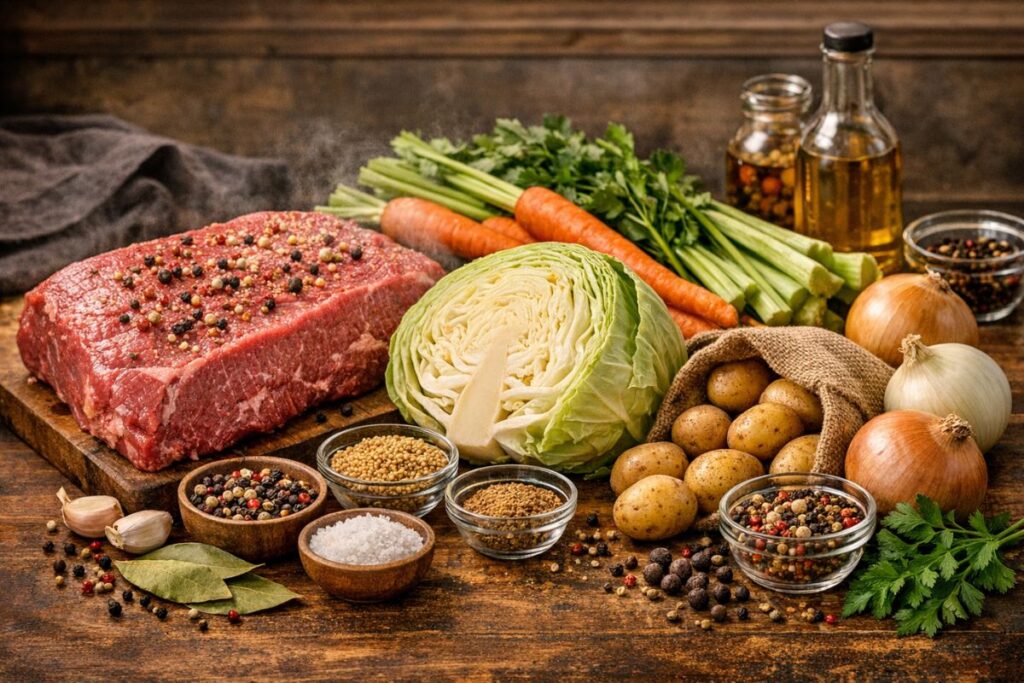
- 4 lb corned beef brisket flat cut preferred
- 1 tbsp black peppercorns
- 4 whole cloves
- 3 bay leaves
- 12 oz hard apple cider
- 1 head Savoy cabbage
- 1 lb baby Yukon Gold potatoes
- 4 large carrots heirloom if available
- 1 white onion quartered
Instructions
The Rinse (Critical for Balance)
- Rinse rinse the brisket thoroughly in cold running water.This removes excess surface brine and prevents the dish from becoming overwhelmingly salty—a key factor in achieving the best corned beef and cabbage recipe.
The Sear (The Game-Changer)
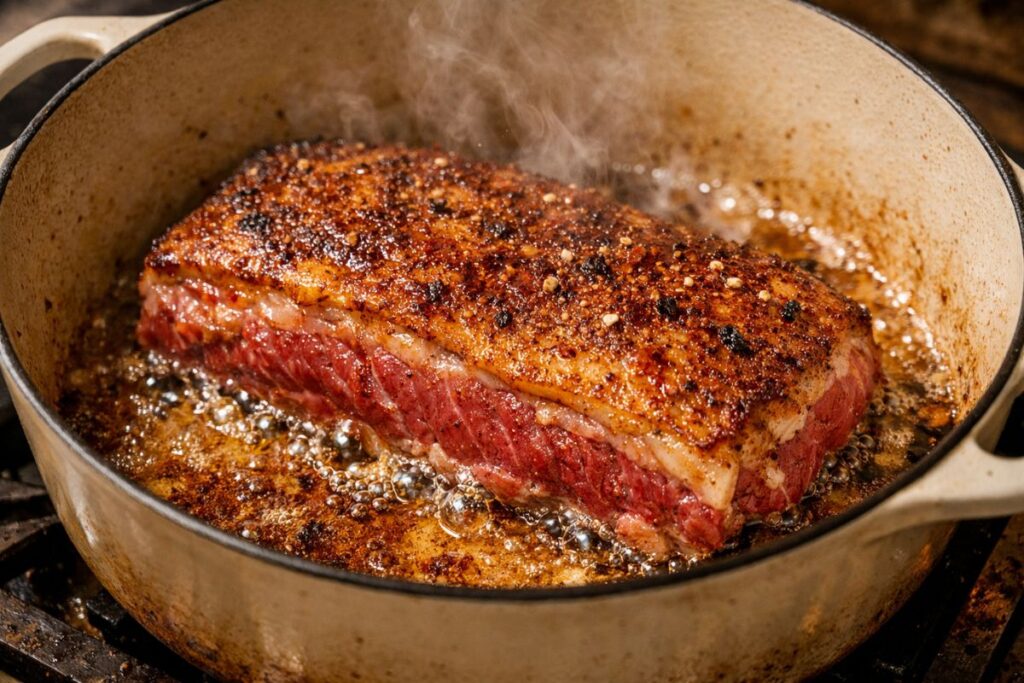
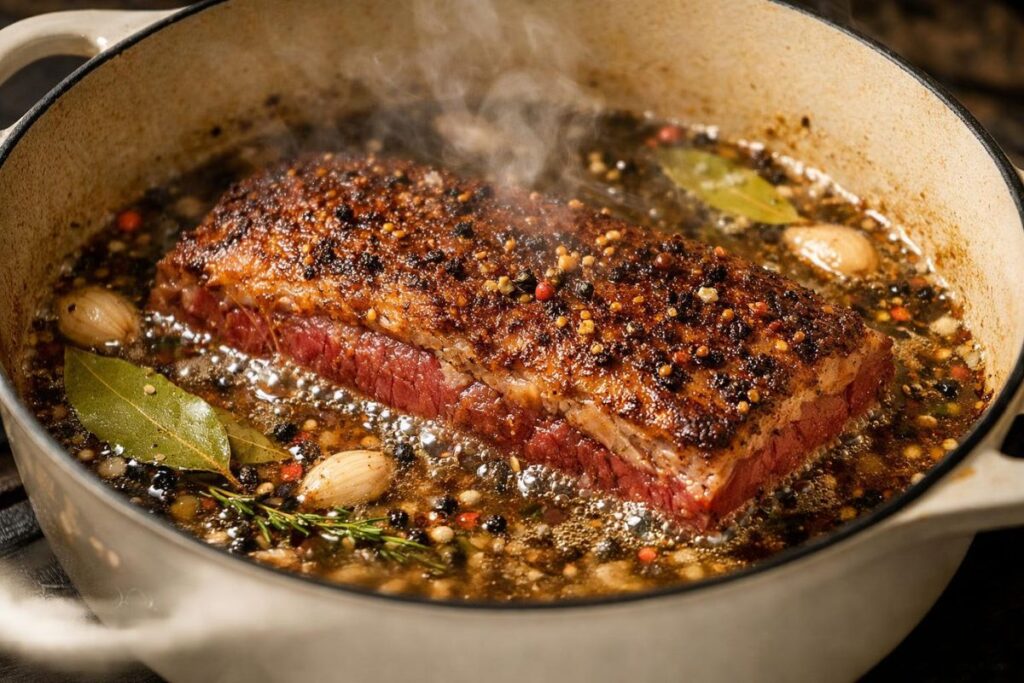
- Place the brisket fat-side down in your pot and sear for about 4 minutes.Why this matters:1. Renders fat2. Builds flavor foundation3. Adds complexity missing in traditional methodsThis step alone separates average from exceptional.
The Braise
- Add:1. Hard apple cider3. Spices3. Enough water to cover the brisket by one inch
Cooking Options:
Slow CookerLow for 7–8 hoursStovetop1. Bring to a boil, then reduce to a gentle simmer (3–4 hours)Avoid aggressive boiling—it tightens proteins and dries the meat.
The Staggered Entry (The Precision Technique)
- This is the defining feature of this method.Do NOT add vegetables early.1. Add potatoes and carrots in the final 45 minutes2. Add cabbage in the final 15 minutesThis ensures:1. Potatoes stay intact2. Carrots remain slightly firm3. Cabbage retains color, texture, and sweetnessThis is what elevates cabbage & corned beef recipes into something memorable.
The Rest
- Remove the brisket and let it rest for 15 minutes.Then slice against the grain.Skipping this step results in tougher meat—no matter how well it was cooked.
Video
Notes
Beyond The Recipe Card
Now that you’ve mastered the step-by-step basics, it’s time to go beyond the recipe and bring this classic dish to life with deeper flavors, a bit of history, and presentation that turns heads at the table.
Elevating Flavor Beyond the Basics
While the traditional simmering method delivers tender, satisfying corned beef, there’s plenty of room to level it up.
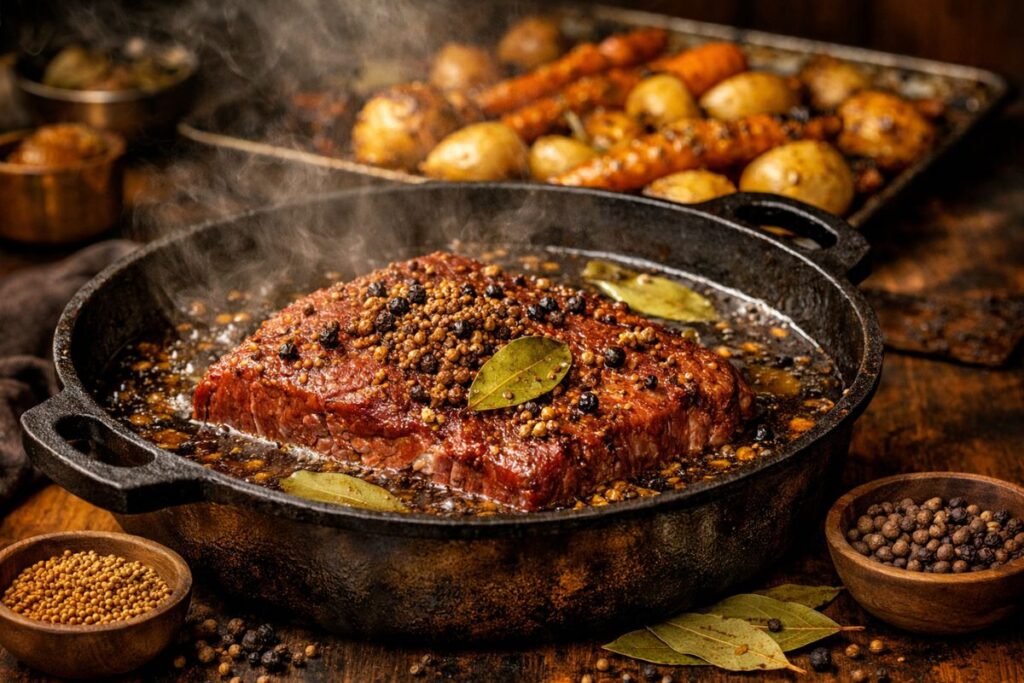
Try braising the brisket in a combination of beef broth and dark beer to introduce a rich, malty depth. You can also experiment with spice blends such as coriander, mustard seed, bay leaves, and peppercorns to build a more complex aroma.
For the vegetables, take a different route. Instead of cooking everything together, roast carrots and potatoes separately until they develop a golden, caramelized exterior. Then fold them back in before serving. This layering of cooking techniques adds both texture and flavor, turning a simple meal into something memorable.
From Ireland to America: A Culinary Journey
Corned beef and cabbage may feel deeply Irish, but its roots tell a slightly different story.
In Ireland, the traditional dish was bacon and cabbage. When Irish immigrants settled in the United States, they found that beef was more affordable and widely available than pork. As a result, corned beef became a popular substitute.
Over time, this adaptation evolved into a beloved staple of St. Patrick’s Day celebrations. Today, it stands as a flavorful symbol of cultural adaptation and heritage.
Serving with Style
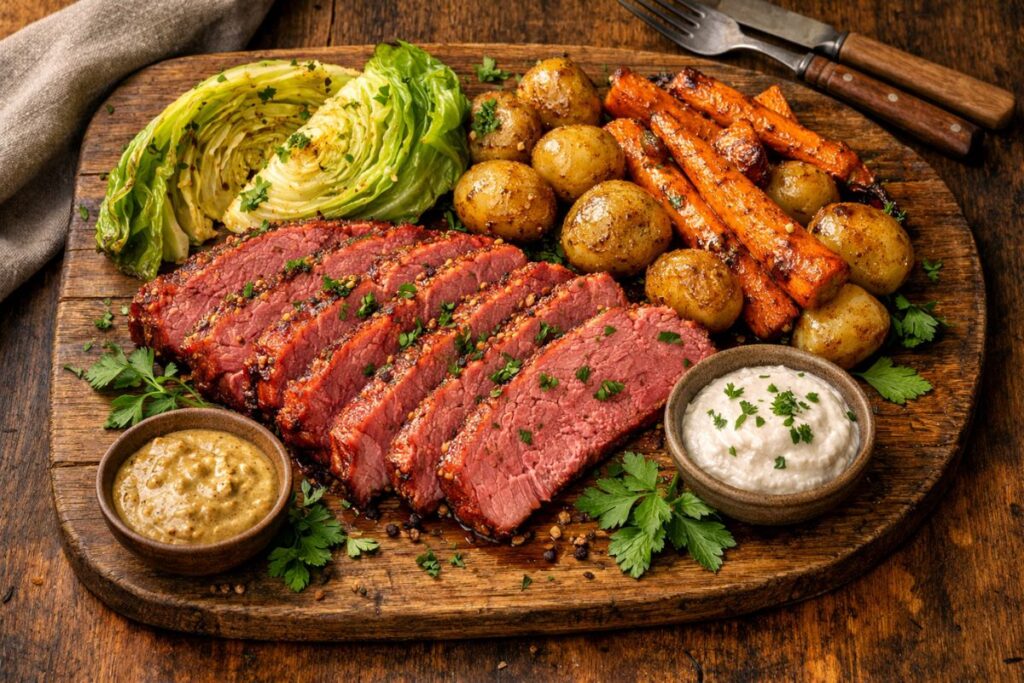
A great dish deserves a great presentation.
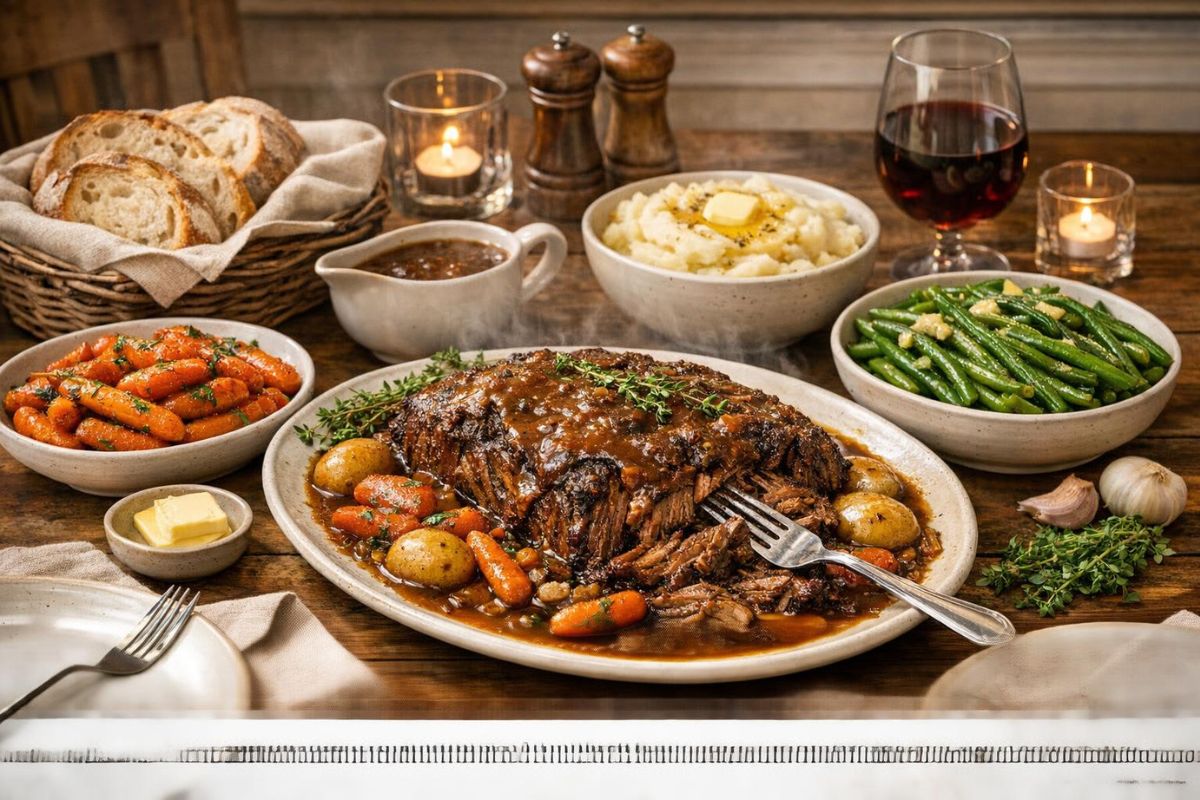
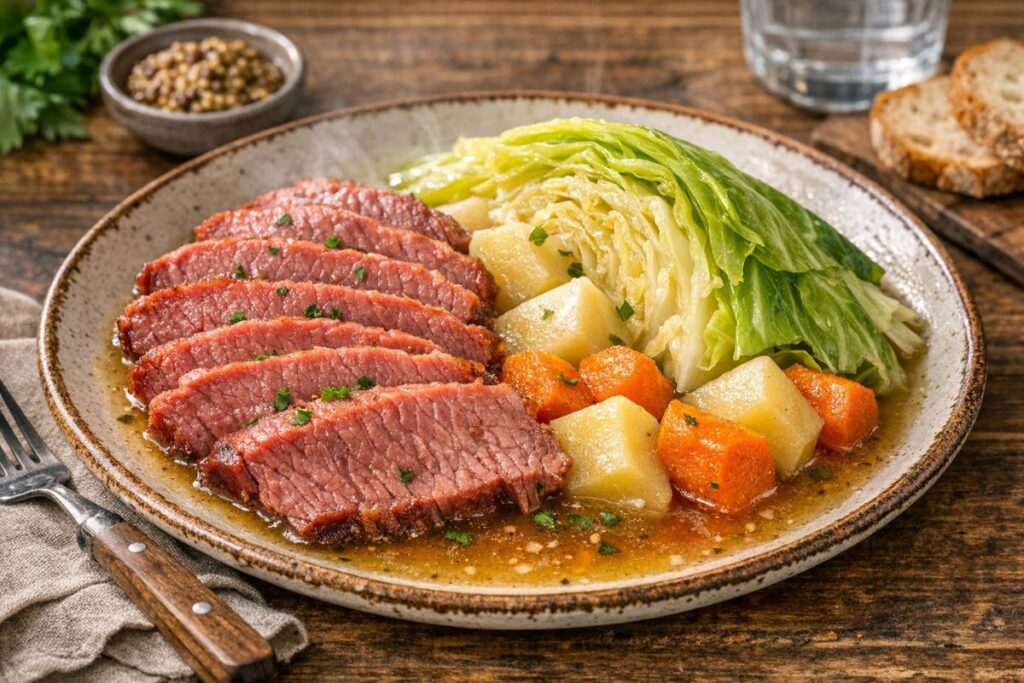
Slice the corned beef against the grain and arrange it in a fan across a serving platter. Place cabbage wedges and roasted vegetables around it to create contrast and visual appeal.
Finish with a sprinkle of fresh parsley for a pop of color. Serve with horseradish cream or mustard sauce on the side to give guests options.
For presentation, a rustic wooden board or cast-iron dish adds a traditional, hearty feel. If you prefer a cleaner, modern look, a simple white platter lets the colors of the dish shine.

Nutrition (Per Serving)
- Calories: 485 kcal
- Protein: 32g
- Carbs: 22g
- Fat: 28g
- Sodium: 1150mg
The Science Behind the Tenderness
Brisket is rich in collagen—a tough connective tissue.
At temperatures between 160°F and 180°F, collagen transforms into gelatin. This creates that luxurious, melt-in-your-mouth texture.
The apple cider plays a crucial role:
- Its acidity weakens protein bonds
- Speeds up tenderization
- Enhances overall flavor complexity
Pro Tip
Think of the simmer like a “gentle smile”—not a boil.
A rolling boil ruins texture. A soft simmer builds it.
Dutch Oven vs. Slow Cooker Efficiency
Both methods work—but they behave differently.
Dutch Oven
- Better flavor development (thanks to searing and evaporation)
- More control over heat
Slow Cooker
- Convenient and consistent
- Ideal for busy schedules
For the best corned beef and cabbage recipe slow cooker version, always include apple cider or a splash of vinegar to compensate for the sealed environment.
Probiotic-Rich Cabbage Preparation
While traditional boiling reduces nutritional value, this method preserves more of cabbage’s benefits:
- Short cook time maintains structure
- Retains mild probiotic qualities
- Prevents sulfur-heavy breakdown
The result? A fresher, brighter component that complements the richness of the beef.
Flavor Enhancements You Can Try
Once you master the base recipe, experiment:
- Add mustard seeds for tang
- Finish with fresh parsley for brightness
- Serve with whole-grain mustard or horseradish cream
Corned beef and cabbage Frequently Asked Questions:
What is the best cut for corned beef and cabbage?
The flat cut is ideal for clean slicing and presentation, making it the preferred choice for the best corned beef and cabbage.
What makes this the best corned beef and cabbage this slow cooker version of the recipe?
The addition of apple cider accelerates collagen breakdown while enhancing flavor—something water alone cannot achieve.
How do I slice corned beef so it isn’t tough?
Always slice against the grain. Look for the direction of muscle fibers and cut perpendicular to them.
What if my corned beef is too salty?
Rinse thoroughly before cooking
Add a halved potato during cooking to absorb excess salt
Why is my cabbage gray?
It’s overcooked. Adding it in the final 15 minutes preserves its color and texture.
How long do leftovers last?
3–4 days in the fridge.
And here’s a twist: leftovers make incredible fusion dishes—think crispy corned beef smashed into tortillas.
What is the best cut for corned beef and cabbage?
The flat cut is ideal for clean slicing and presentation, making it the preferred choice for the best corned beef and cabbage.
What makes this the best corned beef and cabbage this slow cooker version of the recipe?
The addition of apple cider accelerates collagen breakdown while enhancing flavor—something water alone cannot achieve.
How do I slice corned beef so it isn’t tough?
Always slice against the grain. Look for the direction of muscle fibers and cut perpendicular to them.
What if my corned beef is too salty?
Rinse thoroughly before cooking
Add a halved potato during cooking to absorb excess salt
Why is my cabbage gray?
It’s overcooked. Adding it in the final 15 minutes preserves its color and texture.
How long do leftovers last?
3–4 days in the fridge.
And here’s a twist: leftovers make incredible fusion dishes—think crispy corned beef smashed into tortillas.
To deepen your mastery of slow-cooked comfort food, explore these related recipes:
- For a richer, fall-apart beef experience, try our Slow Cooker Beef Chuck Roast, which uses a similar low-and-slow collagen breakdown technique.
- Looking for a bold fusion twist? This dish pairs beautifully with the flavor layering approach in our Korean BBQ Tacos.
- If you enjoy one-pot comfort meals, don’t miss our Homemade Chicken and Dumplings, another classic elevated with precision cooking methods.
For food safety and historical context, these trusted sources add depth and credibility:
- Review the USDA Safe Minimum Internal Temperature Guidelines to ensure your brisket is cooked safely and properly.
- Learn more about the cultural roots of this dish through the Irish Diaspora and Culinary Evolution research available via the Smithsonian Institution.
A Dish That Transcends Origin
Despite its strong association with Irish-American tradition, corned beef and cabbage is more than a cultural artifact.
It’s a universal idea:
Take something tough. Give it time. Treat it with care. Transform it into something deeply comforting.
That’s what happened in that quiet kitchen at midnight.
No ceremony. No audience. Just a pot, a few tired people, and the unmistakable signal that the day was finally over.
Final Thought
If you’ve only ever known corned beef and cabbage as a heavy, overly salty, overcooked dish, this method will change your perspective entirely.
This isn’t just the best corned beef and cabbage recipe—it’s a reminder that even the simplest meals can become extraordinary when approached with intention.
And sometimes, the best meals aren’t served under bright lights.
They’re shared quietly, after midnight, when the world slows down just enough for you to taste them properly.