The Orchard of Whispers: A Story of Texture and Time
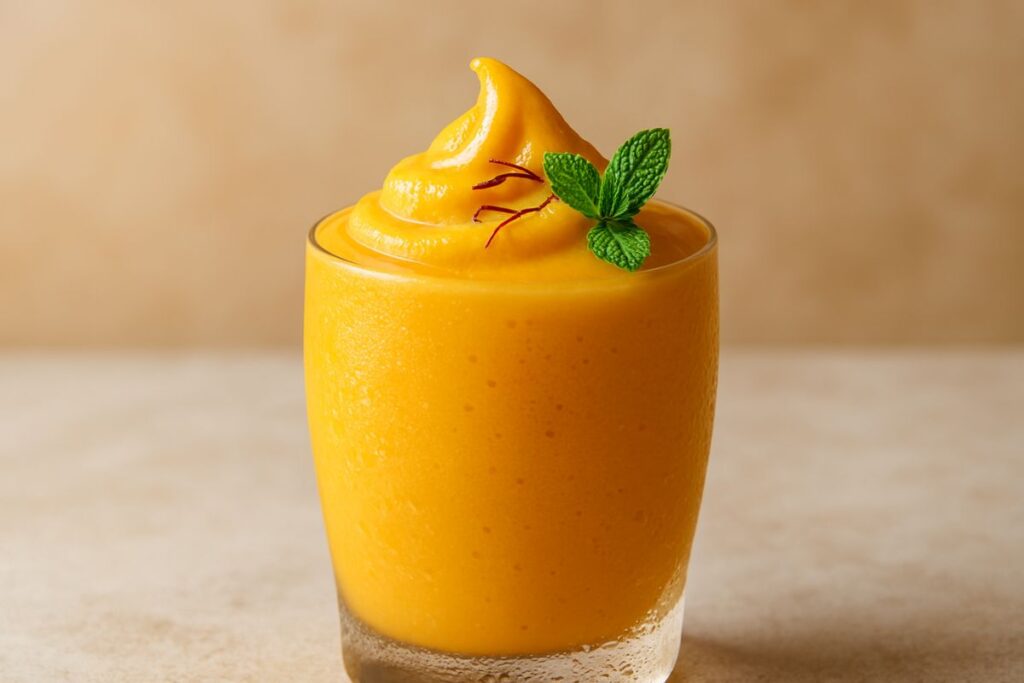
Most people think a mango smoothie is simple. Toss fruit into a blender, add milk or juice, maybe some ice—and you’re done. It’s efficient, quick, and functional.
But that assumption misses something essential: texture is flavor.
My understanding changed forever in a coastal village in South Asia, in a place locals called the Orchard of Whispers. It wasn’t on any tourist map. No curated menus. No smoothie bars with neon signs advertising a “fruit smoothie mango” blend.
Just trees, salt air, and silence.
It was there that I met Ayesha.
She didn’t use a blender. She didn’t measure ingredients. She didn’t rush.
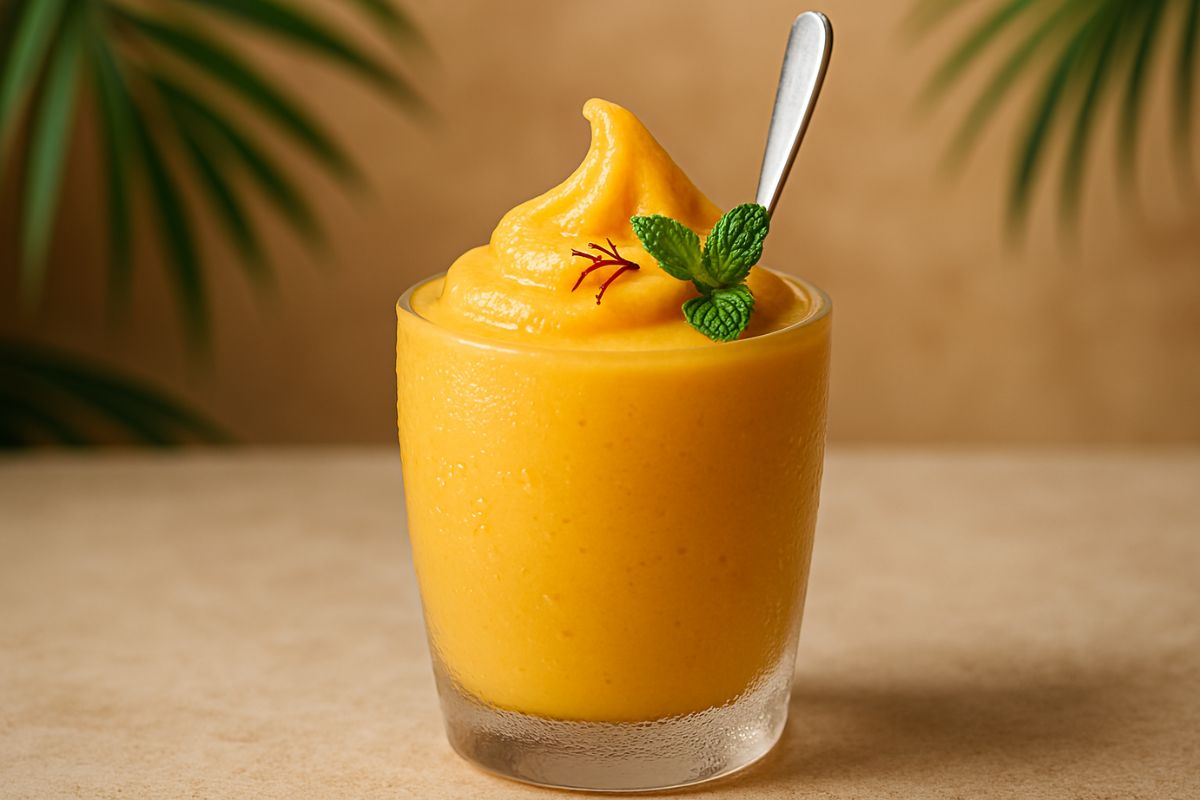
While tourists nearby drank diluted, ice-heavy mango and fruit smoothie drinks that separated into layers within minutes, Ayesha created something entirely different. Her mango fruit shake had the density of custard and the chill of winter. It didn’t drip—it held.
When I asked her how, she simply smiled and said:
“Ice is impatience. Mango needs time.”
Then she added a pinch of salt.
That moment redefined everything I knew about making a mango and smoothie. Because what she understood—intuitively—is now backed by food science:
- Ice dilutes flavor
- Temperature affects viscosity
- Salt enhances sweetness
- Texture determines satisfaction
This recipe is built on her philosophy:
No ice. No shortcuts. No compromise.
Why Most Mango Smoothies Fail (And How to Fix It)
Search online for a mango mix smoothie, and you’ll see the same pattern:
- Ice cubes
- Juice fillers
- Low-fat liquids
- Quick blends
The result?
A drink that starts strong but quickly turns into flavored water.
The Core Problem: Dilution
Ice melts. That’s not a flaw—it’s physics. But in a mango smoothie with milk, melting ice destroys:
- Flavor concentration
- Texture stability
- Mouthfeel richness
Within minutes, your smoothie becomes thin, pale, and forgettable.
The Zero-Dilution Philosophy
To fix this, we replace water-based cooling with structure-based cooling.
Instead of ice:
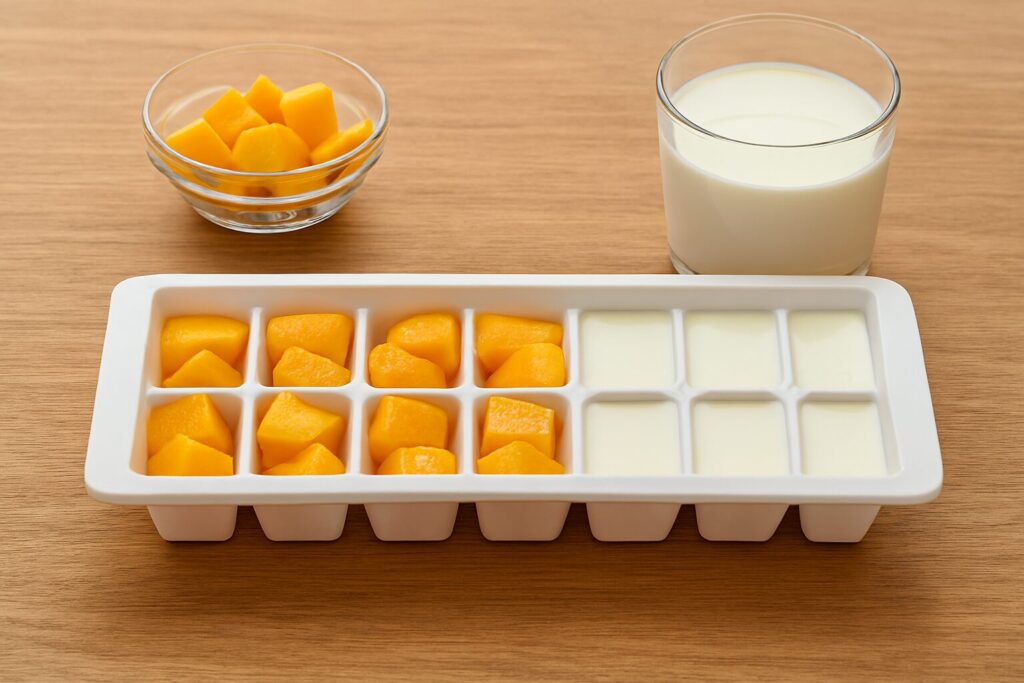
- We freeze mango
- We freeze milk
- We control temperature through ingredients—not dilution
This transforms a basic milk and mango smoothie into something closer to gelato.
The Triple-Freeze Technique ( Texture Breakthrough)
This method is the heart of the recipe—and what separates a basic mango fruit shake from a premium experience.
1. Frozen Mango (Structure)
Frozen mango provides thickness and body. It replaces ice entirely.
2. Frozen Milk Cubes (Creaminess)
Instead of watering down your drink, frozen milk enhances richness as it melts.
3. Fresh Mango (Fluidity)
Fresh mango helps the blender move naturally—no added liquids needed.
Together, they create a perfectly balanced mango smoothie mix that is:
- Thick but drinkable
- Cold but not icy
- Rich but not heavy
The Science of “Fruit Blooming”
Here’s where things get interesting.
When fruit is frozen and then blended, something subtle happens:
- Cell walls break down
- Natural sugars disperse evenly
- Aromatic compounds intensify
This process is what we call fruit blooming.
In a fruit smoothie mango, blooming creates:
- Deeper sweetness
- More uniform texture
- Enhanced aroma
It’s why frozen fruit (used correctly) tastes better than fresh in smoothies.
The Salt-Bloom Effect: Small Ingredient, Massive Impact
Adding salt to a mango and milk smoothie sounds strange—but it’s one of the most important steps.
What Salt Actually Does:
- Suppresses bitter notes
- Amplifies sweetness
- Enhances aroma
In culinary science, this is called a flavor bridge.
In this mango milk shake, the salt doesn’t make it salty—it makes it vivid.
Without it, your smoothie tastes flat.
With it, the mango tastes like it’s in high definition.
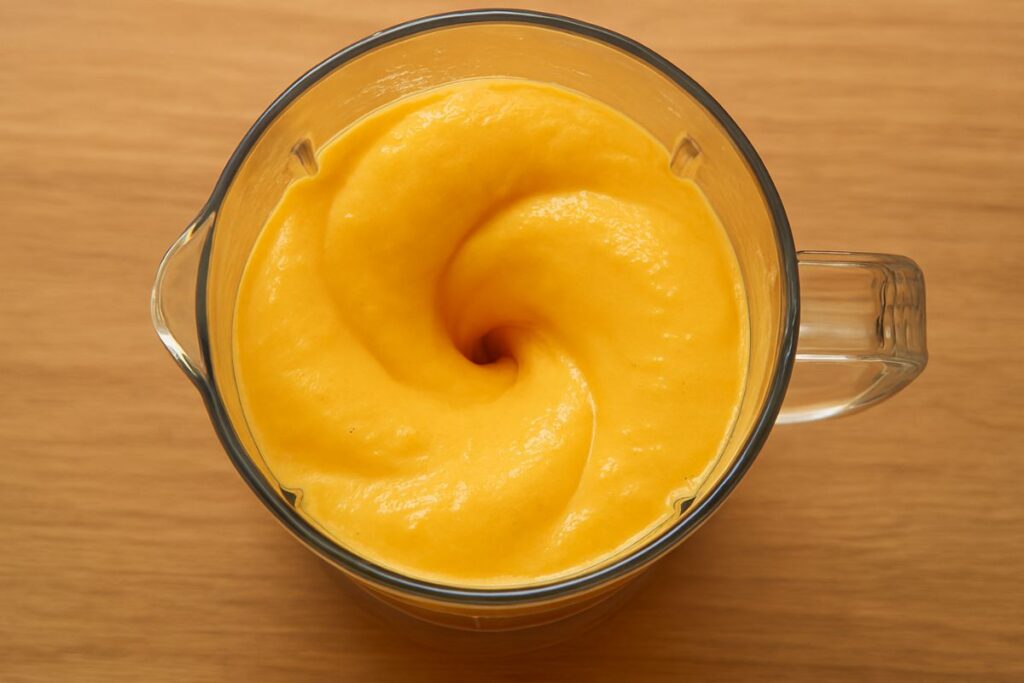
Choosing the Right Mango: The Foundation of Flavor
Not all mangoes are equal—especially for a mango smoothie.
Best Choices:
- Ataulfo (Honey Mango): buttery, non-fibrous
- Alphonso: intensely aromatic and sweet
Avoid:
- Fibrous varieties (unless blended longer)
Ripeness Test:
- Smells fragrant at the stem
- Slightly soft to the touch
A perfect mango eliminates the need for added sugar in your mango mix smoothie.
The Role of Milk: Turning Smoothie into Luxury
Milk isn’t just a liquid—it’s a texture enhancer.
In a mango smoothie with milk, it:
- Adds fat for creaminess
- Stabilizes the blend
- Enhances nutrient absorption
Options:
- Whole milk → classic richness
- Coconut milk → tropical depth
- Almond milk → lighter version
This is what transforms a basic drink into a mango milk shake experience.
The Recipe: The “Velvet Sunset” Mango Smoothie
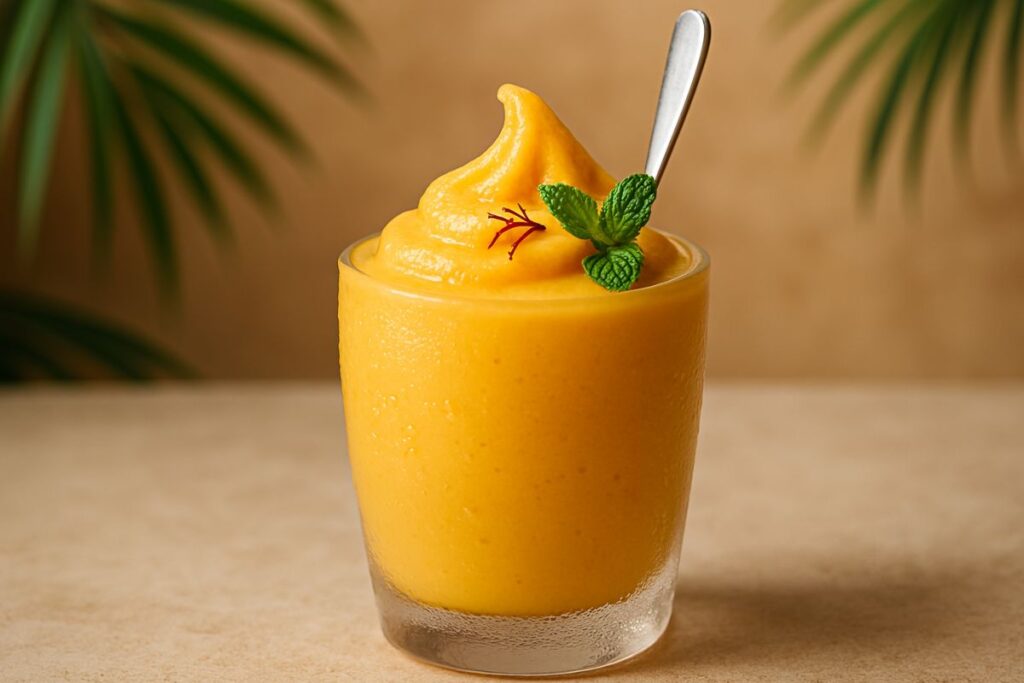
No Ice Beginner Friendly The “Velvet Sunset” Mango Smoothie
Equipment
- 1 High-speed blender (900W or higher)
- 1 Silicone ice cube tray
- 1 Sharp knife
- 1 Cutting board
- 1 Rubber Spatula
- 1 Measuring cups
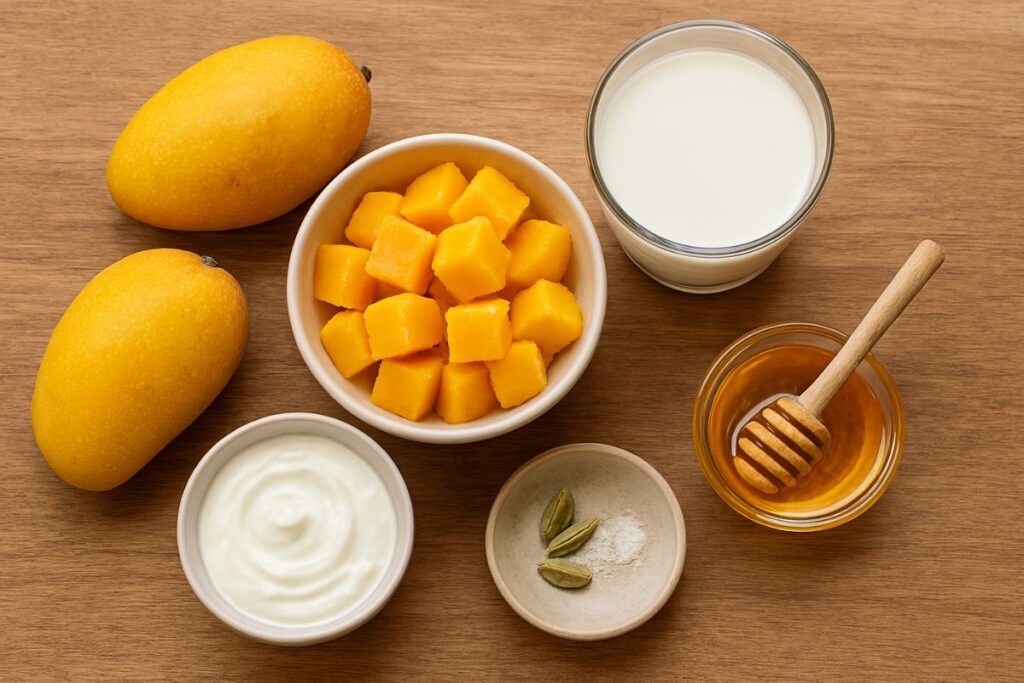
Ingredients
- 2 ripe mangoes split fresh + frozen
- 1 cup milk frozen into cubes
- ½ cup Greek yogurt
- 1 tsp honey optional
- Pinch of salt
- ¼ tsp cardamom
Instructions
Step 1: Freeze Smart
- Freeze milk in cubes. Freeze half the mango.
Step 2: Build the Base
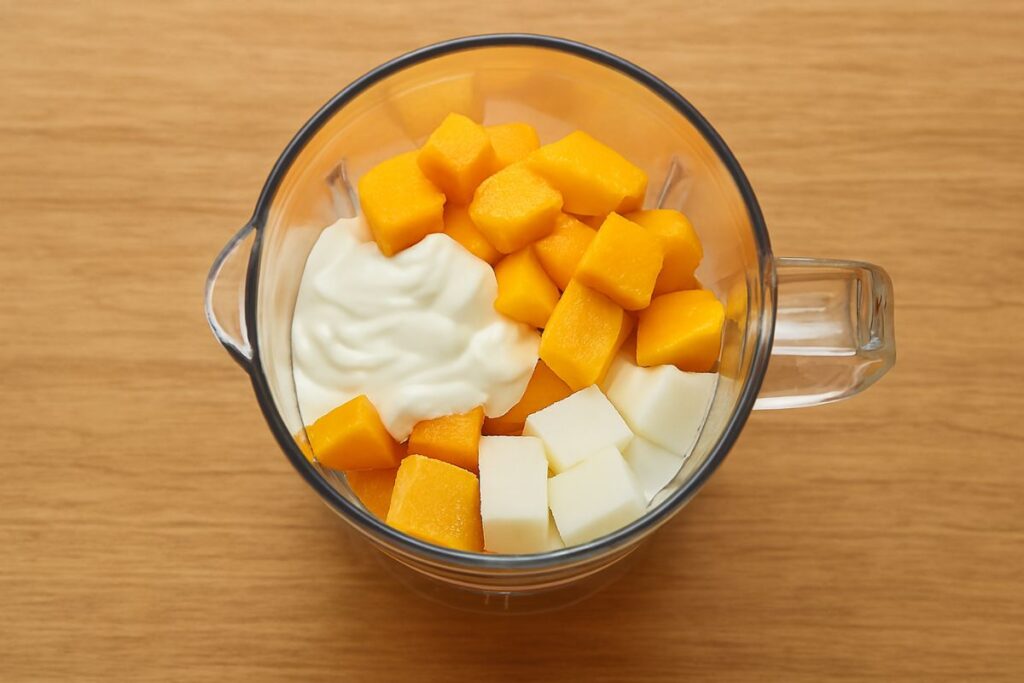
- Add fresh mango, yogurt, honey, and cardamom.
Step 3: Add the Cold Core
- Add frozen mango and milk cubes.
Step 4: Salt Bloom
- Add a pinch of salt on top.
- Step 5: Blend
Step 5: Blend
- Start low, increase to high. Blend 45–60 seconds.
Step 6: Serve Immediately
- Pour into a chilled glass.
Video
Notes
Calories: 220–260 kcal
Protein: 6–8 g
Carbohydrates: 35–40 g
Sugars (Natural): 28–32 g
Fat: 6–9 g
Fiber: 3–5 g
Vitamin C: ~60–70% DV
Vitamin A: ~25–30% DV
Potassium: ~300–400 mg Note: Video for reference only — follow the recipe for exact method.
Texture Goals: What “Perfect” Looks Like
Your smoothie should:
- Hold its shape briefly when poured
- Coat a spoon like custard
- Feel dense but smooth
If it’s runny → too much liquid
If it’s icy → blended too long
Nutritional Powerhouse: Why Your Body Needs This
Mangoes are more than just delicious—they’re packed with essential nutrients your body needs daily.
According to Healthline, mangoes are rich in:
- Vitamin C (immune support)
- Vitamin A (eye health)
- Antioxidants (cell protection)
They also contain beneficial plant compounds that support digestion and skin health.
Research highlighted by Harvard Health Publishing shows that potassium-rich fruits like mango help regulate blood pressure and support heart health.
👉 By combining mango with milk and yogurt, this mango smoothie with milk improves absorption of fat-soluble vitamins—making your mango fruit shake both indulgent and functional.
For a broader understanding of balanced nutrition and how fruit-based drinks fit into a healthy diet, resources like Mayo Clinic provide medically reviewed guidance on daily nutrition habits.
Pairing Ideas for a Complete Experience
To turn this into a full meal:
- Golden Quinoa Glow Bowl → protein + fiber
- Festive Cranberry Orange Sparkler → contrast flavor
- The Ultimate Silk-Road Pistachio Cheesecake Recipe → indulgent pairing
Common Mistakes to Avoid
1. Using Ice
Destroys texture and flavor.
2. Over-blending
Melts structure → watery smoothie.
3. Unripe Mango
Leads to sour, flat taste.
4. Skipping Salt
Misses the bloom effect entirely.
Advanced Variations
Tropical Boost
Add pineapple for a brighter mango and smoothie profile.
Protein Version
Add protein powder—great post-workout.
Dessert Version
Add saffron + extra yogurt → ultra-rich mango milk shake.
Mango Smoothie FAQ’s
Can I use store-bought mango smoothie mix?
Yes—but ensure no added sugar or syrup.
Why is my smoothie thin?
Too much liquid or not enough frozen components.
Can I make it vegan?
Yes—use coconut milk and plant yogurt.
Can I make this a “mango mix smoothie” using frozen store-bought bags?
Yes, but ensure the bag contains only 100% fruit. Many “mango smoothie mix” products contain added corn syrup or preservatives. If using store-bought, add an extra tablespoon of yogurt to compensate for the loss of fresh enzymes.
Why does my mango and smoothie separate after 10 minutes?
Separation happens when there is too much water (from ice) or thin juice. The “Velvet Sunset” method avoids this by using milk cubes and frozen pulp, creating a stable emulsion that stays thick for up to an hour.
Is a mango milk shake healthy?
While “shake” implies dessert, this version uses no refined sugar or ice cream. By using the natural sweetness of the mango and the protein of the milk, you get the indulgence of a shake with the macro-nutrients of a meal.
What is the best mango for a fruit smoothie mango?
Ataulfo (Honey) mangoes are superior because they are non-fibrous and “buttery.” If you use Tommy Atkins mangoes, you may need to blend for an extra 30 seconds to break down the strings.
Final Thoughts: The Philosophy of Texture
A mango smoothie isn’t just about ingredients—it’s about control.
Control of:
- Temperature
- Water content
- Texture
- Balance
Once you remove ice and embrace the zero-dilution method, everything changes.
You’re no longer making a drink.
You’re crafting an experience.