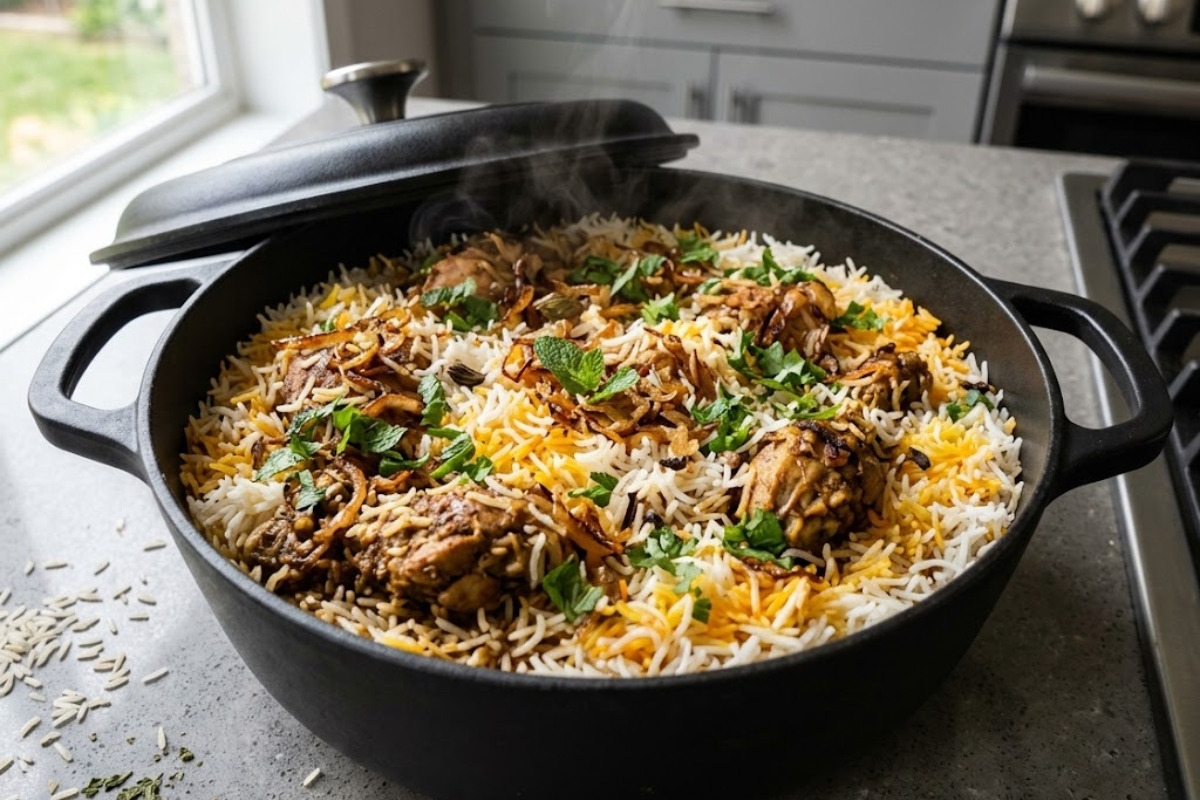
Recipe Overview & Key Metrics
- Prep Time: 25m | Cook Time: 45m | Total Time: 1h 10m
- Servings: 6
- Flavor Profile: Fragrant, savory, warmly spiced, and deeply aromatic
- Texture: Tender, juicy chicken with fluffy, separate basmati rice
- Difficulty Level: Easy to Moderate
- Cooking Method: Dutch Oven Dum Cooking
- Make Ahead: Yes, marinate the chicken up to 24 hours ahead
- Freezer Friendly: Best enjoyed fresh; freezing can soften the rice and reduce its texture
Kitchen Notes & Testing Insights
Getting chicken biryani right at home is less about complicated equipment and more about controlling heat, moisture, and rice texture. During testing, the biggest challenge was finding a method that cooked the chicken thoroughly while keeping the basmati rice fluffy instead of wet or broken.
A tightly covered Dutch oven produced the most consistent results. Compared with cooking the layered biryani directly over a stovetop flame, the oven provides gentler, more even heat and reduces the risk of scorching the bottom layer. Once sealed, the trapped steam helps finish the partially cooked rice while the marinated chicken cooks underneath.
The rice preparation also makes a noticeable difference. Soak aged basmati rice for about 30 minutes, then parboil it briefly until the grains are only partially cooked. The rice should still have a firm center because it will continue cooking during the final dum stage. Overcooking the rice before layering is one of the easiest ways to end up with soft, clumpy biryani.
I also found that not rushing the final resting period matters. After the Dutch oven comes out of the oven, let the biryani remain covered for about 10 minutes. This allows the steam to redistribute through the rice and makes the grains easier to separate when serving.
The result is a practical home-kitchen approach to chicken dum biryani: tender, flavorful chicken, fragrant basmati rice, and distinct grains without requiring a traditional clay pot or elaborate cooking setup.
The Science of Perfect Texture: Starch Gelatinization & Yogurt Marinade
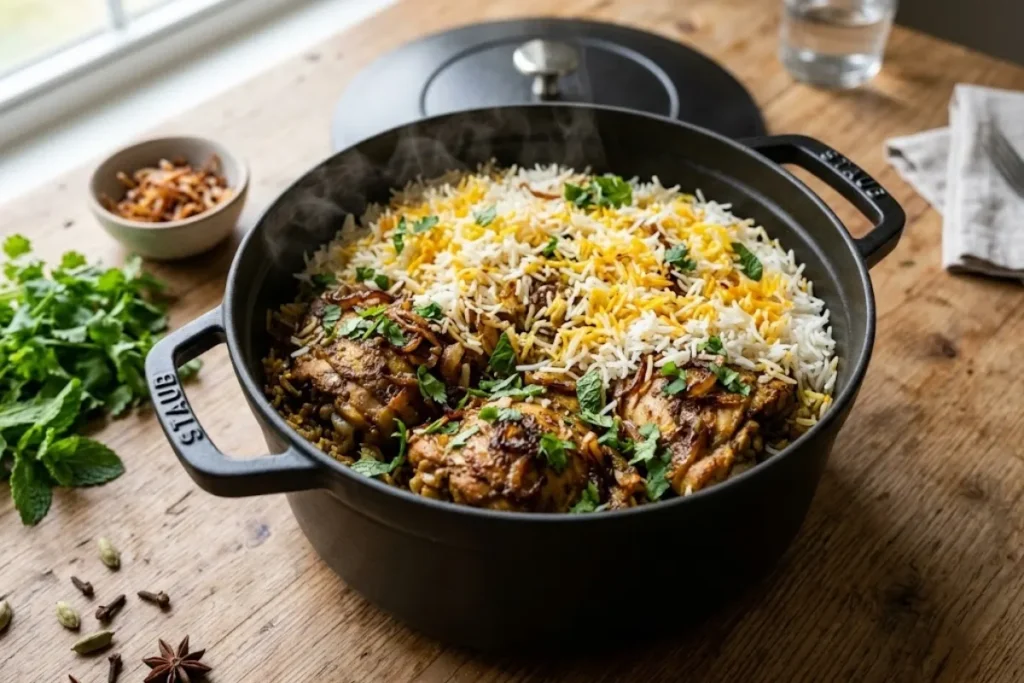
Perfect chicken biryani depends on controlling two things: how the rice absorbs water and how the yogurt marinade behaves under heat.
Basmati rice contains relatively high levels of amylose, which helps cooked grains remain separate. During soaking and parboiling, water penetrates the rice and causes the starch granules to swell and gelatinize. The trick is to stop cooking before the grains are fully tender. Parboiling the rice to roughly 70% doneness gives it enough structure to finish cooking during the sealed dum stage without becoming soft or mushy.
Rinsing the rice thoroughly before soaking also helps remove excess surface starch, reducing the chance of clumping. Once the partially cooked rice is layered over the chicken, trapped steam gently finishes the grains while allowing them to absorb the aromatic cooking juices.
The yogurt marinade performs a different job. Its lactic acid helps tenderize the chicken gradually, while the yogurt provides moisture and a creamy base for spices to cling to the meat. For the smoothest result, use full-fat yogurt and avoid exposing the marinade to sudden, intense heat. The gentle, enclosed cooking environment of a Dutch oven helps the yogurt-based marinade cook into the chicken rather than separating aggressively.
The payoff is the texture every good biryani should have: fluffy, distinct rice grains surrounding juicy, deeply seasoned chicken.
Essential Kitchen Equipment Checklist
- 5.5-Quart Heavy-Bottom Dutch Oven: Holds steady, even heat for the final dum cooking stage.
- Large Stockpot: Gives the basmati rice plenty of room to cook evenly.
- Fine-Mesh Strainer: Lets you drain parboiled rice quickly to prevent overcooking.
- Aluminum Foil: Optional for creating an extra-tight steam seal beneath the lid.
- Measuring Spoons: Help keep the spice balance consistent, especially when making the recipe for the first time.
Ingredient Selection & Common Mistakes
The best chicken biryani starts with ingredients that handle high-heat cooking well: long-grain basmati rice, flavorful chicken, full-fat yogurt, fresh herbs, and aromatic spices.
- Bone-In, Skinless Chicken Thighs: These stay juicy during the covered cooking process and add richness to the chicken layer. Common Mistake: Boneless chicken breasts can become dry if overcooked, while skin-on chicken can release more fat than needed.
- Long-Grain Basmati Rice: Choose good-quality aged basmati with long, slender grains. It produces the fluffy, separate texture that makes biryani distinctive. Common Mistake: Substituting short-grain rice can produce a much softer, stickier result.
- Full-Fat Plain Yogurt: Yogurt adds moisture, mild acidity, and richness to the chicken marinade. Greek yogurt works too, but thin it slightly if it is exceptionally thick. Common Mistake: Using sweetened or flavored yogurt, which can throw off the flavor completely.
- Chicken Biryani Masala & Whole Spices: A combination of cumin, coriander, cardamom, cloves, cinnamon, and chili creates the warm aromatic backbone. Common Mistake: Using old, stale spices. Freshly opened spices make a noticeable difference.
- Fresh Mint & Cilantro: These herbs add freshness that balances the rich chicken and spices. Common Mistake: Adding all the herbs too early. Reserve some for layering and garnishing.
- Saffron: A small amount of saffron adds delicate floral aroma and golden color. Soak the strands in a little warm milk or water for several minutes before drizzling over the rice. Common Mistake: Using too much saffron. Its flavor should be subtle rather than overpowering.
- Fried Onions: Crispy golden onions add sweetness, texture, and depth to the finished biryani. Store-bought fried onions can save time, but homemade onions offer better freshness. Common Mistake: Burning the onions. Dark brown edges can quickly turn bitter.
Step-by-Step Instructions
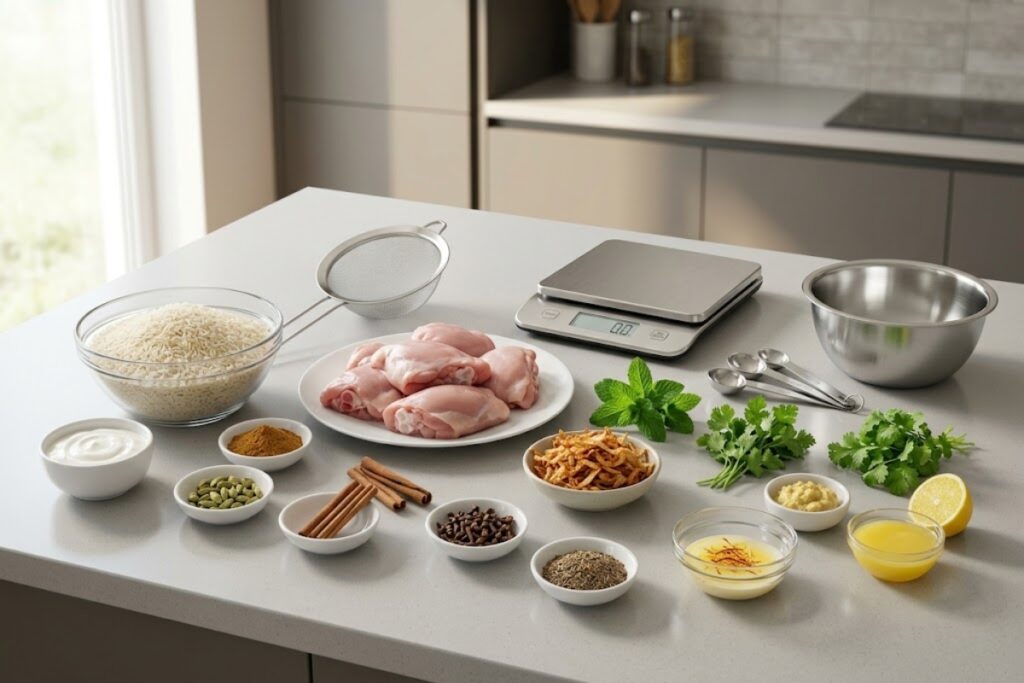
Layering partially cooked basmati rice over seasoned chicken and finishing it in a tightly sealed Dutch oven creates the gentle steam environment needed for flavorful dum biryani.
- Marinate the Chicken: Add 2 pounds of skinless, bone-in chicken thighs to a large bowl. Mix in 1/2 cup full-fat Greek yogurt, 1 tablespoon ginger-garlic paste, 1 1/2 tablespoons chicken biryani masala, 1 teaspoon salt, and 1 tablespoon lemon juice. Coat the chicken thoroughly, cover, and refrigerate for at least 30 minutes. For deeper flavor, marinate for 2 to 4 hours.

2. Soak and Parboil the Basmati: Rinse 2 cups of aged basmati rice several times until the water runs mostly clear. Soak in cool water for 30 minutes, then drain. Bring 8 cups of water to a rolling boil with 1 1/2 tablespoons salt, 2 green cardamom pods, and 1 bay leaf. Add the drained rice and cook for about 5 minutes, or until the grains are partially cooked with a firm center. Drain immediately.
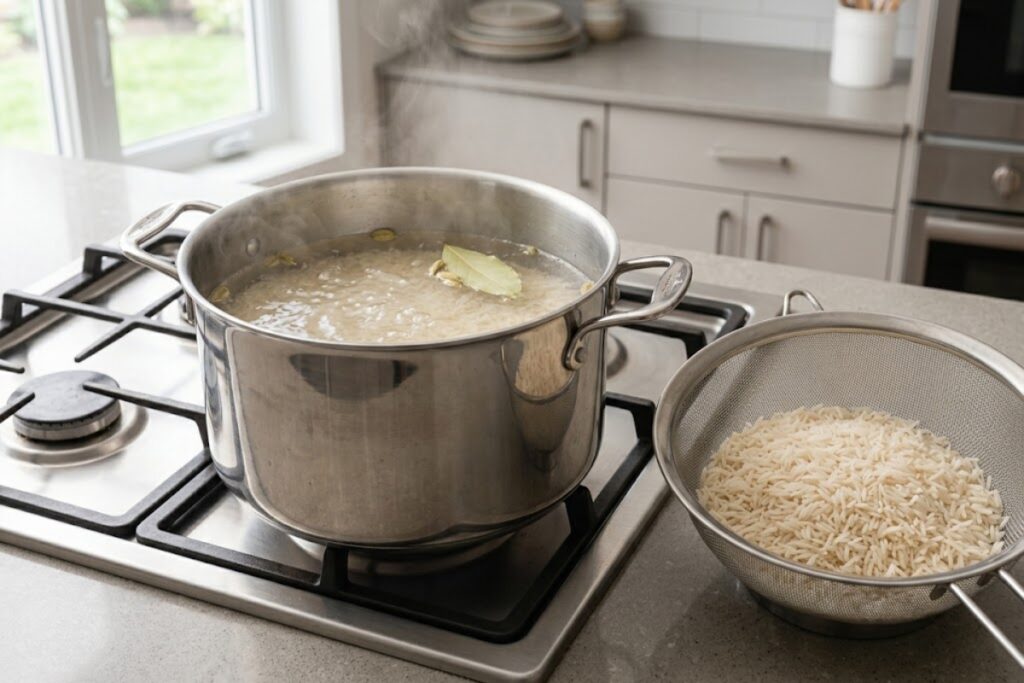
3. Prepare the Chicken Base: Heat 2 tablespoons ghee or neutral oil in a 5.5-quart Dutch oven over medium heat. Carefully arrange the marinated chicken in a single layer. Sear briefly on both sides, just until lightly browned. The chicken does not need to be cooked through at this stage. Turn off the heat and arrange the pieces evenly across the bottom of the pot.
4. Layer the Biryani: Spread the parboiled rice gently over the chicken without compacting it. Sprinkle 1/2 cup fried onions, chopped fresh mint, and cilantro over the rice. Drizzle the bloomed saffron milk across the surface, then finish with 1 tablespoon melted ghee.
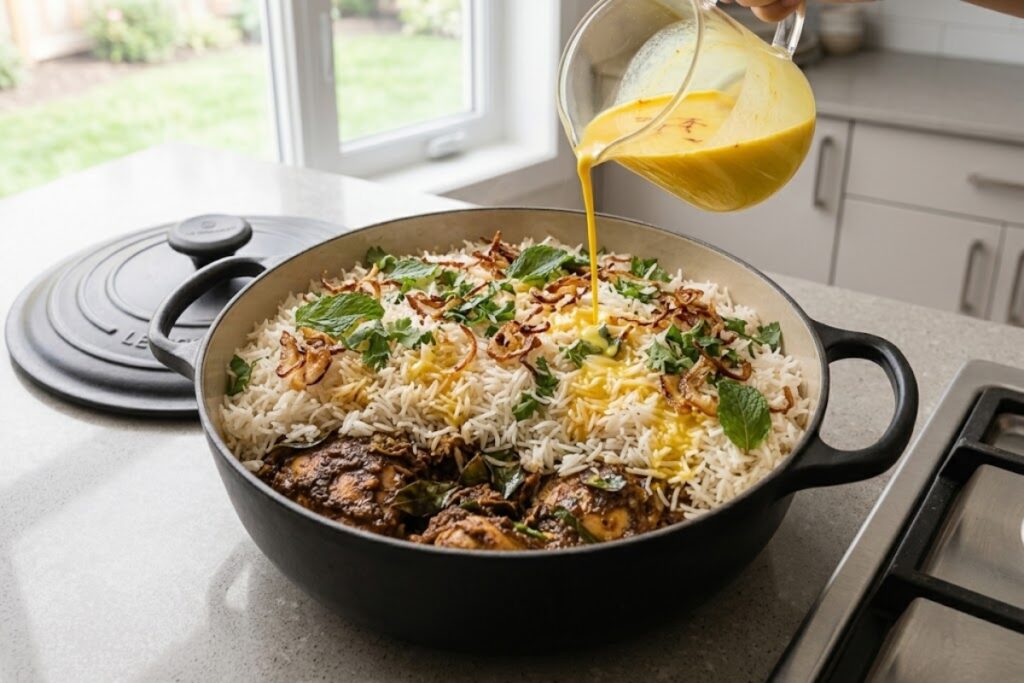
5. Seal and Cook the Dum: Cover the Dutch oven tightly with aluminum foil, then place the lid firmly on top. Transfer to a preheated 350°F (175°C) oven and cook for about 30 minutes. Because chicken pieces and ovens vary, check the thickest chicken piece with an instant-read thermometer. It should reach 165°F (74°C).
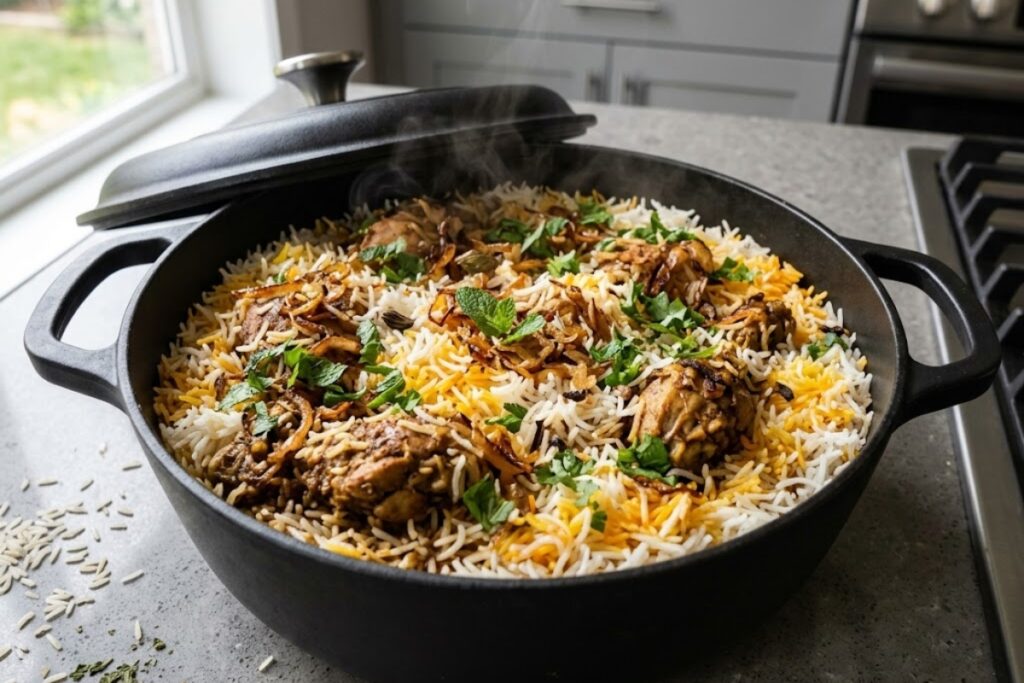
6. Rest Before Serving: Remove the Dutch oven from the oven and leave it covered for 10 minutes. This resting period allows the trapped steam to redistribute through the rice. Open carefully, then gently lift and fold the rice with a wide spatula rather than aggressively stirring it. Serve from the bottom upward so each portion gets chicken, aromatic rice, and caramelized onions.
Troubleshooting Common Biryani Mistakes
Small adjustments to rice cooking, moisture, and heat can rescue most homemade biryani problems.
- Rice Turned Gummy or Soggy: The most common causes are overcooking the rice during parboiling or using a marinade that is excessively watery. Fix: Cook the rice only until the grains are partially cooked with a firm center, then drain it immediately and thoroughly before layering.
- Chicken Stuck or Burned on the Bottom: Excessive direct heat can cause the yogurt marinade to scorch before the chicken finishes cooking. Fix: Use the 350°F oven method for more controlled heat. If cooking on the stovetop, place the Dutch oven over a heavy skillet or tawa to create a buffer from the flame.
- Rice Grains Feel Hard or Chalky: This usually means the rice did not receive enough moisture or steam escaped during dum cooking. Fix: Check that the lid is tightly sealed. If the rice is still undercooked, sprinkle 1–2 tablespoons of warm water over the surface, reseal, and cook for another 5–10 minutes.
- Chicken Is Not Fully Cooked: Cooking time can vary with chicken size and oven temperature. Fix: Check the thickest piece with an instant-read thermometer. Chicken should reach 165°F (74°C) before serving.
Chicken is safely cooked when the thickest part reaches 165°F (74°C), according to the USDA Food Safety and Inspection Service
Recommended Serving Ideas & Pairings
Balance the rich, aromatic chicken biryani with cool, fresh sides and a lightly sweet finish.
Serve the biryani hot with cucumber-mint raita, which adds a cool, creamy contrast to the warm spices. A simple cucumber and onion salad with lemon juice also brings freshness and crunch to the plate. For a regional comparison, explore our Authentic Kolkata Chicken Dum Biryani Recipe, which takes a different approach to this beloved dish.
Finish the meal with a small serving of Sheer Khurma, a creamy, gently spiced vermicelli dessert that complements the savory biryani beautifully.
Frequently Asked Questions
Can I make chicken biryani ahead of time?
Absolutely. You can marinate the chicken up to 24 hours ahead. Cooked biryani can also be refrigerated and reheated gently in a covered dish with a splash of water to restore moisture.
Can I use boneless chicken breast instead of thighs?
Yes, although thighs are more forgiving and stay juicier during dum cooking. If using chicken breast, cut it into large pieces and start checking for doneness earlier to avoid overcooking. The thickest piece should reach 165°F (74°C).
Why is my basmati rice breaking?
Overcooking and vigorous stirring are the usual culprits. Parboil the rice only until it has a firm center, drain it immediately, and let the finished biryani rest for 10 minutes before gently lifting the layers with a wide spatula.
Can I freeze cooked chicken biryani?
Yes, but fresh or refrigerated biryani generally has better rice texture. If freezing, cool it promptly, portion it into airtight containers, and reheat thoroughly. The rice may become slightly softer after thawing.
What is the best rice-to-water ratio for parboiling?
For this method, you don’t need a precise rice-to-water ratio. Cook the basmati in plenty of salted boiling water, similar to pasta, then drain it when the grains are about 70% cooked. This gives you better control over the final texture.
Recipe Card: Authentic Easy Chicken Biryani

Authentic Easy Chicken Biryani
Equipment
- 1 5.5-quart cast-iron Dutch oven
- 1 Large Stockpot:
- 1 Fine-mesh strainer
- 1 Aluminum foil
- 1 Instant-read thermometer
Ingredients
- 2 lbs bone-in skinless chicken thighs
- 2 cups aged long-grain basmati rice
- 1/2 cup full-fat plain Greek yogurt
- 1 1/2 tbsp chicken biryani masala
- 1 tbsp ginger-garlic paste
- 1 tbsp lemon juice
- 1/2 cup crispy fried onions birista
- 1/4 cup fresh mint leaves chopped
- 1/4 cup fresh cilantro chopped
- 1/4 tsp saffron strands
- 3 tbsp warm milk
- 2 tbsp ghee divided
- 1 tsp salt for the chicken marinade
- 1 1/2 tbsp salt for the rice cooking water
- 2 green cardamom pods
- 1 bay leaf
Instructions
- Marinate: Combine chicken, yogurt, biryani masala, ginger-garlic paste, lemon juice, and 1 tsp salt. Cover and refrigerate for at least 30 minutes or up to 4 hours.
- Prepare the Rice: Rinse 2 cups basmati rice until the water runs mostly clear. Soak for 30 minutes and drain. Boil 8 cups water with 1 1/2 tbsp salt, cardamom, and bay leaf. Add rice and cook for about 5 minutes, until partially cooked with a firm center. Drain immediately.
- Start the Chicken: Heat 1 tbsp ghee in the Dutch oven over medium heat. Add the marinated chicken and briefly sear both sides. Turn off the heat and arrange the chicken evenly.
- Layer: Spread the parboiled rice over the chicken. Add fried onions, mint, cilantro, saffron soaked in warm milk, and the remaining 1 tbsp melted ghee.
- Dum Cook: Cover the Dutch oven tightly with foil and then the lid. Bake at 350°F (175°C) for about 30 minutes.
- Check & Rest: Verify that the thickest chicken piece reaches 165°F (74°C). Remove from the oven and keep covered for 10 minutes. Gently fluff from the bottom with a wide spatula and serve hot.
Notes
Category: Main Course / Dinner / One-Pot Meals
Method: Dutch Oven Dum Cooking
Servings: 6
Prep Time: 25 minutes
Marinating Time: 30 minutes to 4 hours
Cook Time: 45 minutes
Total Time: About 1 hour 40 minutes, excluding optional longer marinating
Nutrition (per serving, 1 of 6): Approximately 560 calories, 38g protein, 18g fat, 62g carbohydrates, 3g fiber, and 850mg sodium.
Nutrition information is an estimate and will vary depending on the specific chicken, yogurt, fried onions, ghee, biryani masala, and amount of salt absorbed during cooking.