The Scent of Eid at 5 AM
In many South Asian homes, the end of Ramadan is not truly felt when the moon is sighted. It is felt when the kitchen fills with the fragrance of Sheer Khurma gently simmering on the stove.
For me, the story of this sheer khurma recipe begins at exactly 5:00 AM on Eid morning.
The house would still be silent. The streetlights outside were dim, and the early call to prayer echoed softly through the air. But inside the kitchen, something magical was happening. The stovetop crackled quietly while milk warmed in a heavy-bottomed pot, and the rhythmic clink-clink of a wooden spoon tapping the sides of the degchi created a soothing melody.
My mother moved with calm precision.
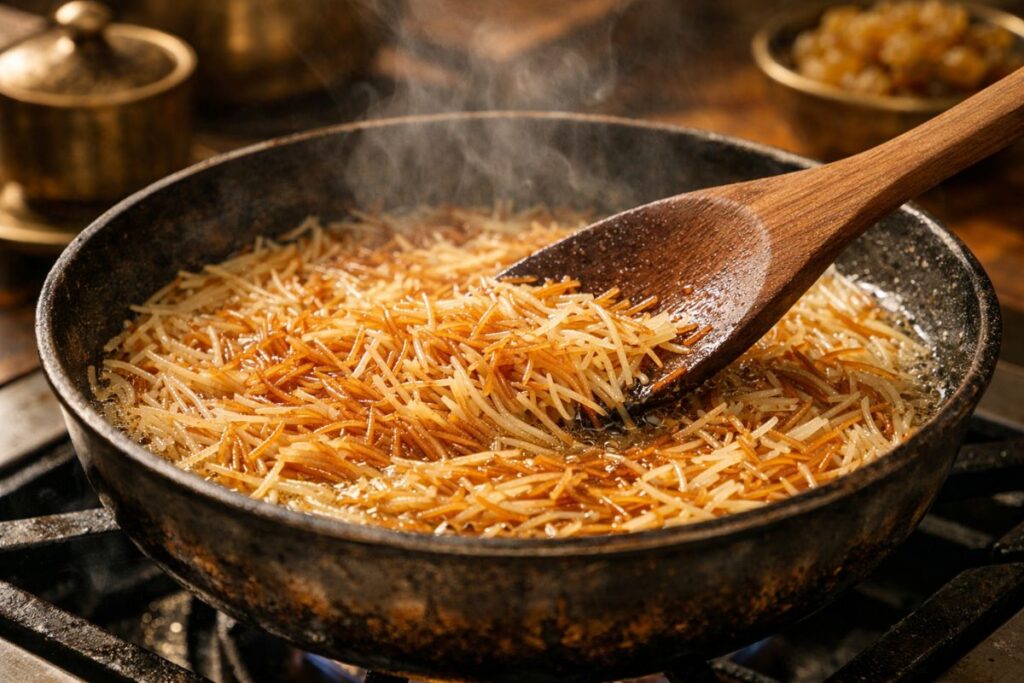
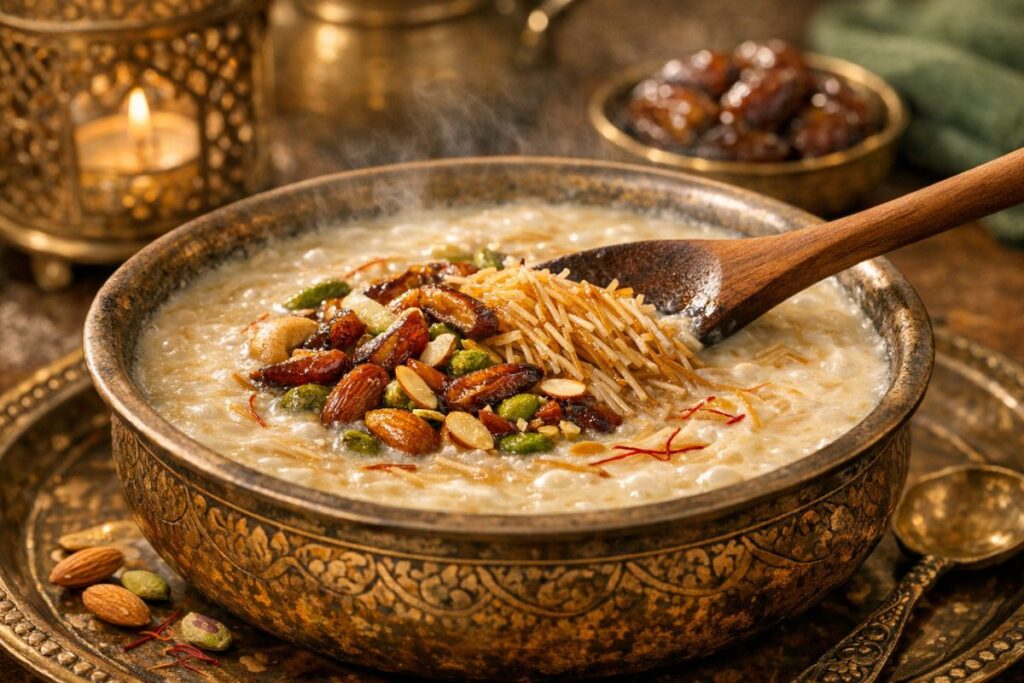
First came the vermicelli for sheer khurma. Pale strands of sheer khurma semiya dropped into hot ghee, instantly releasing a nutty aroma. Slowly they transformed from soft ivory to a deep golden bronze. She always said you could judge the success of the festival by how perfectly the vermicelli was roasted.
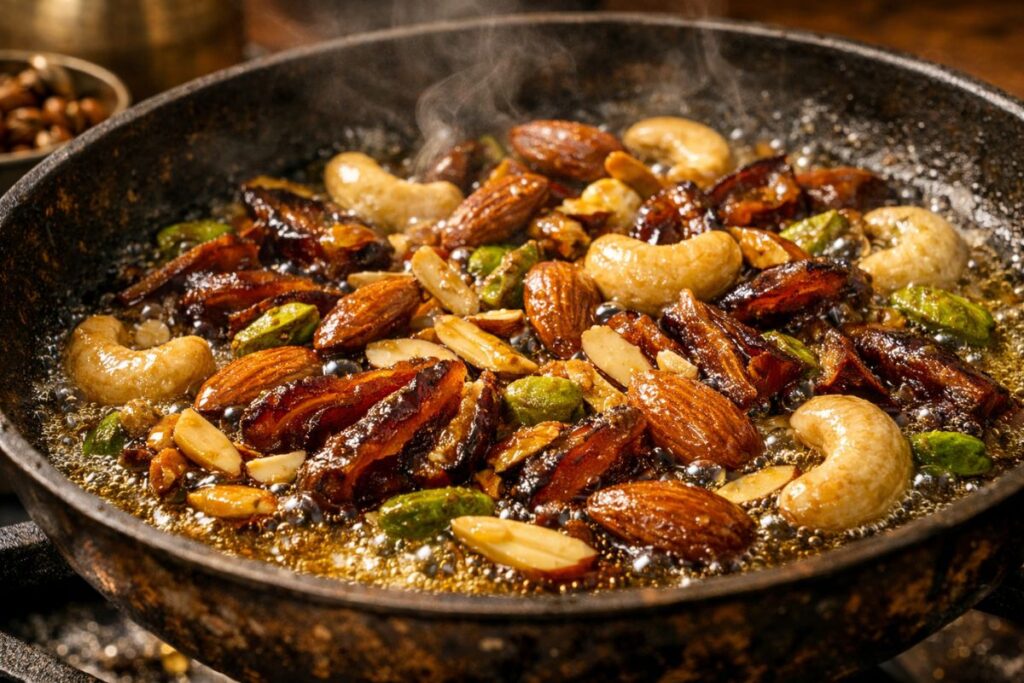
Then the dry fruits for sheer khurma joined the pan—almonds, pistachios, and cashews. As they toasted, the kitchen filled with a buttery fragrance that blended with the sweetness of simmering milk.
Sheer Khurma literally means “milk with dates.” The name itself is a beautiful reflection of its roots—derived from the Persian words for milk and dates—and as noted in the historical overview of Sheer Khurma, it remains a central symbol of hospitality across Central Asia and the Indian subcontinent.
But anyone who has grown up with this dish knows it is much more than a dessert.
It is the first spoonful of sweetness after a month of fasting. It is the taste of celebration after prayer. It is the moment when family gathers around a single pot, still in new Eid clothes, waiting for their first bowl.
My mother believed the heart of good sheer khurma preparation was patience. The milk must reduce slowly, she would say. Only then does the dessert develop its velvety texture and pale, creamy color.
Those mornings became the inspiration behind Dish Stories. Because sometimes, a recipe is not just instructions—it’s a memory waiting to be recreated.
And every Eid morning, when the smell of saffron, cardamom, and roasted semiya fills the air, I am instantly transported back to that kitchen at 5 AM.
The Science of Texture: Why Your Sheer Khurma Isn’t Creamy Enough
Many recipes simply instruct you to boil milk and add ingredients. But mastering sheer khurma preparation requires understanding the science behind its luxurious texture.
Let’s break down what actually makes a perfect sheer khurma sweet.
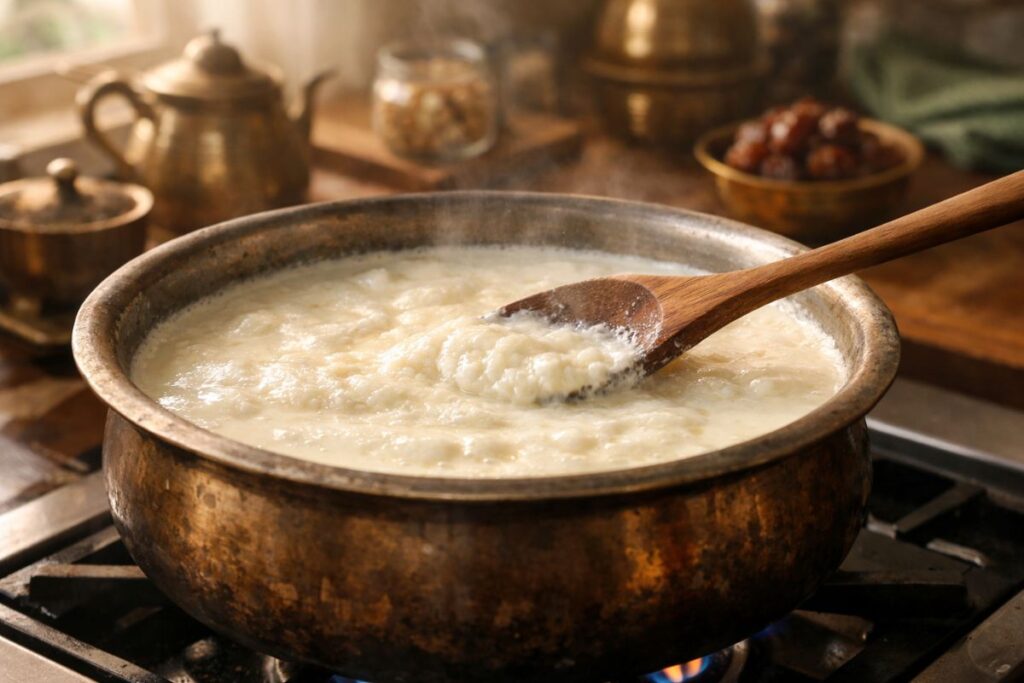
1. Milk Reduction: The Secret to Velvet Texture
The base of a great sheer khurma recipe is properly reduced milk.
When milk simmers slowly for 20–30 minutes, water evaporates and the natural fats, proteins, and sugars concentrate. This process thickens the milk naturally and creates the silky consistency that defines traditional Eid Sheer Khurma.
You may also notice a thin skin forming on top of the milk—this is malai. Instead of discarding it, gently whisk it back into the milk. This adds richness and depth to the dessert.
Slow reduction also causes the milk sugar (lactose) to caramelize slightly, which gives the dish its subtle pale-pink hue without artificial coloring.
2. The Role of Ghee in Flavor Development
One of the biggest mistakes people make when learning sheer khurma how to make is skipping the roasting step.
The dry fruits for sheer khurma and vermicelli must be roasted in desi ghee.
Ghee coats the nuts and vermicelli with fat, which:
- Prevents them from turning mushy in the milk
- Intensifies their nutty flavor
- Adds aromatic richness to the dish
As the nuts toast, their natural oils release into the ghee, creating a fragrant base that elevates the entire dessert.
3. The Maillard Reaction: Toasting the Semiya
The deep golden color of roasted sheer khurma semiya is not just aesthetic.
When the vermicelli for sheer khurma is toasted, it undergoes the Maillard reaction, a chemical process where proteins and sugars react under heat to produce complex flavors.
This reaction gives the vermicelli a slightly smoky, nutty flavor that balances the sweetness of sugar and dates. Without it, the dessert can taste flat.
Nutritional Highlights: The Power of Dates
One of the most important sheer khurma ingredients is dates.
Beyond their rich caramel flavor, dates are also incredibly nutritious. The traditional recipe uses Medjool dates, which add natural sweetness and a soft chewy texture to the dessert.
Beyond their rich caramel flavor, dates are a powerhouse of nutrition; according to Healthline’s guide to date benefits, they are packed with fiber and antioxidants, making this festive dessert a great source of natural energy after a day of fasting.
They also provide:
- Natural sugars for quick energy
- Fiber for digestion
- Potassium and magnesium
- Powerful antioxidants
This is one reason why Sheer Khurma has remained a beloved Eid tradition for centuries.
Sheer Khurma Recipe Card
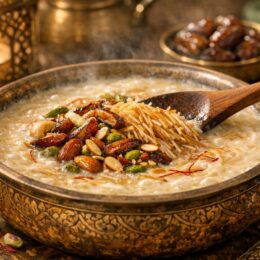
Sheer Khurma Recipe
Equipment
- 1 Heavy-bottomed deep pot (Dutch oven or Degchi)
- 1 Small frying pan (for tempering nuts)
- 1 Whisk or wooden spoon
Ingredients
The Base
- 2 Liters Full-fat milk
The Crunch
- 1 cup vermicelli for sheer khurma broken into small pieces
Sweetener
- ¾ cup Sugar adjust to taste
- 12 pcs Medjool dates thinly sliced
The Nut Mix
- ¼ cup Almonds slivered
- ¼ cup Pistachios sliced
- ¼ cup Cashews
- 1 tbsp Chironji optional
Aromatics
- 1 tsp Cardamom powder
- 5 Saffron strands soaked in warm milk
- 1 tsp Rose water or Kewra water
Fat
- 4 tbsp Desi Ghee
Instructions
Reduce the Milk
- Bring the milk to a boil in a heavy pot. Lower the heat and simmer for 20–25 minutes, stirring occasionally, until it reduces by about 25%.
Roast the Vermicelli
- In a separate pan, heat 2 tbsp ghee. Add the sheer khurma semiya and roast on low heat until deep golden brown. Do not burn. Set aside.
The Nut Tempering
- In the same pan, add the remaining ghee. Fry the sliced dates and dry fruits for sheer khurma until fragrant and slightly crunchy.
Combine
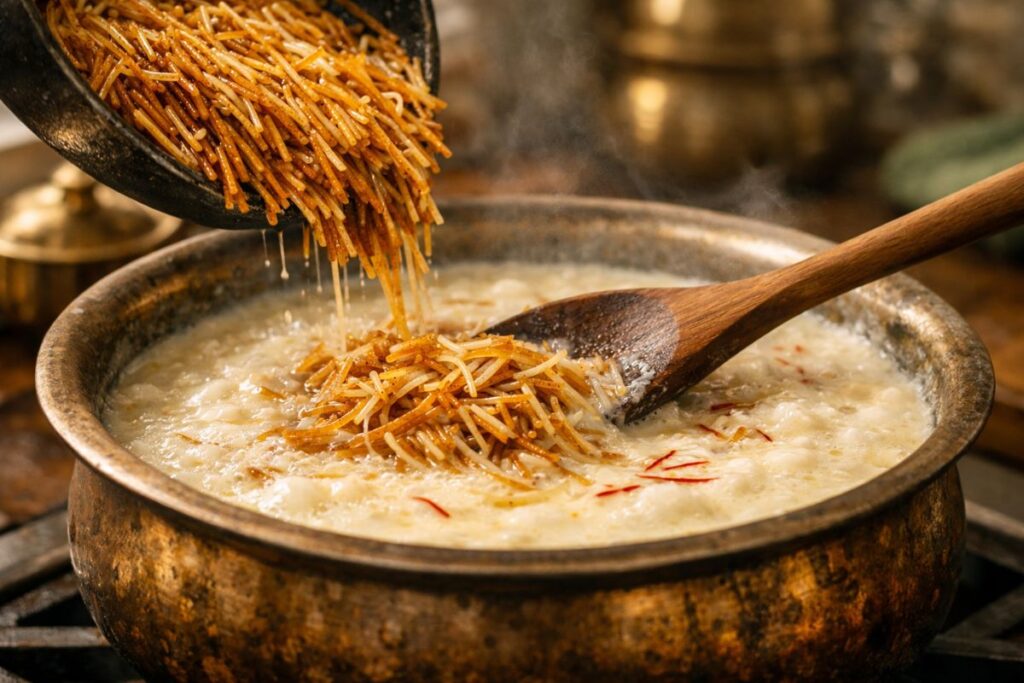
- Add the roasted vermicelli to the reducing milk. Cook for 5–7 minutes until the vermicelli softens.
Flavor Infusion
- Add sugar, roasted nuts, and dates. Stir in saffron milk and cardamom powder.
The Finishing Touch
- Simmer another 5 minutes until the pudding becomes creamy. Turn off heat and stir in rose water.
Serve
- Serve hot or chilled. Garnish with extra nuts and dried rose petals.
Video
Notes
Serving Suggestions for Eid
Sheer Khurma is traditionally served after a rich festive meal.
For a complete Eid feast, try pairing it with:
- Kacchi Biryani recipe — the perfect savory main dish before dessert
- Ultimate Kabsa Rice — a festive Middle Eastern centerpiece
- Festive Cranberry Orange Sparkler — a refreshing modern drink that balances the richness of the milk dessert
These combinations create a well-balanced Eid table with both traditional and modern flavors.
FAQ: Sheer Khurma
Which vermicelli is best for sheer khurma?
Use extremely thin wheat vermicelli labeled Seviyan or Sheer Khurma Vermicelli. Avoid thick pasta-style vermicelli.
Can I make this dairy-free?
Yes. Replace full-fat milk with coconut milk or cashew milk for a creamy plant-based alternative.
How long does Sheer Khurma stay fresh?
It stays fresh for 3–4 days in the refrigerator. As it cools, the pudding thickens. Add a splash of warm milk while reheating to restore the creamy consistency.
Join the Conversation
Every family has its own twist on this beloved Eid dessert.
What is your family’s secret ingredient for Sheer Khurma?
Do you prefer it hot on Eid morning or chilled later in the day?
Share your traditions in the comments—because the best recipes always come with stories. ✨
Kacchi Biryani recipe – Linked in the “Serving Suggestions” section.
Ultimate Kabsa Rice – Linked as a “Festive Main Course” alternative.
Festive Cranberry Orange Sparkler – Linked as a refreshing “Modern Drink Pairing.”