This easy Baked Cabbage Boil Recipe features tender green cabbage wedges roasted with rich butter, garlic, and bold Cajun seasoning (p. 1). Finished with a splash of fresh lemon juice, this simple 5-ingredient side dish delivers all the smoky, robust flavor of a traditional Southern boil straight from your oven (p. 1).
How the Cabbage Boil Became a Viral Sensation
The classic Southern boil—whether seafood, shrimp, or sausage—has always been about more than ingredients. It’s about bold seasoning, communal comfort, and letting simple foods soak up deep flavor.
Traditionally, cabbage plays a supporting role in these boils, simmering in a seasoned pot alongside corn, potatoes, and protein. But in recent years, something unexpected happened. Home cooks began pulling cabbage out of the pot and putting it into the oven—and the internet took notice.
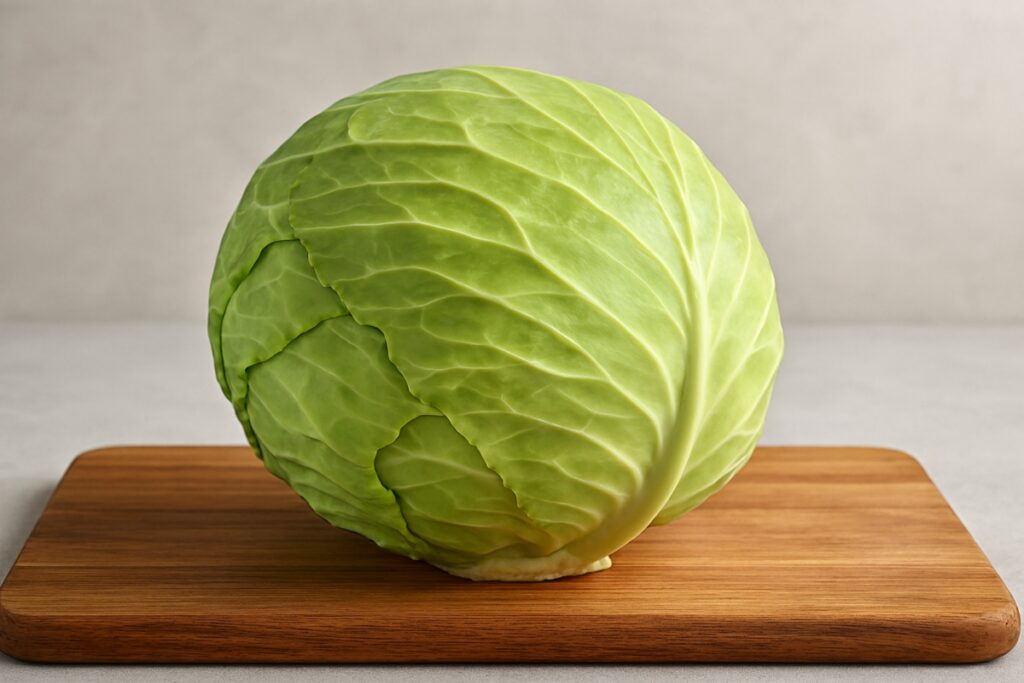
From Boiling Pot to Baking Sheet
Boiling cabbage does its job: it softens the leaves and absorbs seasoning. But it also dilutes flavor and can turn mushy if pushed too far. Baking, on the other hand, changes everything.
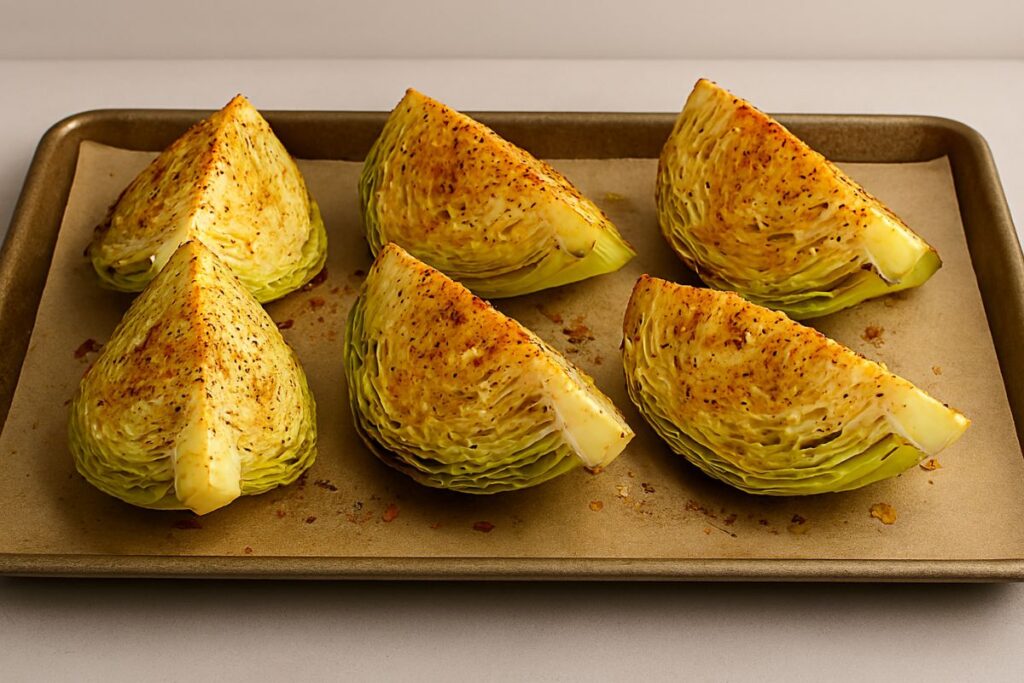
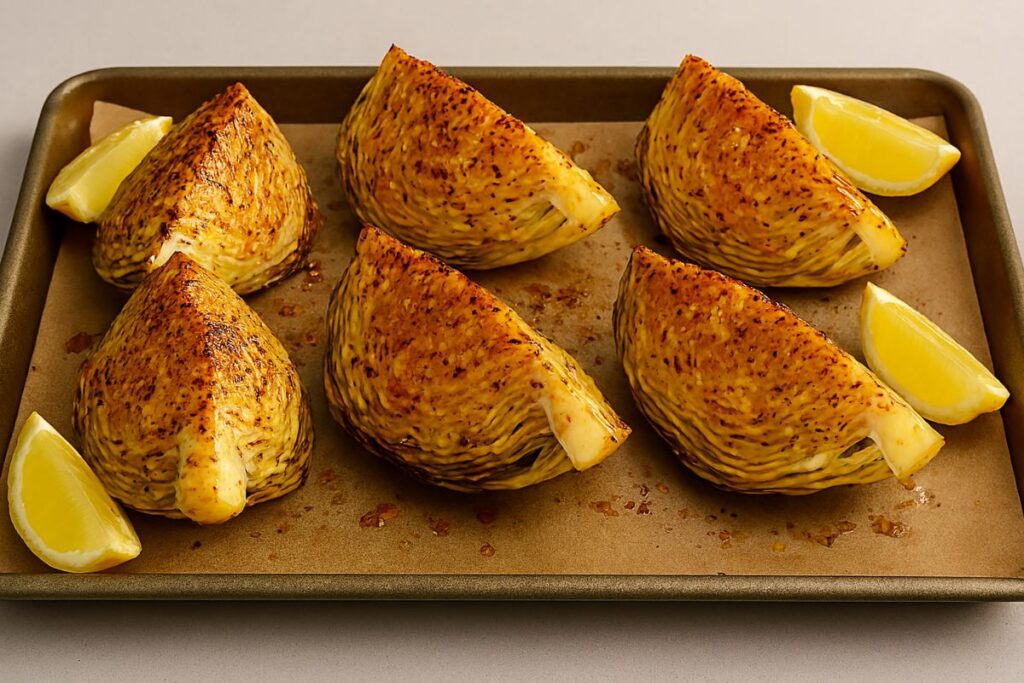
When cabbage is roasted in a hot oven, moisture evaporates, natural sugars concentrate, and the edges caramelize. Instead of watery leaves, you get tender centers with crisp, buttery edges—the same flavors as a boil, but intensified.
This shift from boiling to baking is why the Baked Cabbage Boil Recipe became a viral sensation. It delivers everything people love about a traditional boil—bold seasoning, butter, garlic, citrus—without the mess, the massive pot, or the long ingredient list.
Why We Created This 5-Ingredient Version
After testing countless variations, we noticed a pattern: the most successful cabbage boils weren’t overloaded. They were focused.
We wanted the soul-warming flavors of a boil without a 10-step process—something anyone could make on a weeknight, in a standard oven, with pantry staples. This recipe was tested in both conventional and convection ovens, adjusted for even browning, and refined until only the most essential ingredients remained.
The result? A truly easy 5-ingredient cabbage recipe that delivers maximum flavor with minimal effort.
Why This Recipe Works (The Science of Oven-Baked Cabbage)
Great recipes aren’t accidents—they’re chemistry.
The Maillard Reaction & Natural Sugars
When cabbage roasts at high heat, two key things happen:
- Natural sugars caramelize, bringing out subtle sweetness
- The Maillard reaction creates deep, savory notes where butter, garlic, and seasoning meet the cabbage’s surface
This is something boiling simply can’t achieve.
Roasting at 400°F is the sweet spot. It’s hot enough to drive off excess moisture and encourage browning, but not so hot that the butter burns or the cabbage dries out.
Why These 5 Ingredients Matter
This Baked Cabbage Boil Recipe works because every ingredient has a job:
- Cabbage: The foundation—hearty, layered, and ideal for roasting
- Butter: The key fat that carries flavor and promotes browning
- Cajun or Old Bay Seasoning: Delivers classic boil flavor in one step
- Garlic: Adds aromatic depth as it roasts
- Lemon: Balances richness and brightens the final dish
Nothing extra. Nothing wasted.
For more on why roasting vegetables enhances flavor, see this explanation from [Bon Appétit on the benefits of roasting vs. boiling vegetables].
The Art of the Cut: Wedges vs. Steaks
How you cut cabbage determines how it cooks—and how it tastes.
Option 1: Cabbage Wedges (Recommended)
Best for boil-style flavor
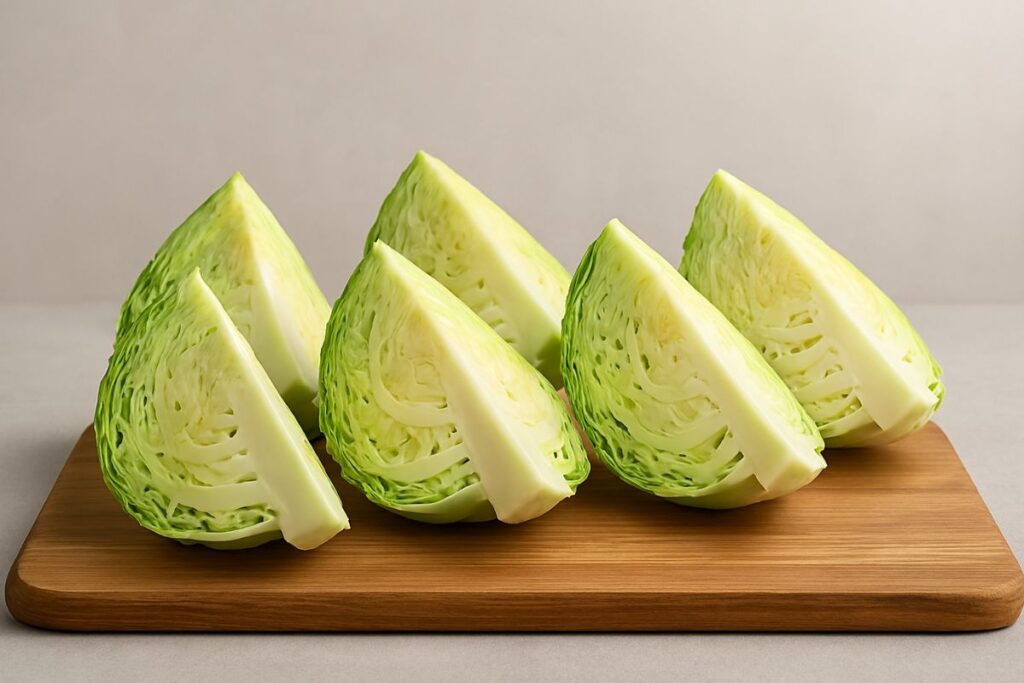
- Cut the cabbage into 6–8 wedges, keeping the core intact
- The layered structure traps butter and seasoning between leaves
- Wedges stay tender inside while crisping on the edges
This is the ideal cut for oven baked cabbage with butter because it mimics how cabbage behaves in a traditional boil—just with better texture.
Option 2: Cabbage Steaks
Best for presentation
- Slice thick cross-sections (¾–1 inch thick)
- More surface area means more browning
- Slightly less moisture retention
While beautiful, steaks don’t hold seasoning quite as well as wedges. For this recipe, wedges win.
The Recipe Card: 5-Ingredient Baked Cabbage Boil
Baked Cabbage Boil Recipe
Equipment
- 1 Large baking sheet (rimmed)
- 1 Parchment paper or aluminum foil
- 1 Sharp chef’s knife
- 1 Cutting board
- 1 Small bowl (for melting butter)
- 1 Pastry brush or spoon
- 1 Measuring spoons
Ingredients
- 1 large green cabbage
- 4 tbsp unsalted butter melted
- 1½ tbsp Cajun or Old Bay seasoning
- 3 pcs cloves minced
- 2 pcs garlic minced
- 1 lemon cut into wedges
Instructions
- Preheat oven to 400°F (204°C). Line a large baking sheet with parchment paper.
- Remove outer cabbage leaves. Cut cabbage into 6–8 wedges, keeping the core intact.
- Arrange wedges cut-side down on the baking sheet, leaving space between them.
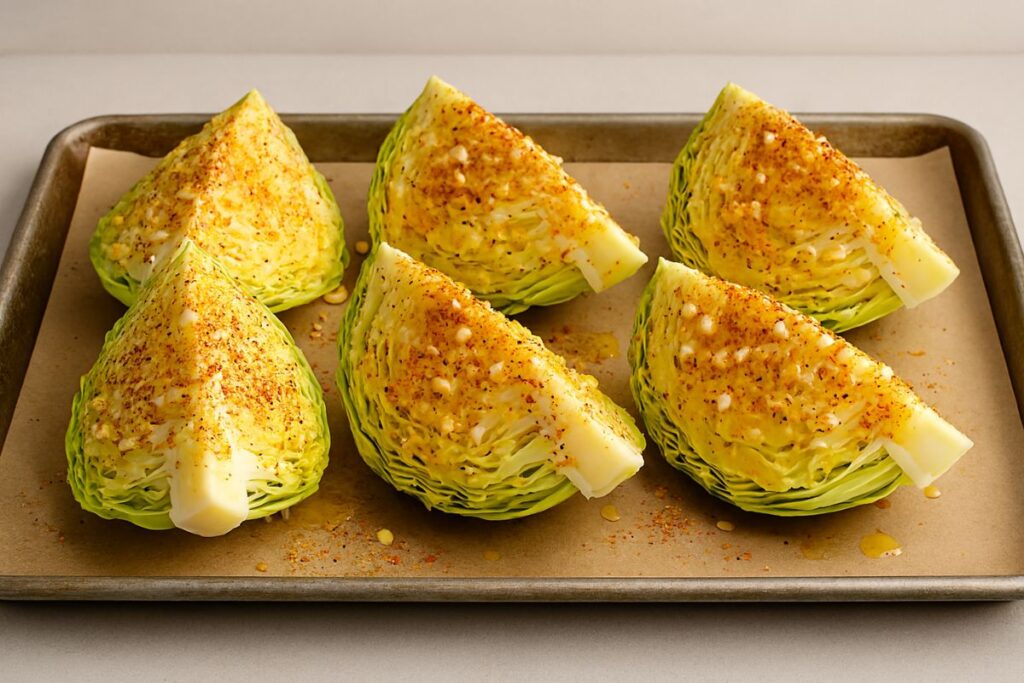
- Brush generously with melted butter, ensuring butter drips between layers.
- Sprinkle evenly with seasoning and minced garlic.
- Roast uncovered for 25–30 minutes, flipping once halfway through.
- Remove when edges are deeply golden and centers are tender.
- Finish with fresh lemon juice before serving.
Video
Notes
Nutrition Facts (Per Serving – Approximate)
- Calories: 160
- Total Fat: 12g
- Carbohydrates: 14g
- Dietary Fiber: 5g (18% DV)
- Protein: 2g
- Vitamin C: 45% DV
Pro Tips for Perfect Results
- Wash cabbage thoroughly, checking between leaves for dirt
- Dry completely before roasting to avoid steaming
- Don’t overcrowd the pan—use two sheets if needed
- Store leftovers in an airtight container for up to 3 days
- Reheat in the oven or air fryer—not the microwave—for best texture
Health Benefits of Roasted Cabbage
One of the quiet advantages of this Baked Cabbage Boil Recipe is that it’s as nourishing as it is comforting. Cabbage belongs to the cruciferous vegetable family—known for being rich in fiber, vitamin C, and naturally occurring antioxidants that support overall wellness.
Unlike long boiling, which can leach nutrients into the water, roasting helps cabbage retain much of its nutritional value while dramatically improving texture and flavor. The result is a dish that feels indulgent, but still fits beautifully into a balanced, vegetable-forward meal.
According to research summarized by Healthline, cruciferous vegetables like cabbage are associated with digestive support and cellular health when eaten regularly. Roasting simply makes it easier—and far more enjoyable—to eat them often.
Health Benefits of Roasted Cabbage
Cabbage is a cruciferous vegetable rich in fiber, vitamin C, and antioxidants. According to research summarized by [Healthline on the nutritional benefits of cruciferous vegetables], regular consumption supports digestion and cellular health.
Roasting preserves nutrients better than prolonged boiling while enhancing flavor—making this recipe both delicious and smart.
Final Thoughts: Why This Is the Best Baked Cabbage Boil Recipe
This Baked Cabbage Boil Recipe proves that simple ingredients, when treated thoughtfully, can deliver big flavor. By roasting instead of boiling, you get tender cabbage with caramelized edges, bold seasoning in every layer, and a dish that feels both familiar and fresh.
Whether you serve it as a side, turn it into a sheet pan meal, or make it your new favorite way to cook cabbage, this recipe is designed to be reliable, flexible, and deeply satisfying.
Have you tried roasting cabbage yet?
Did you use Old Bay, Cajun seasoning, or add your own twist? Share your variation in the comments—we love seeing how you make it your own.
Comprehensive FAQ
Can I make this recipe vegan?
Yes. Substitute plant-based butter or olive oil. Vegan butter provides the closest flavor to traditional boils.
How do I prevent soggy cabbage?
# Roast at high heat (400°F)
# Leave space between wedges
# Avoid covering the pan
What’s the best seasoning: Old Bay or Cajun?
# Old Bay: Briny, classic boil flavor
# Cajun: Spicier, smokier
# Either works; choose based on your heat preference.
Can I add protein to make it a meal?
Yes! Add sliced smoked sausage or shrimp during the last 12–15 minutes of roasting to make a full sheet-pan meal.
How many people does this recipe serve?
This recipe serves 6 people as a side dish. Adjust cabbage quantity and butter if you want larger portions.
If you enjoy oven-roasted vegetables like this baked cabbage boil, don’t miss our Perfect Oven Roasted Asparagus Recipe (425°F) for another simple, flavorful side that’s quick to prepare and always a crowd-pleaser.
For a deeper dive into why roasting vegetables unlocks superior flavor and nutrition compared to boiling, check out this detailed explanation from Serious Eats on the benefits of roasting vs. boiling vegetables.