Disclosure: As an Amazon Associate, DishStories may earn from qualifying purchases at no extra cost to you.
Introduction
There’s something unforgettable about smoking your very first brisket recipe. The anticipation of lifting the grill lid after hours of low-and-slow cooking, the rich aroma of seasoned beef filling the backyard, and that first perfectly juicy slice all make brisket one of the most rewarding barbecue experiences you can tackle at home. While brisket has a reputation for being intimidating, modern pellet grills and smokers make the process surprisingly approachable with steady, reliable temperature control that delivers true “set-it-and-forget-it” convenience.
If you’ve ever loved the ease of tossing ingredients into a slow cooker and letting dinner practically cook itself, smoking brisket offers a similar hands-off experience — just with an irresistible smoky bark and deep barbecue flavor you simply can’t get from a crockpot. In fact, if you enjoy comforting beef dinners, you might also love this hearty Slow Cooker Beef Chuck Roast for another easy, fall-apart tender meal option.
For beginners, understanding the basics of fire management, trimming, and resting your brisket can make a huge difference in the final result. This helpful guide from Serious Eats brisket smoking basics breaks down the fundamentals and helps take the guesswork out of your first smoke.
Whether you’re cooking for a backyard gathering, a weekend barbecue project, or simply challenging yourself to master classic Texas-style BBQ, this brisket recipe will guide you through every step toward tender, smoky perfection.
Tools You’ll Need :
Recommended Tools for Smoking Brisket
- Instant‑Read Meat Thermometer – for accurate internal temp checks
- Pellet Grill / Smoker – steady heat control for beginners
- Butcher Paper – helps preserve bark during the stall
- Heavy Duty Aluminum Foil – alternative wrapping method
- Sharp Carving Knife – for clean, pencil‑thick slices
- Large Cutting Board – sturdy surface for trimming and slicing
- Spray Bottle – for apple juice spritzing to keep brisket moist
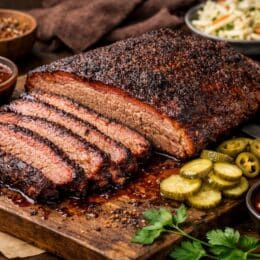
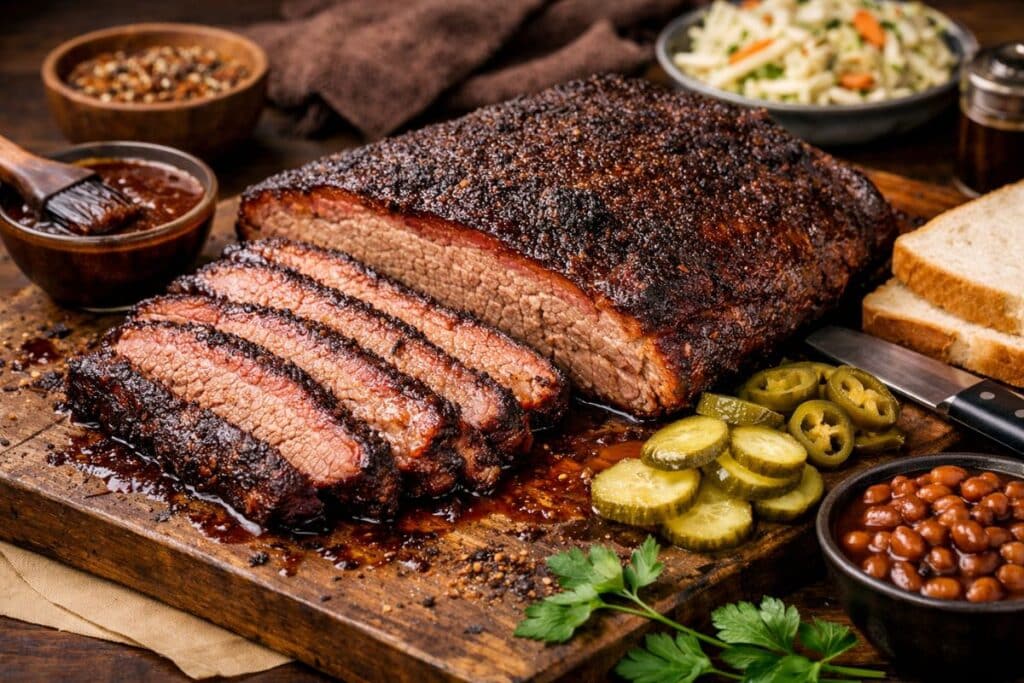
Smoked Beef Brisket on the Grill (Brisket Recipe)
Equipment
- Charcoal or pellet grill / smoker
- Smoker box (if using gas grill)
- Meat thermometer (instant-read or probe)
- Aluminum foil or butcher paper
- Large cutting board
- Sharp carving knife
- Spray bottle (optional for moisture control)
Ingredients
Main Brisket
- 14 lb whole packer beef brisket
Dry Rub
- 2 tbsp kosher salt
- 2 tbsp coarse black pepper
- 1 tbsp garlic powder
- 1 tbsp onion powder
- 1 tbsp paprika
- 2 tbsp brown sugar optional
Optional Spritz
- 1 cup apple juice
- 1 cup water
- 2 tbsp apple cider vinegar
Instructions
Prepare the Brisket
- Trim excess fat from the brisket, leaving about a ¼-inch fat cap. Remove hard fat pockets that will not render during cooking.
Season Generously
- Mix dry rub ingredients and coat the brisket evenly on all sides. Press seasoning into the meat. Let it rest uncovered in the refrigerator for at least 4 hours or overnight for best flavor.
Preheat the Grill
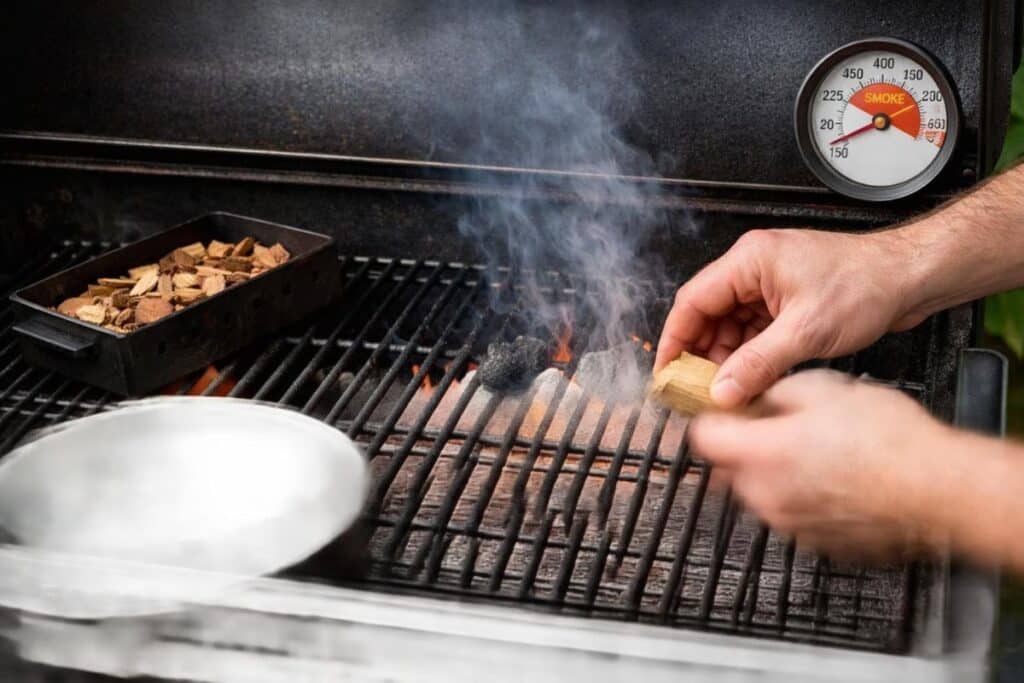
- Set grill or smoker to 225°F–250°F. Add wood chips or chunks (oak, hickory, or mesquite blend recommended).
Start Smoking
- Place brisket fat side up on the grill grates. Close lid and maintain steady temperature. Smoke for several hours without opening frequently.
Maintain Moisture
- (Optional) Spritz brisket every 1–2 hours with apple juice mixture to help keep surface moist and enhance bark formation.
The Stall Phase
- When internal temperature reaches around 160°F, the brisket will stall. This is normal. Continue cooking patiently.
Wrap the Brisket
- Once bark is set, wrap brisket tightly in foil or butcher paper. Return to grill and continue cooking.
Finish Cooking
- Continue cooking until internal temperature reaches 195°F–203°F and probe feels tender like butter.
Rest the Brisket
- Remove from grill and rest wrapped for 1–2 hours in a cooler or warm oven. This locks in juices.
Slice and Serve
- Slice brisket against the grain into pencil-thick slices. Serve immediately with BBQ sides.
Notes
- Calories: 520 kcal
- Protein: 48 g
- Fat: 35 g
- Carbohydrates: 2 g
Preparing Your Beef Brisket
When it comes to making an unforgettable beef brisket recipe, preparation is everything. A few simple steps before your brisket ever touches the smoker can make the difference between dry, tough meat and tender, juicy slices packed with smoky flavor. Don’t worry if this is your first brisket — with a little patience and the right prep, you’ll be well on your way to barbecue success.
Step 1: Choose the Right Brisket
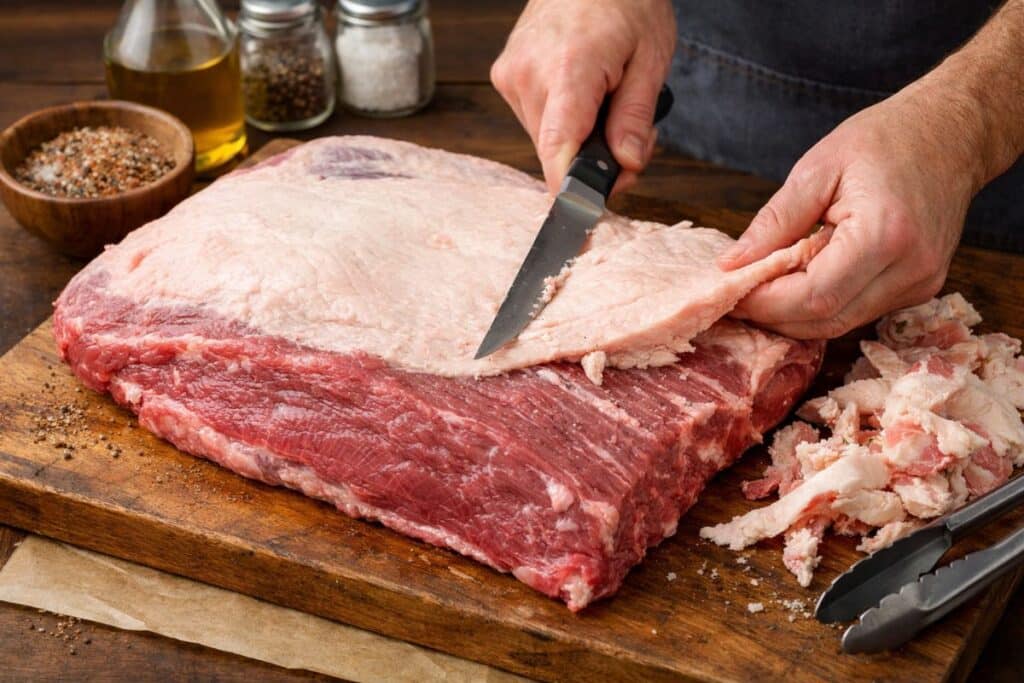
For the best results, look for a whole “packer” brisket, which includes both the flat and the point. A brisket weighing between 10–14 pounds is ideal for beginners because it cooks more evenly and stays juicier during long smoking sessions.
When shopping, pay attention to:
- Good marbling: Thin white streaks of fat throughout the meat help keep it moist.
- Flexible texture: A brisket that bends easily usually has better fat distribution.
- Even thickness: Helps prevent dry edges during cooking.
Step 2: Trim the Fat Properly
Trimming can seem intimidating, but it’s simpler than it looks. The goal is to remove excess fat while leaving enough to protect the meat during smoking.
How to Trim Your Brisket
- Place the brisket on a large cutting board while cold — cold fat is much easier to trim.
- Use a sharp boning or chef’s knife.
- Trim the fat cap down to about ¼ inch thick.
- Remove any hard, waxy fat sections that won’t render during cooking.
- Square up thin edges or loose pieces that could burn.
Pro Tip:
Too much fat prevents seasoning and smoke from reaching the meat, while too little can dry it out. A balanced trim is key for a successful beef brisket recipe.
For more traditional Texas-style trimming techniques, check out Texas Monthly BBQ brisket prep guide for authentic barbecue insights from pitmasters.
Season generously with our ultimate dry rub before smoking — it’s designed to create a perfect bark.
Step 3: Season Generously
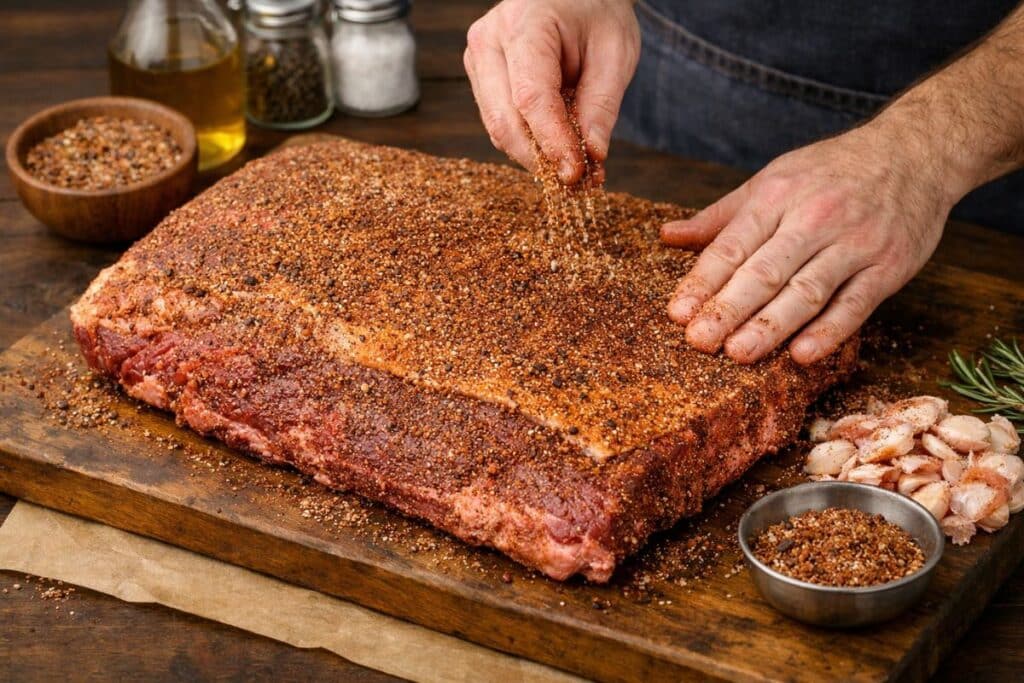
Brisket loves bold seasoning. Even a simple rub can create incredible flavor after hours on the smoker.
Basic Brisket Dry Rub
A beginner-friendly brisket rub typically includes:
- Kosher salt
- Coarse black pepper
- Garlic powder
- Onion powder
- Paprika (optional for color)
- Brown sugar (optional for sweetness)
Apply the seasoning generously to every side of the brisket. Don’t be afraid to use more rub than you think — brisket is a large cut of meat, and some seasoning will naturally fall off during cooking.
Pro Tip:
Let the seasoned brisket sit uncovered in the refrigerator for at least 4 hours, or overnight if possible. This dry-brining process helps the seasoning penetrate deeper into the meat and improves bark formation.
Step 4: Bring the Brisket Closer to Room Temperature
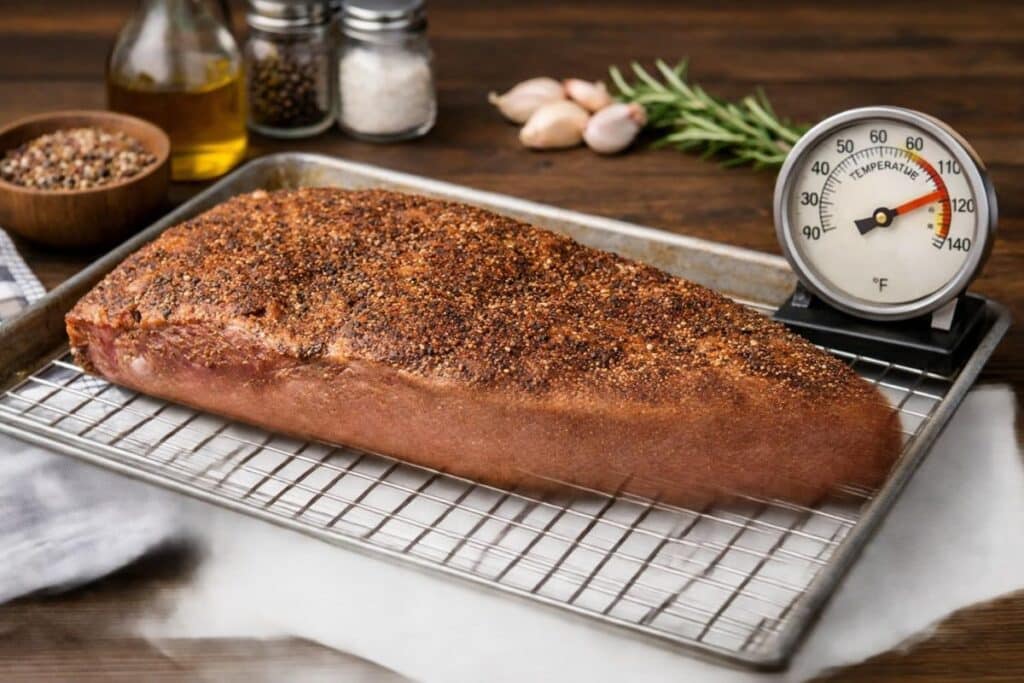
About 30–45 minutes before smoking, remove the brisket from the refrigerator. This helps promote more even cooking and allows the meat to cook consistently from edge to center.
While the brisket rests, preheat your smoker or grill to your target cooking temperature — usually around 225°F to 250°F.
Step 5: Don’t Skip the Resting Period
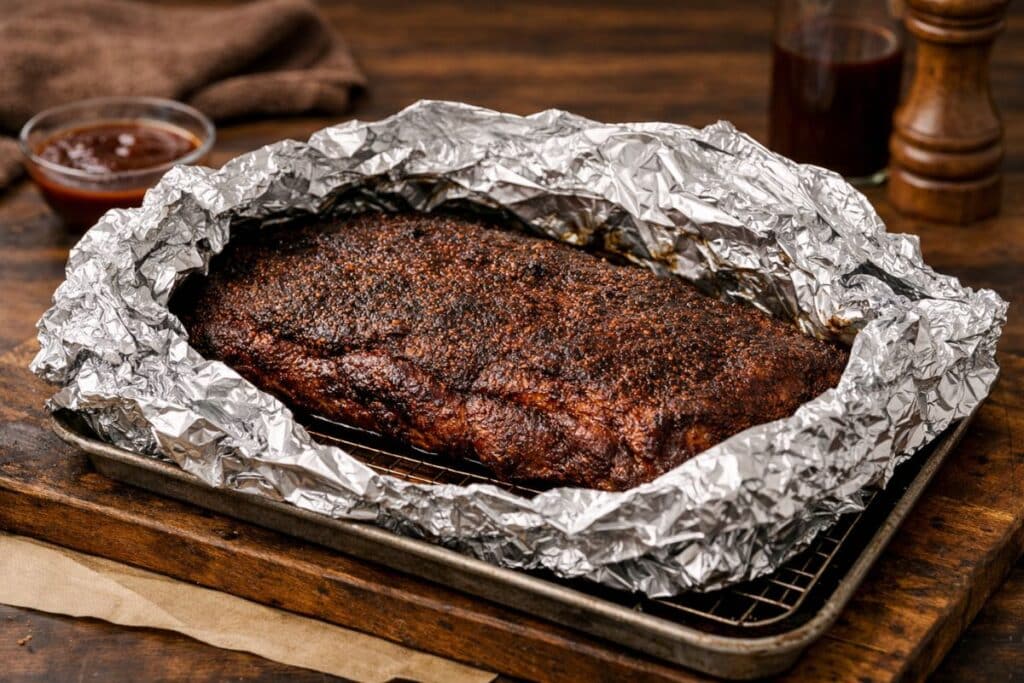
One of the biggest mistakes beginners make is slicing brisket too soon. Resting allows the juices to redistribute throughout the meat instead of spilling out onto the cutting board.
How to Rest Brisket Properly
- Remove the brisket once it reaches your desired tenderness.
- Wrap it in butcher paper or foil.
- Let it rest in a cooler or warm oven for at least 1–2 hours.
Pro Tip:
A properly rested brisket slices cleaner, stays juicier, and develops even better texture.
The Perfect Side Dish Pairing
No backyard barbecue is complete without a comforting side dish. Fluffy biscuits pair beautifully with smoky brisket and help soak up all those flavorful juices. Serve your brisket alongside these homemade Easy Homemade Baking Powder Biscuits for a classic comfort-food combination your guests will love.
With your brisket trimmed, seasoned, and rested correctly, you’re ready for the most exciting part — the low-and-slow smoking process that transforms this tough cut into melt-in-your-mouth barbecue perfection.
How to Smoke Brisket on the Grill
A great bbq brisket recipe is all about patience, steady heat, and rich smoky flavor. Smoking brisket on the grill transforms a tough cut of beef into tender, juicy barbecue with a flavorful bark that simply can’t be replicated in the oven or slow cooker. While the process takes time, the results are absolutely worth it — especially when your backyard starts smelling like authentic Texas BBQ.
Want to see how smoking compares to oven roasting or crockpot methods? Check out our complete Beef Brisket & Chuck Roast Cooking Guide to master every style
The Secret to Great Brisket: Low and Slow Cooking
Brisket contains a lot of connective tissue, which means it needs gentle heat over a long period of time to become tender. The ideal smoking temperature for a bbq brisket recipe is between 225°F and 250°F.
At this temperature:
- Fat slowly renders into the meat
- Collagen breaks down for tenderness
- Smoke has time to build deep flavor
- The bark develops beautifully on the outside
One of the biggest advantages of modern pellet grills and temperature-controlled smokers is the ability to maintain consistent heat with minimal effort. It’s very similar to the convenience of a slow cooker — you can set the temperature, monitor occasionally, and let time do the hard work.
However, unlike slow cooker brisket, grill-smoked brisket develops:
- A smoky crust (“bark”)
- Rich wood-fired flavor
- Better texture contrast
- Authentic barbecue aroma
Slow cookers are excellent for convenience and tenderness, but smoking creates a much deeper and more complex flavor profile that barbecue lovers crave.
Choosing the Best Wood for Smoking Brisket
The type of wood you use has a major impact on the final flavor of your brisket. Different woods create different smoke intensities, so choosing the right one helps customize your barbecue style.
Oak
Oak is one of the most popular brisket woods because it burns steadily and provides a balanced smoky flavor without overpowering the beef.
Best for:
- Traditional Texas-style brisket
- Long smoking sessions
- Beginners learning smoke balance
Hickory
Hickory delivers a stronger, richer smoke flavor with slightly sweet and savory notes.
Best for:
- Bold barbecue flavor
- Darker bark formation
- Combining with milder woods
Mesquite
Mesquite creates an intense earthy smoke that’s common in Texas barbecue. A little goes a long way.
Best for:
- Strong smoky flavor lovers
- Shorter smoking periods
- Mixing with oak for balance
Pro Tip:
If you’re new to smoking brisket, start with oak or an oak-hickory blend before experimenting with stronger woods like mesquite.
How Long Does It Take to Smoke Brisket?
A general rule for any bbq brisket recipe is:
Plan for about 1 hour per pound at 225°F–250°F.
That means:
- 8-pound brisket = about 8–10 hours
- 12-pound brisket = about 12–14 hours
Keep in mind that every brisket cooks differently depending on:
- Thickness
- Fat content
- Grill consistency
- Outdoor temperature
Understanding “The Stall”
Around 160°F–170°F internal temperature, brisket often stops rising in temperature for several hours. This is completely normal and happens as moisture evaporates from the meat.
Many pitmasters wrap the brisket in butcher paper or foil during this stage to help push through the stall while retaining moisture.
Monitoring Temperature the Right Way
Instead of relying only on time, use a quality meat thermometer to track internal temperature.
Typical doneness targets:
- Sliceable brisket: 195°F–203°F
- Probe tenderness: Feels like soft butter when inserted
Pro Tip:
Tenderness matters more than exact temperature. Every brisket finishes differently.
Grill-Smoked Brisket vs. Slow Cooker Brisket
Both methods can produce delicious beef, but they create very different experiences.
| Grill-Smoked Brisket | Slow Cooker Brisket |
|---|---|
| Deep smoky flavor | Mild savory flavor |
| Crispy bark exterior | Soft exterior |
| Authentic BBQ texture | Pot roast-style texture |
| Wood-fired aroma | Brothy comfort-food flavor |
| Requires longer cooking | More hands-off convenience |
If you want true barbecue flavor, smoking on the grill is unmatched.
Perfect Comfort Food Pairing
Smoky brisket pairs beautifully with creamy, cheesy side dishes that balance the bold barbecue flavors. Serve your brisket with this comforting Crispy Mac and Cheese for the ultimate backyard BBQ plate.
Learn from the BBQ Community
One of the best ways to improve your brisket skills is by learning from experienced pitmasters and backyard grillers. The BBQ Brethren Forum is packed with smoker setup advice, brisket troubleshooting tips, wood recommendations, and real-world cooking experiences from barbecue enthusiasts.
Why Temperature Control Matters
The secret behind the best beef brisket recipe isn’t just the seasoning or the type of wood you use — it’s temperature control. Brisket is a tough cut of meat loaded with connective tissue, and mastering low-and-slow cooking is what transforms it from chewy and dry into tender, juicy barbecue perfection.
For beginners, it may seem surprising that cooking meat for 10–14 hours actually improves texture instead of ruining it. But there’s real food science happening inside the smoker, and understanding it can dramatically improve your brisket results.
The Science of Collagen Breakdown
Brisket comes from the cow’s chest area, which means the muscles work hard and contain large amounts of collagen and connective tissue. If cooked too quickly at high heat, those tissues stay tough and rubbery.
The magic happens during slow cooking at temperatures between 225°F and 250°F.
As the brisket’s internal temperature rises to around 160°F, collagen slowly begins breaking down into gelatin.
160∘F
That gelatin:
- Creates a silky mouthfeel
- Keeps the meat moist
- Helps brisket become fork-tender
- Adds rich beefy flavor
This process takes time, which is why rushing a brisket almost always leads to disappointing texture.
Why Low-and-Slow Works Best
Low temperatures allow:
- Fat to render gradually
- Moisture to stay inside the meat
- Smoke flavor to penetrate deeply
- Bark to form without burning
Cooking too hot causes the outside to dry out before the interior connective tissue has time to soften.
Understanding Moisture Retention
One of the biggest goals in any best beef brisket recipe is keeping the brisket juicy throughout the long smoking process.
Brisket naturally loses moisture as it cooks, but controlled temperatures help minimize excessive drying.
When your grill stays stable:
- Muscle fibers contract more slowly
- Juices remain distributed throughout the meat
- Rendered fat continuously bastes the brisket internally
This is especially important during the “stall,” when brisket temperatures plateau around 160°F–170°F due to evaporative cooling.
Pitmasters often wrap brisket during this stage using butcher paper or foil to:
- Reduce moisture loss
- Speed up cooking
- Preserve tenderness
Bark Formation: The Flavor Layer Everyone Loves
That dark, flavorful crust on the outside of smoked brisket is called the bark, and temperature control plays a huge role in creating it properly.
Bark forms through a combination of:
- Smoke particles adhering to the meat
- Rendered fat
- Dry rub spices
- The Maillard reaction (browning process)
Steady heat allows the bark to slowly develop without scorching the exterior.
Too much heat can:
- Burn the rub
- Dry out the surface
- Create bitter flavors
Too little airflow or unstable temperatures can leave the bark soft and underdeveloped.
The Advantage of Automatic Temperature Control
Modern pellet grills and digital smokers make brisket much more beginner-friendly because they regulate heat automatically.
Instead of constantly adjusting vents or adding charcoal, temperature-controlled grills:
- Maintain steady cooking temperatures
- Reduce heat spikes
- Improve consistency
- Allow more “set-it-and-forget-it” convenience
This reliability is one reason more home cooks are confidently attempting the best beef brisket recipe for holidays, cookouts, and family gatherings.
BBQ Is Both Cooking and Science
Understanding the science behind brisket can help you troubleshoot common problems like:
- Dry brisket
- Tough slices
- Weak bark
- Uneven cooking
For deeper explanations on barbecue science, smoking techniques, and meat chemistry, AmazingRibs.com BBQ science guide is one of the most trusted resources among backyard pitmasters and competition BBQ cooks alike.
Another Crowd-Pleasing Holiday Meat Recipe
If you enjoy preparing impressive smoked meats for gatherings and holiday meals, you may also love this flavorful Herb Butter Turkey Recipe that delivers juicy, tender results with rich herb flavor and crispy golden skin.
With proper temperature control, patience, and a little understanding of the science behind barbecue, you’ll be much closer to mastering a truly unforgettable brisket.
Your First Brisket: A Beginner’s Guide
Cooking your first brisket can feel like a big step in your BBQ journey. It’s a long cook, a large cut of meat, and there’s plenty of advice floating around that can make it seem more complicated than it really is. The truth is, if you understand a few basics and stay patient, you’re already halfway to a great result.
This is one of those recipes where confidence matters just as much as technique. Brisket rewards calm, steady cooking far more than constant tweaking or overthinking.
Don’t Fear the Stall
One of the first surprises for beginners is something called “the stall.” This happens when the brisket’s internal temperature seems to stop rising — usually around 160°F–170°F — and stays there for hours.
It can feel like something is going wrong, but it’s completely normal.
During your first brisket, remember:
- The stall is part of the process
- It happens because moisture is evaporating from the surface
- It will eventually pass if you stay consistent
Resist the urge to panic or crank up the heat. The brisket is still cooking, even if the thermometer looks stuck.
Common Mistakes to Avoid
Most beginner brisket problems don’t come from bad ingredients — they come from impatience or overhandling the meat.
1. Opening the lid too often
Every time you open the smoker or grill, you lose heat and smoke. This slows cooking and disrupts temperature stability.
Try to:
- Check only when necessary
- Trust your thermometer more than your curiosity
- Let the smoker do its job
2. Rushing the cook
Brisket is not a fast meal. Trying to speed it up with higher heat can lead to:
- Tough meat
- Dry edges
- Poor bark formation
Low and slow is not optional — it’s essential.
3. Slicing too early
This is one of the most common beginner mistakes. Cutting into brisket too soon releases all the juices before they can redistribute.
Always allow proper resting time so the meat stays tender and flavorful.
Confidence Comes from Patience
If there’s one thing to remember when making your first brisket, it’s this: patience equals flavor.
The long cooking time isn’t a drawback — it’s what allows:
- Tough connective tissue to break down
- Smoke to fully develop into the meat
- Juices to build richness and depth
- Bark to form properly on the surface
Great brisket can’t be rushed, but it also doesn’t require constant attention. Once your temperature is stable, your job is mostly to wait and trust the process.
A Beginner-Friendly Confidence Booster
If you enjoy starting with simpler, more forgiving recipes to build kitchen confidence, try these easy Epic Chicken Parm Sliders — they’re a great way to practice timing, layering flavors, and building comfort with cooking before tackling larger barbecue projects like brisket.
Keep Learning and Keep It Simple
Every brisket you cook teaches you something new. Even experienced pitmasters still adjust timing, wrapping methods, and seasoning based on the cut in front of them.
For more beginner-friendly cooking tips, step-by-step guides, and kitchen fundamentals, The Kitchn cooking guides is a helpful resource for building strong foundational skills in cooking.
Your first brisket doesn’t need to be perfect — it just needs time, steady heat, and patience. The rest comes naturally.
Grill vs. Slow Cooker Brisket
When exploring a brisket recipe slow cooker approach, it’s helpful to understand how it compares to traditional grill smoking. Both methods can produce tender, satisfying beef, but they deliver very different results in flavor, texture, and overall barbecue experience.
At its core, the choice comes down to a simple trade-off: convenience vs. authentic BBQ flavor.
Slow Cooker Brisket: Maximum Convenience
A slow cooker brisket is all about ease. You add your ingredients, set the temperature, and let it cook for hours without much attention. It’s a great option for busy days or when you want a hands-off meal.
Why people love it:
- Extremely easy preparation
- Consistent, predictable results
- Very tender, fall-apart texture
- Minimal supervision required
However, even the best brisket recipe slow cooker method has limitations when it comes to barbecue character.
Slow cookers:
- Don’t produce a smoky bark
- Lack airflow for crust development
- Don’t create a smoke ring
- Produce a softer, pot-roast-style texture
The result is delicious — but closer to a savory beef stew or pot roast than traditional BBQ brisket.
For slow cooker fans who enjoy this style of comfort cooking, you might also enjoy this cozy Easy Crock-Pot Italian Chicken & Orzo, which offers similar hands-off convenience with rich, comforting flavors.
Grill-Smoked Brisket: Authentic BBQ Flavor
Smoking brisket on a grill or smoker takes more time and attention, but it delivers a completely different experience — one that defines true barbecue.
What makes it special:
- Authentic bark formation: The dry rub transforms into a dark, flavorful crust
- Smoke ring development: A pink layer just under the surface caused by nitrogen compounds in wood smoke
- Deep smoky flavor: Built gradually over hours of wood exposure
- Complex texture: Juicy interior with a slightly crisp exterior
Unlike slow cooker brisket, grill smoking allows airflow and wood combustion to interact with the meat surface, which is what creates that iconic BBQ finish.
Key Differences at a Glance
| Feature | Grill-Smoked Brisket | Slow Cooker Brisket |
|---|---|---|
| Flavor | Deep, smoky, complex | Mild, savory |
| Texture | Juicy with bark crust | Very soft, pot-roast style |
| Smoke ring | Yes | No |
| Bark | Crisp and flavorful | None |
| Convenience | Moderate effort | Very easy |
Why Bark and Smoke Ring Matter
Two of the biggest defining features of a traditional brisket are the bark and the smoke ring.
- The bark forms when seasoning, rendered fat, and smoke combine over long cooking times at steady heat.
- The smoke ring develops when gases from burning wood react with the meat’s myoglobin before it fully cooks.
These features are what give barbecue brisket its signature appearance and layered flavor — something a slow cooker simply cannot replicate.
Which One Should You Choose?
If your priority is:
- Convenience → Slow cooker brisket is a great choice
- Authentic BBQ experience → Grill smoking is the clear winner
Both methods have value, but they serve different purposes in the kitchen.
Explore Slow Cooker Brisket Recipes
If you want to explore more variations of brisket recipe slow cooker ideas and techniques, Food Network slow cooker brisket recipes offers a wide range of trusted, beginner-friendly recipes and adaptations.
Whether you choose the ease of a slow cooker or the bold flavor of a smoker, both paths can lead to a satisfying brisket — it just depends on the experience you’re looking for.
FAQ Section (Brisket Recipe & BBQ Brisket Recipe)
Here are some of the most common questions beginners ask when following a brisket recipe or mastering a bbq brisket recipe. Understanding these basics will help you avoid common mistakes and cook with more confidence.
How long does brisket take to smoke?
A general rule for any bbq brisket recipe is about 1 hour per pound at 225°F–250°F, but this is only a guideline.
Typical estimates:
8 lb brisket → 8–10 hours
12 lb brisket → 12–14 hours
Larger packer briskets → up to 16+ hours
However, brisket is done when it’s tender, not when the clock says so. Always check for:
Internal temperature (around 195°F–203°F)
Probe tenderness (should feel like butter)
Should I wrap brisket in foil or butcher paper?
Wrapping helps push through the stall and retain moisture, but both methods have slightly different results.
Foil (Texas Crutch)
Speeds up cooking time
Locks in moisture
Produces a softer bark
Butcher Paper
Preserves more bark texture
Still retains moisture
Allows light smoke penetration
For most brisket recipe beginners, butcher paper is often preferred because it balances tenderness with a better bark.
What is the best wood for brisket?
Wood choice has a big impact on flavor in any bbq brisket recipe.
Popular options include:
Oak: Balanced, traditional Texas BBQ flavor
Hickory: Strong, slightly sweet smoky taste
Mesquite: Bold, intense smoke (best used in moderation)
A great beginner combination is oak + hickory, which gives depth without overpowering the beef.
How do I slice brisket properly?
Slicing brisket correctly is just as important as cooking it.
Follow these tips:
Always let brisket rest for at least 1–2 hours before slicing
Identify the grain direction before cutting
Slice against the grain for tenderness
Keep slices about pencil-thick for best texture
Cutting with the grain instead of against it is one of the most common mistakes and can make even perfectly cooked brisket feel tough.
Can I use brisket leftovers in other recipes?
Absolutely. Brisket leftovers are incredibly versatile and can be used in sandwiches, tacos, or soups. If you enjoy slow-cooked comfort dishes, you might also like this flavorful Authentic Pho Ga Recipe, which shares similar long-simmered depth and richness.
Where can I learn more BBQ science and brisket tips?
For deeper explanations on smoking techniques, wrapping methods, and meat science behind brisket, Meathead Goldwyn BBQ FAQ is one of the most trusted resources among barbecue enthusiasts and pitmasters.
Mastering brisket takes time, but once you understand these fundamentals, every cook becomes more predictable, flavorful, and rewarding.
Conclusion & Call-to-Action
Smoking a brisket on the grill might seem like a big project at first, but once you break it down, it’s surprisingly approachable — even for beginners. With steady heat, simple seasoning, and a bit of patience, your first cook can turn into a truly rewarding BBQ experience. The grill does most of the heavy lifting; your main job is just keeping the temperature stable and trusting the process.
The beauty of a great brisket recipe is that it teaches you timing, temperature control, and confidence in a way few other dishes can. And once you’ve tasted that smoky bark and juicy interior, it’s hard not to want to try it again — and improve it every time.
If you’ve made it this far, now’s the moment to give it a try. Fire up your smoker, prepare your brisket, and enjoy the process. Don’t worry about perfection — focus on learning, tasting, and enjoying the experience. If you do cook your first brisket, share your results, tweaks, and lessons learned. Every pitmaster started exactly there.
For more comforting, slow-cooked inspiration, explore other recipes on DishStories — especially this hearty Ultimate Corned Beef and Cabbage, another classic that rewards patience and low-and-slow cooking.
And if you want to continue learning barbecue fundamentals, techniques, and community insights, the National BBQ Association is a great place to deepen your understanding and connect with serious BBQ enthusiasts.
Now it’s your turn — grab a brisket, keep your heat steady, and start building your own barbecue story.