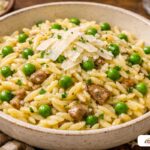
Garlic Butter Parmesan Orzo with Peas
A creamy, nutty, garlic-forward pasta dish that utilizes the "Pilaf Method" for maximum flavor with minimal ingredients.
Servings 5 people
Calories 320kcal
Equipment
- 1 12-inch Skillet (wide surface area is best for even liquid absorption).
- 1 Wooden spoon or spatula.
Ingredients
- 16 oz 1 box Orzo Pasta: This rice-shaped pasta has a high surface-area-to-volume ratio, perfect for quick absorption.
- 4 tbsp Butter: Half for toasting half for the finishing glaze.
- 4 cloves Garlic: Minced or 1 tsp garlic powder for the ultimate budget hack.
- 3 ½ cups Water or Broth: Using a 2:1 ratio plus a little extra ensures a creamy, risotto-like finish.
- 1 cup Frozen Peas: Adds fiber color, and "pop" for pennies.
- ¼ cup Grated Parmesan: Store-brand shaker parmesan works perfectly here to add a salty umami kick.
Instructions
- The Toast (The Pilaf Method): Melt 2 tbsp of butter in the skillet over medium heat. Add the dry orzo and garlic. Stir constantly for 2–3 minutes until the pasta turns a light golden brown and smells nutty. This "toasting" step creates a barrier on the pasta that prevents it from becoming mushy and adds a deep, roasted flavor profile.
- The Absorption: Carefully pour in the water or broth. Bring to a simmer, then turn the heat to medium-low. Cover and cook for 8–10 minutes, stirring occasionally. The orzo will absorb the liquid, releasing its natural starches to create a built-in "sauce."
- The Finishing Glaze: Once the liquid is almost gone and the orzo is tender, add the remaining 2 tbsp of butter, the frozen peas, and the Parmesan cheese.
- Residual Heat Cooking: Turn off the heat. Stir the mixture for 60 seconds. The residual heat from the pasta is enough to perfectly steam the frozen peas and melt the cheese into a velvet-like glaze without overcooking the delicate pasta.
- Waste Control: If you have a few slices of lemon or a pinch of red pepper flakes in the pantry, add them at the end to "brighten" the dish for free. Plan B: Leftover orzo makes a great cold pasta salad base—just add a splash of vinegar and some diced cucumbers the next day.
Video
Notes
Nutrition: 320 kcal | 10g Protein | 48g Carbs | 12g Fat
Please note that the included video serves as a visual technique guide and may not mirror our exact budget-audited recipe.