Disclosure: As an Amazon Associate, DishStories may earn from qualifying purchases at no extra cost to you.
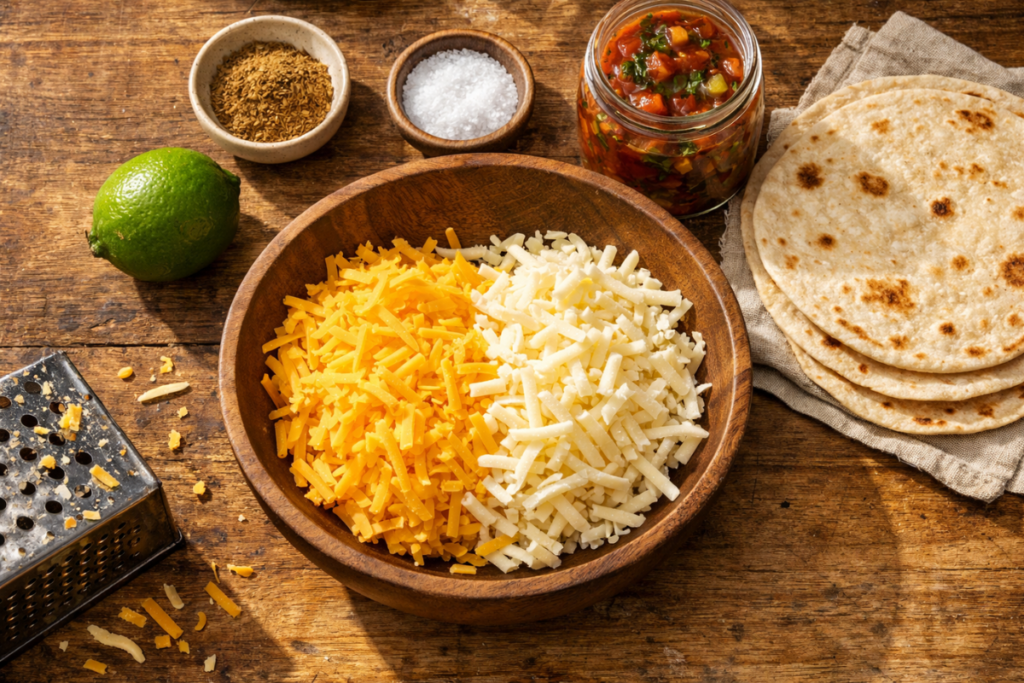
Bean & Cheese Burritos (With Flaky Homemade Flour Tortillas)
There’s a reason the bean & cheese burrito never goes out of style. No trending superfood, no viral sauce — just warm refried beans, melted cheese, and a blistered flour tortilla wrapped tight enough to hold your whole afternoon together.
This is Tex-Mex and Southern California street food at its most honest. From the taqueria counter to the home kitchen, the bean & cheese burrito has fed generations of Americans who understand that simplicity, done right, is its own kind of sophistication.
But here’s where most home cooks miss it: this dish looks easy, and that’s exactly the trap. The real magic lives in the margins — how you season the beans, which cheese you choose, how you warm the tortilla, and that one extra step with a cast-iron skillet that separates a good burrito from a great one.
This guide isn’t a shortcut. It’s a full breakdown of what makes a burrito with beans and cheese genuinely restaurant-worthy — the kind you crave at 9 p.m. on a Tuesday and feel good about making from scratch.
Let’s build it the right way.
The Beans
Not all refried beans are created equal — and straight from the can, most are too thick, too flat, and too forgettable.
How to wake up canned refried beans:
- Add liquid: Stir in 2–3 tablespoons of chicken or vegetable broth. This loosens the texture without watering down the flavor.
- Add fat: A teaspoon of bacon fat or lard is traditional — and for good reason. Fat coats the bean starches, creating an ultra-creamy, cohesive mouthfeel that plant-based oils simply don’t replicate at the same level.
- Season hard: Ground cumin, a pinch of garlic powder, and a small hit of smoked paprika transform a bland base into something you’d expect from a proper bean & cheese burrito recipe.
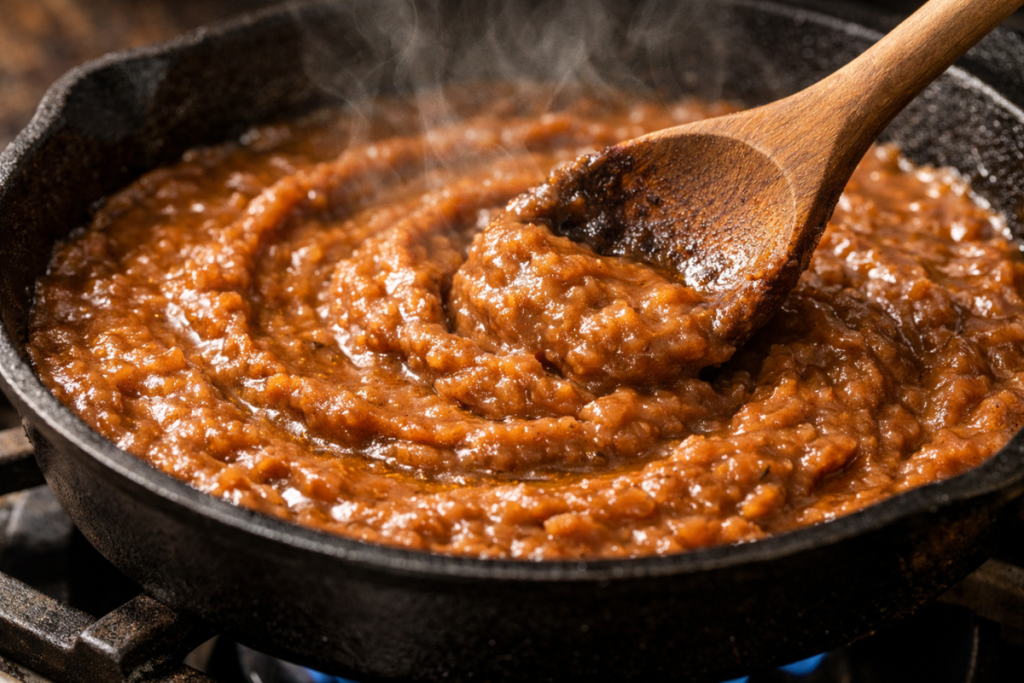
Warm the mixture over medium-low heat, stirring constantly, until it’s smooth, glossy, and spreadable — not runny, not stiff.
The Cheese
This is where most burritos fail quietly. Pre-shredded bagged cheese is coated in cellulose (an anti-caking starch) that actively prevents proper melting. You get a greasy, grainy texture instead of a smooth, flowing melt. Serious Eats has documented this effect extensively in their cheese sauce deep-dives.
The correct move: Grate your own from a block.
Best cheese for burritos — a two-cheese blend:
- Sharp Cheddar — Bold, tangy flavor that cuts through the richness of the beans. Non-negotiable for depth.
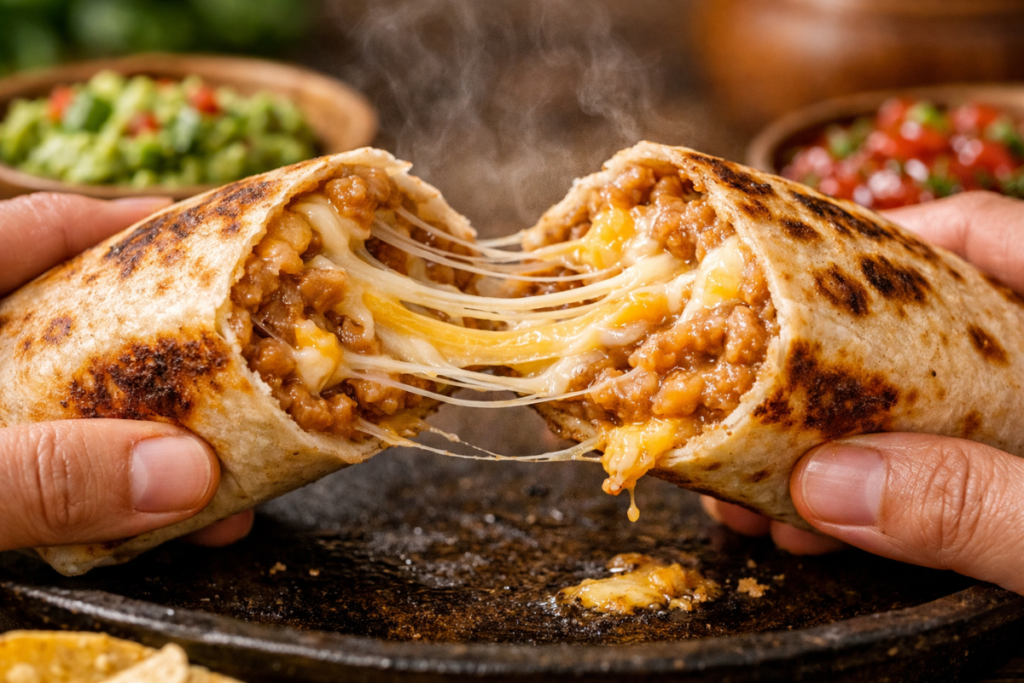
- Monterey Jack or Oaxaca — High moisture content, low melt point. This is what gives you that photo-worthy, pull-apart cheese stretch.
Best Mexican cheese for burritos? Oaxaca is the answer if you can find it. It melts in long, silky ribbons and has a mild, milky flavor that plays beautifully with the cumin-spiked beans.
Grate both cold, combine in a bowl, and use immediately for the cleanest melt.
The Tortilla Masterclass
The tortilla is not just packaging. It’s an active ingredient.
Most grocery store flour tortillas arrive chalky, brittle, and prone to cracking the moment you attempt a fold. They’re shelf-stable by design — not built for the kind of elastic, tight wrap a proper burrito demands.
Two ways to fix a store-bought tortilla:
- Dry skillet method: 20–30 seconds per side on a hot, ungreased comal or cast-iron skillet. Watch for small brown spots — that’s the Maillard reaction at work, adding flavor and flexibility simultaneously.
- Steam method: Wrap in a damp paper towel and microwave for 20 seconds. Fast, reliable, effective.
If you’re making tortillas from scratch, mastering this dough unlocks an entire world of street-food possibilities — from Smash Burger Tacos to Korean BBQ Tacos — all built on the same fundamental dough.
Chef’s Notes: Tortilla Elasticity & Melt Mechanics
On fat choice: Lard and shortening shorten gluten strands during mixing — this is literal chemistry, not folklore. Shorter gluten = a tortilla that stretches without snapping. Butter adds flavor but less elasticity. Oil produces a softer tortilla but with less structural integrity under heat.
On moisture: High-moisture cheeses (Oaxaca, Jack) release steam as they melt inside the burrito. That internal steam is what softens the filling and keeps everything cohesive — but only if your tortilla is sealed properly. A loose wrap lets steam escape, leaving you with a dry, unevenly melted core.
Homemade flour tortillas made with lard, a touch of salt, and warm water — rested for 30 minutes — will outperform any packaged option. Every time.
Kitchen Tools We Recommend
Easy Bean and Cheese Burrito — The Build
Step 1 — The Warm Up Heat your tortilla on a dry skillet for 20–30 seconds per side until pliable and lightly spotted. Work fast — a warm tortilla folds cleanly; a cold one cracks.
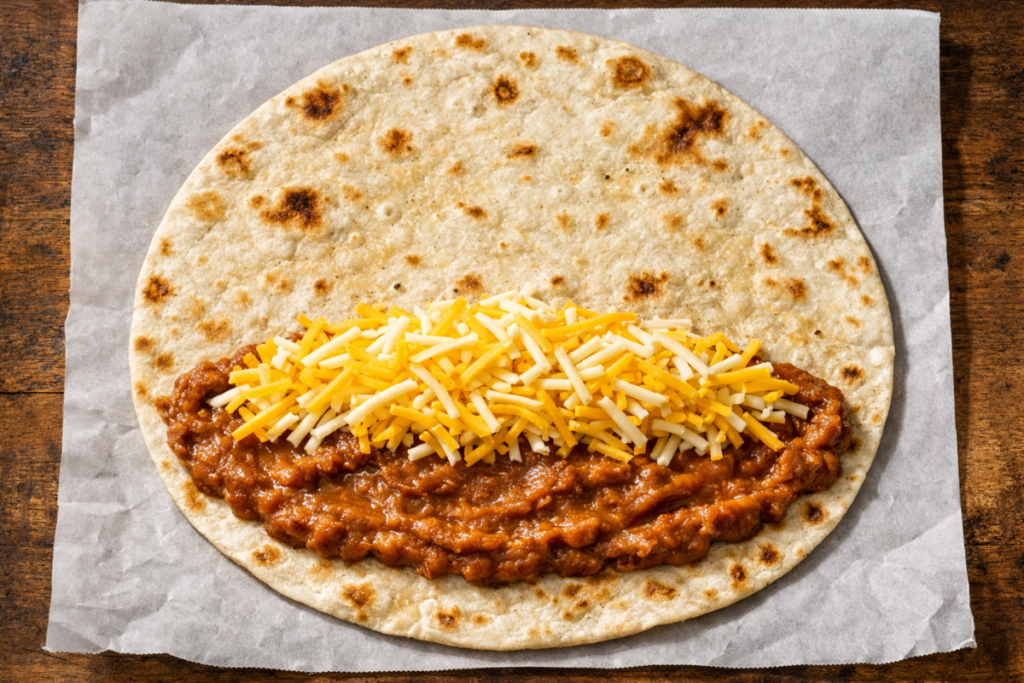
Step 2 — The Layering Strategy Spread a generous layer of warm refried beans across the lower third of the tortilla, leaving a 1-inch border. Immediately pile the grated cheese blend directly on top of the hot beans. The bean heat begins melting the cheese before the burrito is even folded — that’s your melting engine.
Step 3 — The Geometric Wrap
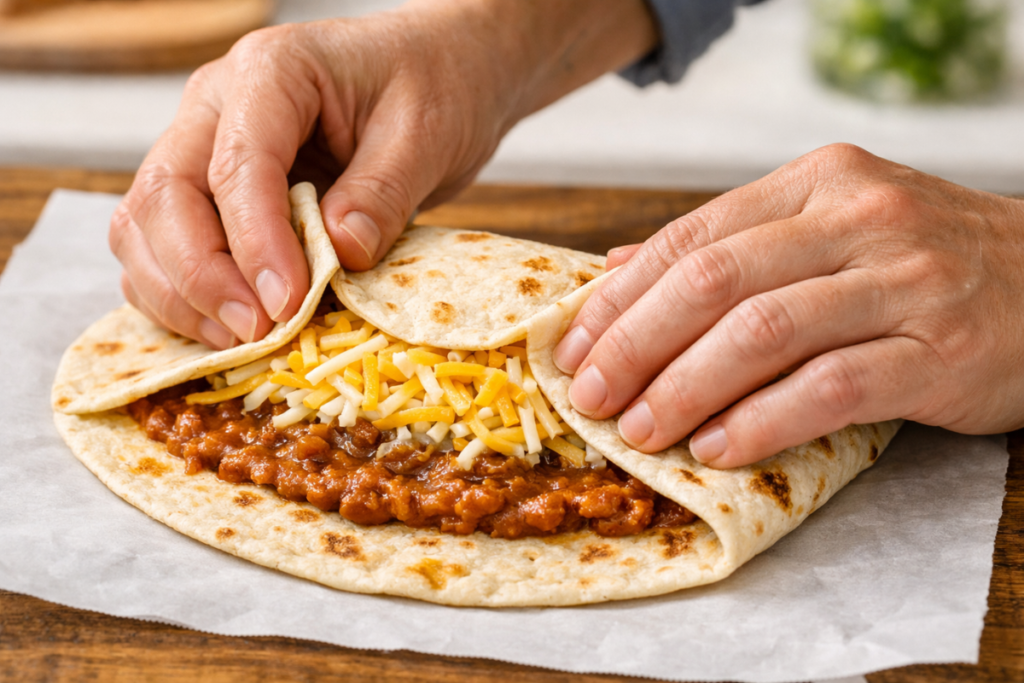
- Fold the left and right sides inward about 1.5 inches.
- Pull the bottom edge up and over the filling, tucking it snugly under.
- Roll forward firmly, keeping tension throughout. No gaps, no air pockets.
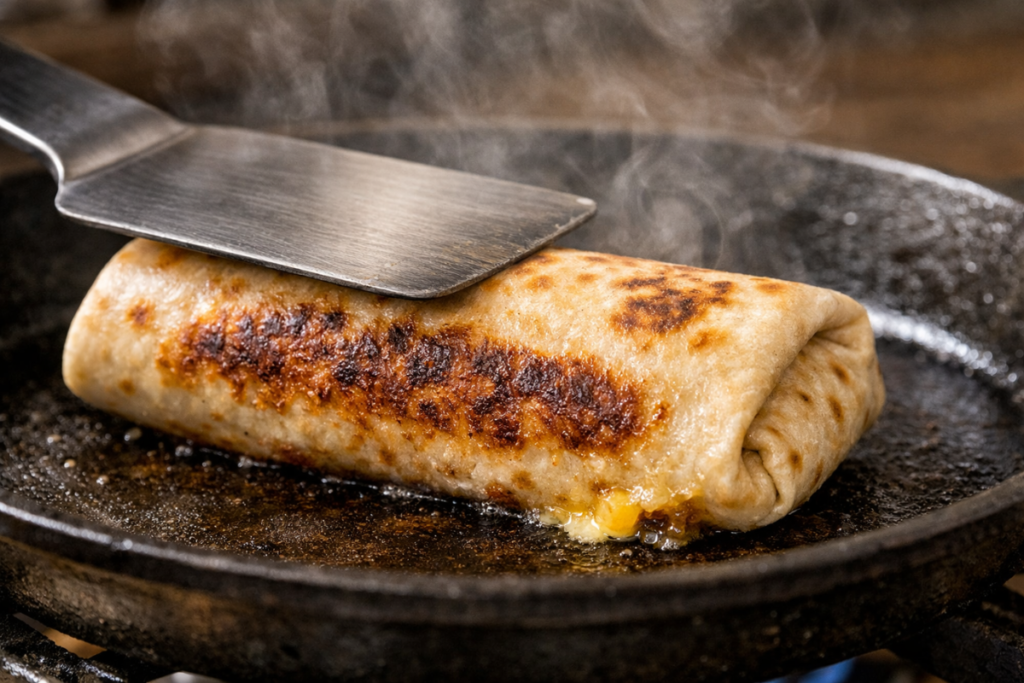
Step 4 — The Skillet Sear (The Pro Secret) Place the burrito seam-side down on a lightly greased, preheated cast-iron skillet over medium-high heat. Press gently with a spatula.
- Sear 1–2 minutes per side until golden brown and crisp.
- This does two things: it fuses the seam shut permanently, and it creates a blistered, crunchy exterior that no microwave can replicate.
This is the step that makes a simple burrito bean and cheese recipe taste like it came from a legit taqueria.
Bean and Cheese Freezer Burritos — Done Right
The biggest mistake with freezer bean & cheese burritos: wrapping them in foil alone and nuking them straight from frozen. The result is a steamed, soggy shell with a cold center. Here’s the correct method.
How to freeze:
- Let assembled, seared burritos cool completely.
- Wrap each one first in parchment paper — this layer absorbs excess moisture during reheating and prevents the tortilla from becoming waterlogged.
- Wrap tightly in heavy-duty aluminum foil over the parchment. Label with date. Freeze flat. Good for up to 3 months.
How to reheat homemade frozen bean & cheese burritos:
- Oven (best results): 350°F for 25–30 minutes, still in foil. Unwrap the last 5 minutes to re-crisp the exterior.
- Air fryer (fastest): Remove foil and parchment. Air fry at 370°F for 12–15 minutes, flipping once halfway. You’ll get a shatteringly crisp shell with a hot, creamy center.
- Microwave (emergency only): Remove foil, keep parchment. 2–3 minutes on 50% power, then 1 minute full power. It works — it just won’t be as good.
Recipe Card & Nutrition
Authentic Bean & Cheese Burritos (With Flaky Homemade Flour Tortillas)
Equipment
- 1 Medium skillet or cast-iron pan For warming and seasoning the beans
- 1 Cast-iron skillet or comal For tortilla warming and final burrito sear
- 1 Wooden spoon or spatula. For stirring beans
- 1 Box grater Coarse side recommended for cheese
- 1 Mixing bowl For cheese blend
- 1 Measuring spoons For seasoning accuracy
- 1 Chef’s knife Optional for diagonal slicing
- 1 Cutting board For serving prep
- 1 Spatula For pressing burritos during sear
Ingredients
- 1 can Refried beans 16 oz High-quality pinto bean base
- 3 tbsp Chicken broth Or vegetable stock to loosen starch matrix
- 1 tsp Lard Or bacon fat for traditional taqueria richness
- 1/2 tsp Ground cumin Strong savory depth
- 1 pinch Garlic powder Subtle aromatic baseline
- 1 pinch Smoked paprika Transformed flavor profile
- Salt and black pepper to taste After warming
- 1 cup Sharp Cheddar cheese Freshly grated from a block
- 1 cup Monterey Jack cheese Or Oaxaca cheese freshly grated
- 4 pcs Large flour tortillas 10-to-12 inch size
- 1 tbsp Bacon fat or butter For greasing skillet during sear
Instructions
The Velvet Beans
- Step 1: Melt the Base FatPlace a medium skillet or cast-iron pan over medium-low heat and add the lard or bacon fat.
- Step 2: Loosen and EmulsifyOnce the fat melts, add the canned refried beans, breaking up any dense clumps with a wooden spoon. Pour in the chicken broth.
- Step 3: Season HardStir in the ground cumin, garlic powder, and smoked paprika. Stir constantly for 4–5 minutes until the mixture is smooth, glossy, and spreadable—not runny, not stiff. Season with salt and pepper to taste, then drop heat to low.
The Cheese Engine
- Step 4: Grate FreshShred your cold blocks of Sharp Cheddar and Monterey Jack (or Oaxaca) cheese using the coarse side of a box grater. Combine both tightly in a bowl and use immediately for the cleanest melt.
The Assembly & Sealing Move
- Step 5: Activate the VesselHeat a dry, ungreased comal or cast-iron skillet over medium-high heat. Warm each flour tortilla for 20–30 seconds per side until tiny brown spots develop and the tortilla is soft and elastic. Work fast while warm.
- Step 6: The Layering StrategySpread a generous layer of warm refried beans across the lower third of the tortilla, leaving a 1-inch border. Immediately pile the grated cheese blend directly on top of the hot beans to kickstart the melting engine.
- Step 7: The Geometric WrapFold the left and right sides inward about 1.5 inches. Pull the bottom edge up and over the filling, tucking it snugly under. Roll forward firmly, keeping uniform tension throughout. No gaps, no air pockets.
The Pro Finishing Move
- Step 8: Execute the Skillet SearPlace your rolled burrito seam-side down onto your lightly greased, preheated cast-iron skillet over medium-high heat. Press down gently with a spatula.
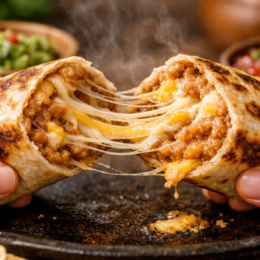
- Step 9: Fuse and ServeSear for 1–2 minutes per side until the exterior is beautifully blistered, golden brown, and the seam is permanently fused shut. Slice diagonally to display the ultimate interior cheese pull and serve hot.
Video
Notes
Nutrition
Estimates based on a 10-inch homemade lard tortilla, ½ cup refried beans, and a 50/50 Sharp Cheddar and Monterey Jack blend. Values vary with specific brands and portions.| Nutrition Facts | Amount |
|---|---|
| Calories | 520 kcal |
| Protein | 22 g |
| Total Carbohydrates | 58 g |
| Dietary Fiber | 9 g |
| Total Fat | 22 g |
| Saturated Fat | 10 g |
| Sodium | 880 mg |
Authentic Bean & Cheese Burrito — FAQ
Why does my burrito get soggy when I reheat it, and how do I fix it?
The culprit is trapped steam with nowhere to go. When you reheat a foil-wrapped burrito in the microwave, moisture from the beans and cheese condenses against the tortilla wall and softens it from the inside out. The fix: wrap in parchment paper before the foil when freezing, and reheat in an oven or air fryer — both methods allow steam to escape while restoring a crisped exterior. If using a microwave, always remove the foil and keep the parchment layer on.
Can I use store-bought tortillas, or do I need to make them from scratch?
Store-bought works — but it requires a non-negotiable prep step. Every packaged tortilla needs to be warmed on a dry skillet or steamed before use. Cold tortillas crack. A 20–30 second hit of dry heat per side activates the fats in the dough and restores pliability. Scratch-made tortillas with lard will always outperform on texture and flavor, but a properly warmed store-bought is a solid foundation.
What’s the best bean-to-cheese ratio to avoid overflow?
For a 10-inch tortilla: use roughly ½ cup of refried beans and ⅓ cup of grated cheese. That’s the structural sweet spot. More than ⅔ cup of combined filling makes a clean fold nearly impossible and causes blowouts at the seam during searing. Spread beans thin and wide rather than thick and centered — even distribution beats a dense pile every time.
Why does grating cheese from a block actually matter?
Pre-shredded bagged cheese is coated in cellulose powder — an anti-caking agent that prevents clumping in the bag but also prevents proper melting on heat. Instead of flowing smoothly, it turns grainy and greasy. Block cheese grated fresh has no additives, higher surface area contact, and melts into a cleaner, stretchier result. For the best way to cook flour tortillas with a proper melt inside, freshly grated cheese isn’t optional — it’s the standard.
Ready to make these? Start with the beans, grate your own cheese, and don’t skip the cast-iron sear. That last step changes everything.