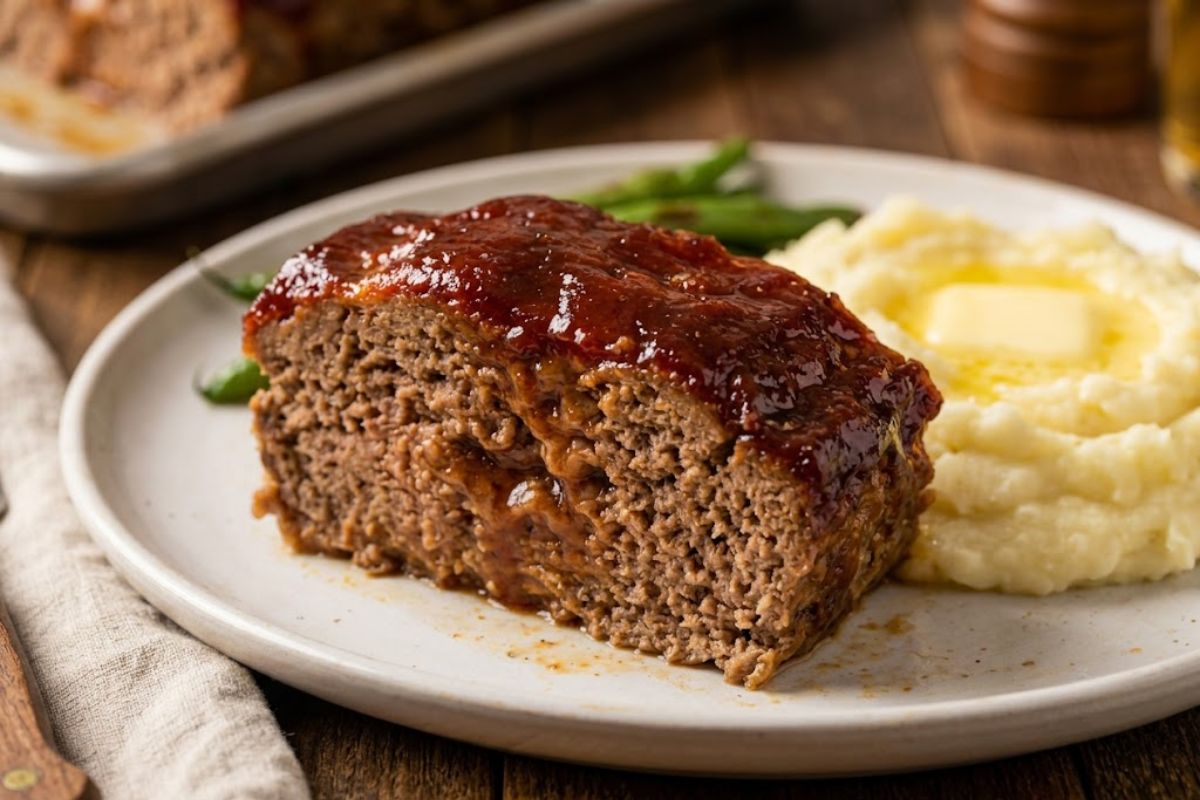
There is something magical about the smell of a classic American kitchen on a Sunday afternoon. As the rich aroma of seasoned beef and a sweet, tangy glaze fills the house, everyone seems to find their way to the dinner table. If you’ve ever worried that homemade meatloaf might turn out dry, crumbly, or bland, you’re in exactly the right place. This meatloaf with brown sugar glaze is everything a classic meatloaf recipe should be: tender, juicy, and packed with comforting flavor in every slice.
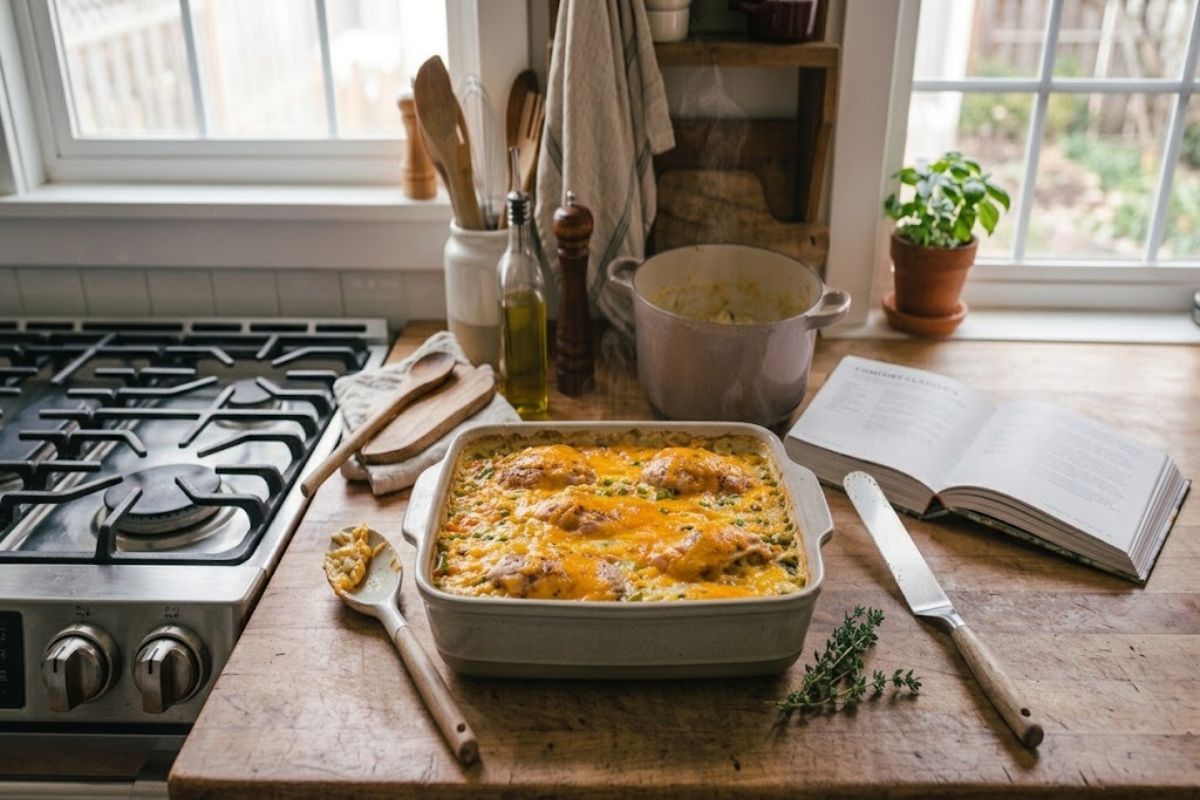
The glossy glaze caramelizes into a sticky, savory-sweet crust that transforms a humble dish into the kind of family comfort food everyone requests again and again. Pair it with creamy mashed potatoes, roasted green beans, or even our Creamy Chicken and Rice Casserole for easy weeknight dinners or relaxed Sunday family meals.
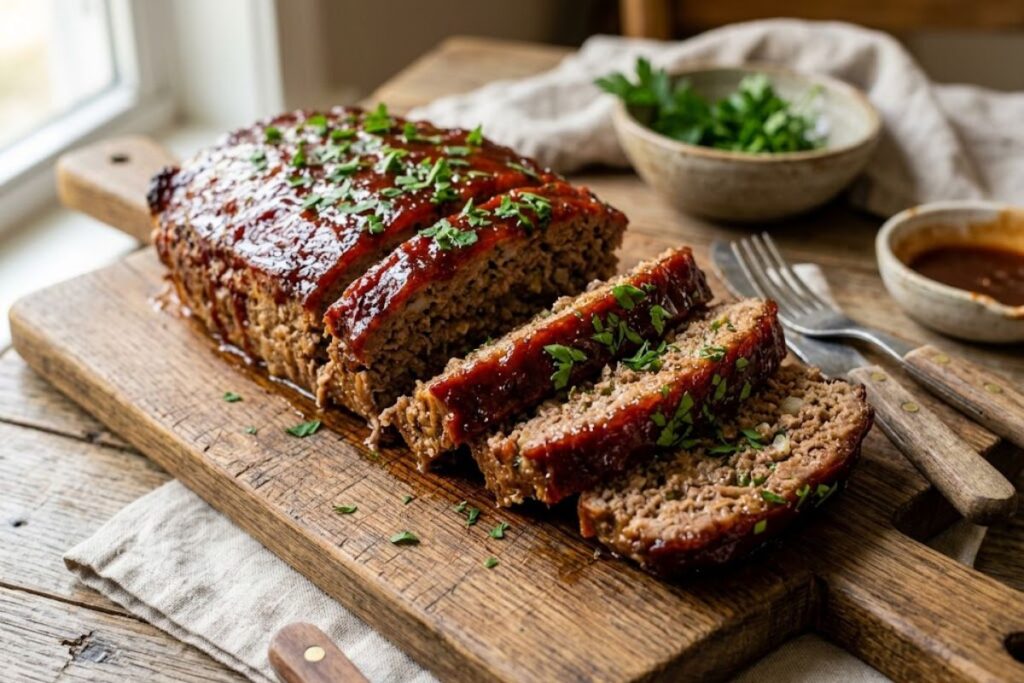
Why This Glaze Steals the Show
The secret to unforgettable meatloaf isn’t just the beef. It’s the glaze. The best meatloaf glaze with brown sugar strikes the perfect balance between sweet, tangy, and savory, creating a glossy finish that tastes just as incredible as it looks.
A simple combination of meatloaf glaze ketchup brown sugar delivers bold flavor with very little effort. The ketchup brings bright tomato richness and a gentle tang, while the brown sugar melts into a sticky-sweet coating. As the meatloaf finishes baking, the sugars caramelize across the surface, forming a beautifully lacquered crust with deep, almost smoky notes.
That caramelized layer does more than add flavor. It acts like a flavorful seal, helping the meatloaf retain its natural juices while creating irresistible edges that are slightly chewy and packed with concentrated taste. A quick trip under the broiler during the final minutes intensifies the caramelization even further, giving you a deeply caramelized glaze that crackles with sweet-tangy goodness and makes every slice look bakery-window beautiful.
Ingredients & Smart Substitutions
For the Meatloaf
- 1½ pounds 80/20 ground beef
- ½ pound ground pork
- 1 cup panko breadcrumbs
- ⅓ cup whole milk
- 2 large eggs, beaten
- 1 small yellow onion, finely diced
- 2 garlic cloves, minced
- 2 tablespoons Worcestershire sauce
- 1 teaspoon kosher salt
- ½ teaspoon freshly ground black pepper
For the Brown Sugar Glaze
- ½ cup ketchup
- ⅓ cup packed light brown sugar
- 1 tablespoon yellow mustard
- 1 tablespoon apple cider vinegar
- Pinch of garlic powder
Why This Meat Blend Works So Well
Using 80/20 ground beef provides the ideal balance of lean meat and fat, creating a meatloaf that’s flavorful, juicy, and tender without becoming greasy. As the meatloaf bakes, the 20% fat renders slowly, helping every slice stay moist, succulent, and packed with rich beef flavor.
Another game-changing technique is soaking the breadcrumbs in milk before mixing them into the meat. This creates a panade, allowing the breadcrumbs to absorb the liquid first and gradually release it during baking. The result is a meatloaf that’s exceptionally tender, juicy, and never dry or crumbly, even when reheated the next day.
Why the Brown Sugar Glaze Is a Classic
A traditional meatloaf topping with brown sugar ketchup and mustard delivers the perfect harmony of sweet, tangy, and savory flavors. Ketchup provides bright tomato richness, brown sugar melts into a glossy caramelized coating, and yellow mustard adds just enough acidity to balance the sweetness. A splash of apple cider vinegar keeps the glaze from tasting overly sugary, while a pinch of garlic powder rounds everything out with subtle savory depth. As the glaze bakes and finishes under the broiler, it transforms into a sticky, beautifully caramelized crust that seals in moisture and gives every slice its signature comfort-food appeal.
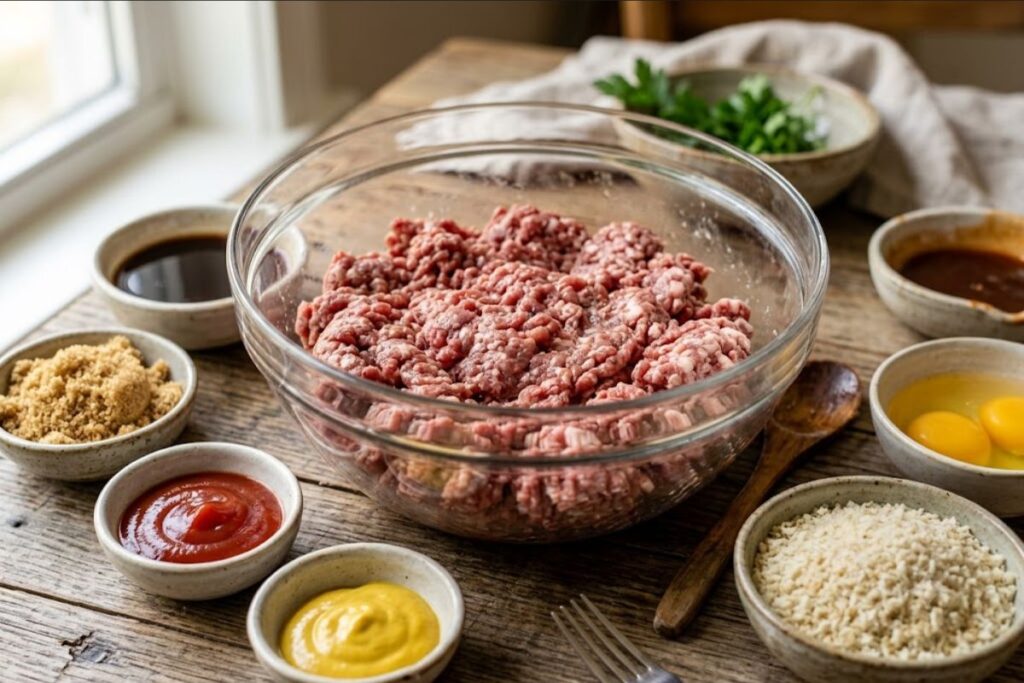
Step-by-Step Instructions (The Foolproof Method)
Step 1: Make the Panade
In a large mixing bowl, combine the panko breadcrumbs and milk. Let the mixture sit for 5 minutes until the breadcrumbs have fully absorbed the liquid. This simple panade is one of the biggest secrets to a moist, tender meatloaf because it helps the meat retain moisture throughout baking.
Step 2: Mix the Meat Gently
Add the ground beef, ground pork, eggs, onion, garlic, Worcestershire sauce, ketchup, parsley, salt, pepper, Italian seasoning, and smoked paprika to the panade.
Using clean hands or a fork, gently fold everything together just until combined. Resist the urge to keep mixing. Overworking the meat compresses the proteins, which can leave your finished meatloaf dense and tough instead of light and juicy.
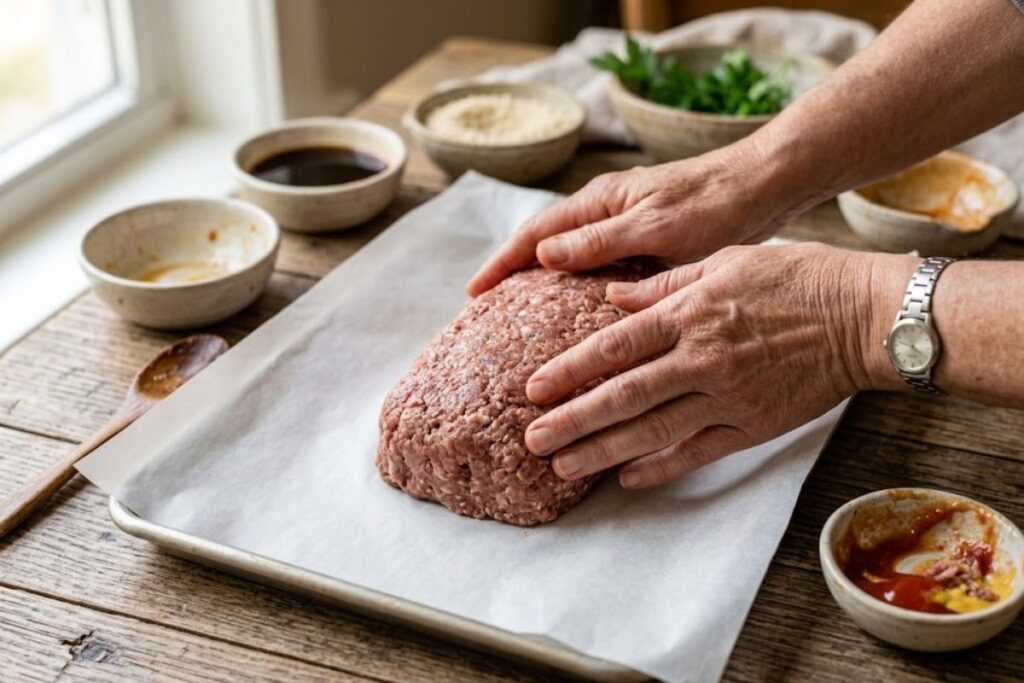
Step 3: Shape the Loaf
Line a rimmed baking sheet with parchment paper or foil for easy cleanup. Shape the mixture into an even loaf about 9 × 5 inches, keeping the thickness consistent so it cooks evenly.
Using a baking sheet instead of a loaf pan allows hot air to circulate around the meat, helping excess fat drain away while creating delicious browned edges.
Step 4: The First Bake
Preheat your oven to 350°F (175°C).
Bake the meatloaf without any glaze for 40 to 45 minutes. This initial bake allows the loaf to set properly before adding the topping. Applying the glaze too early can cause the sugars to darken too quickly before the meat is fully cooked.
Step 5: Prepare the Glaze
While the meatloaf bakes, whisk together:
- ½ cup ketchup
- ¼ cup packed brown sugar
- 1 tablespoon yellow mustard
- 1 teaspoon Worcestershire sauce
- Optional: ½ teaspoon apple cider vinegar for extra brightness
This classic ketchup glaze for meatloaf creates the perfect balance of sweet, tangy, and savory flavors.
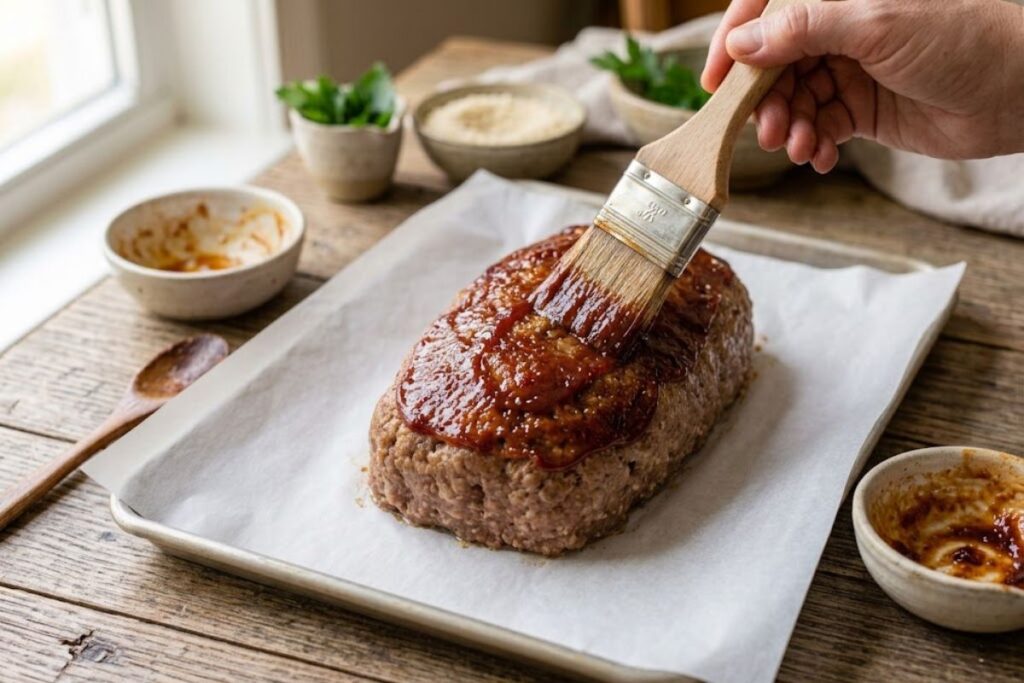
Step 6: Glaze and Finish Baking
Remove the meatloaf from the oven and generously brush the glaze over the entire top and sides.
Return it to the oven and bake for another 15 to 20 minutes, allowing the glaze to thicken and cling to every bite.
To ensure the meatloaf is safely cooked, insert an instant-read thermometer into the center. It should register 160°F (71°C). For current food safety recommendations on cooking ground meat, see the USDA Food Safety Guidelines.
Step 7: The Broil Finale
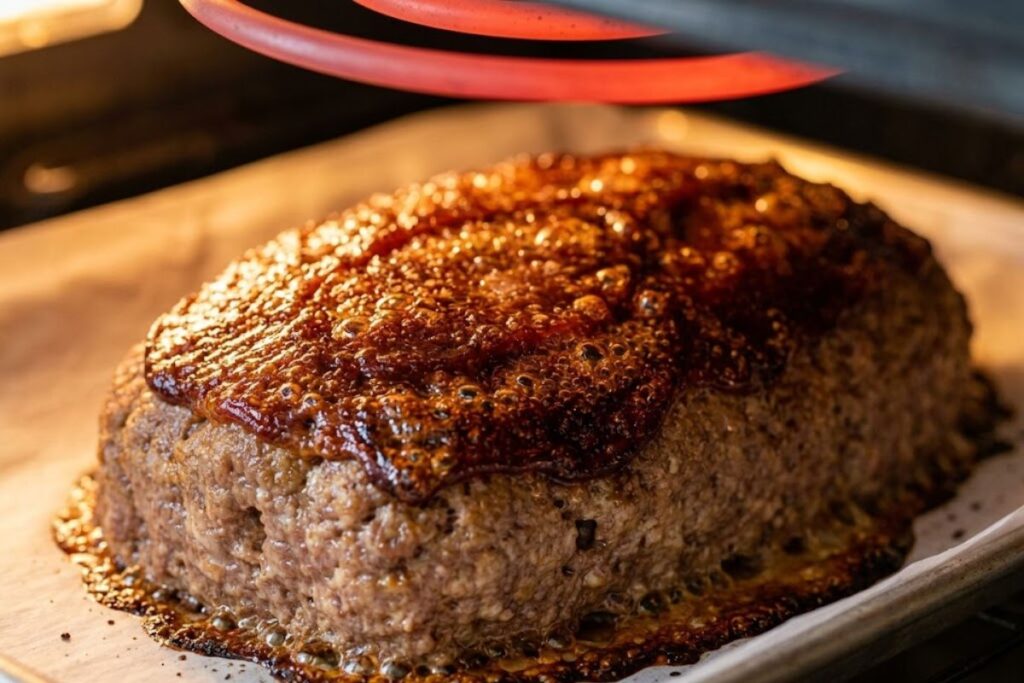
For that irresistible sticky finish, switch the oven to broil for 2 to 4 minutes. Keep a close eye on the meatloaf as the brown sugar caramelizes rapidly.
The glaze should become glossy, bubbly, and deeply caramelized with lightly darkened edges. This final blast of heat transforms the topping into a rich, lacquered coating that makes every slice look and taste restaurant-worthy.
Step 8: Let It Rest Before Slicing
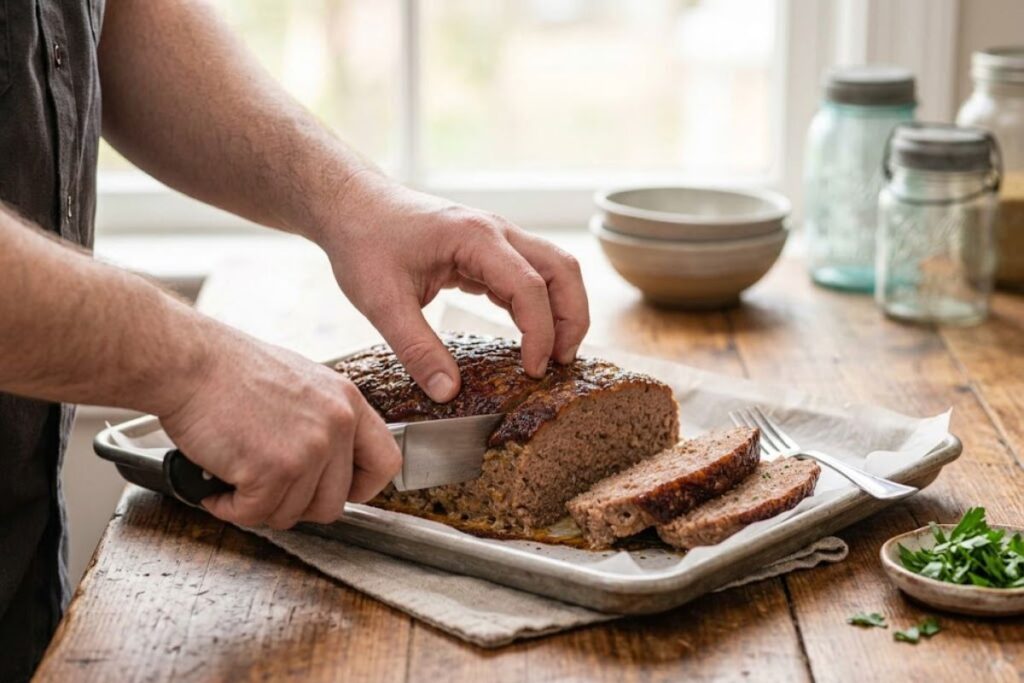
Transfer the meatloaf to a cutting board and let it rest for 10 minutes before slicing.
This resting period allows the juices to redistribute throughout the loaf, so each slice stays moist, tender, and perfectly intact instead of falling apart on the cutting board.
Troubleshooting & Pro Tips
Even a classic comfort food like meatloaf can have a few hiccups. Here are the fixes that make the difference between a good dinner and one your family asks for again and again.
Why Does My Meatloaf Fall Apart?
If your meatloaf crumbles when you slice it, the culprit usually isn’t the recipe. It’s the timing.
The biggest mistake is cutting into it straight from the oven. Instead, let the meatloaf rest for at least 10 minutes before slicing. During this time, the juices redistribute throughout the loaf, and the proteins have a chance to firm up. The reward is neat, sturdy slices that stay together while remaining incredibly moist.
Also make sure you:
- Measure the breadcrumbs accurately. Too few can make the loaf fragile.
- Use the eggs as directed since they help bind everything together.
- Mix the ingredients gently. Overmixing creates a tighter texture, while undermixing can prevent the ingredients from binding evenly.
Can I Make This Ahead of Time?
Absolutely, and it’s one of the best make-ahead dinners for busy weeks.
Here are three easy options:
- Prep Ahead: Mix and shape the meatloaf up to 24 hours in advance. Cover tightly and refrigerate, then bake when you’re ready.
- Freeze Before Baking: Wrap the uncooked loaf tightly in plastic wrap and foil, then freeze for up to 3 months. Thaw overnight in the refrigerator before baking.
- Freeze After Baking: Let the cooked meatloaf cool completely, slice it into portions, and freeze in airtight containers for quick weeknight meals.
Bonus Tip: Leftovers Are Even Better
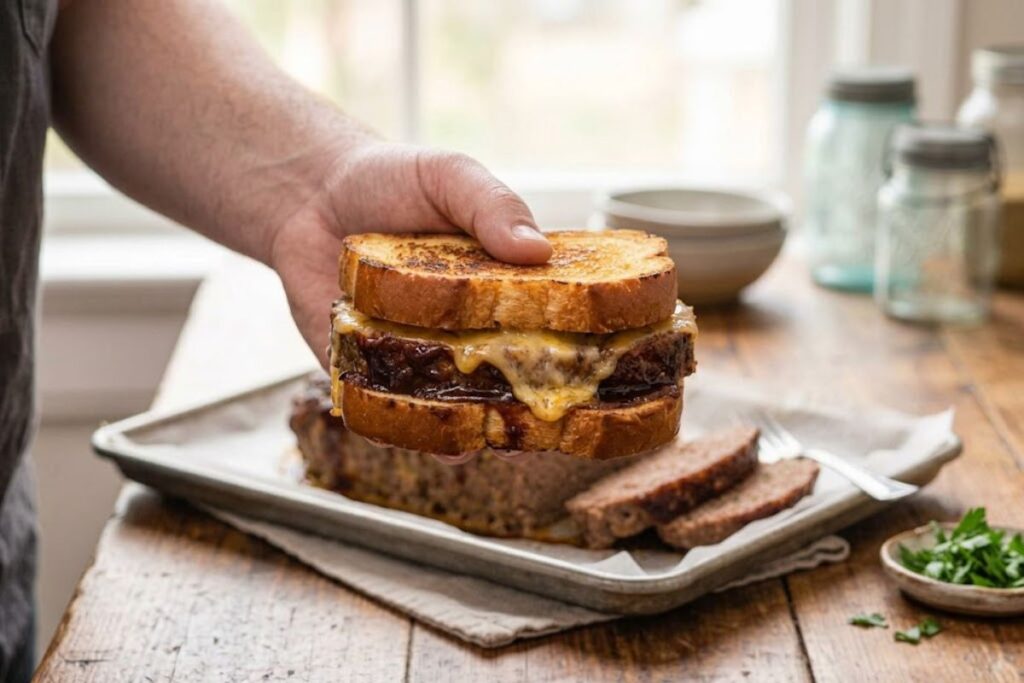
Cold slices of leftover meatloaf make one of the best comfort-food sandwiches around. Layer thick slices on toasted brioche with melted cheddar, a little extra brown sugar glaze, crisp lettuce, or dill pickles for an unforgettable lunch the next day.
Recipe Card:
Meatloaf with Brown Sugar Glaze
Equipment
- 1 Large mixing bowl
- 1 Small bowl
- 1 Measuring cups and spoons
- 1 Baking sheet
- 1 Parchment paper or aluminum foil
- 1 Pastry brush
- 1 Instant-read meat thermometer
Ingredients
The Meatloaf Base
- 2 pounds 80/20 ground beef
- 1 cup panko breadcrumbs
- ⅓ cup whole milk
- 2 large eggs beaten
- 1 small onion finely diced
- 2 garlic cloves minced
- 2 tbsp Worcestershire sauce
- ¼ cup chopped fresh parsley
- 1 tsp Italian seasoning
- ½ tsp smoked paprika
- 1 tsp kosher salt
- ½ tsp black pepper
The Brown Sugar Glaze
- ½ cup ketchup
- ⅓ cup packed light brown sugar
- 1 tbsp yellow mustard
- 1 tbsp apple cider vinegar
- Pinch of garlic powder
Instructions
- Preheat the oven to 350°F (175°C) and line a rimmed baking sheet with parchment paper or foil.
- Combine the panko breadcrumbs and whole milk in a large bowl and let them soak for 5 minutes to create a tender panade.
- Add the ground beef, ground pork, beaten eggs, onion, garlic, Worcestershire sauce, salt, and pepper to the bowl.
- Gently mix everything together just until combined, taking care not to overwork the meat.
- Shape the mixture into an even loaf about 9 x 5 inches and place it on the prepared baking sheet.
- Bake the meatloaf uncovered for 45 to 50 minutes.
- While the meatloaf bakes, whisk together the ketchup, brown sugar, yellow mustard, apple cider vinegar, and garlic powder until smooth to create the ketchup glaze for meatloaf.
- Remove the meatloaf from the oven and generously brush the glaze over the top and sides.
- Return the meatloaf to the oven and bake for another 10 to 15 minutes, or until the center reaches 160°F (71°C).
- Turn the oven to broil and cook for 3 to 5 minutes, watching carefully until the glaze becomes bubbly, sticky, and beautifully caramelized.
- Remove the meatloaf from the oven and let it rest for 10 minutes before slicing and serving.
Notes
- Letting the breadcrumbs soak in milk helps produce an exceptionally tender meatloaf.
- Mixing the meat gently prevents a dense or tough texture.
- Resting the meatloaf before slicing helps it hold together and keeps the juices inside.
- For extra caramelization, brush on a second thin layer of glaze just before broiling.
- Leftovers keep well in the refrigerator for up to 4 days and make outstanding sandwiches.
Nutrition (Estimated Per Serving)
Yield: 8 servings Nutrition (per serving):
- Calories: 440
- Protein: 30g
- Carbohydrates: 17g
- Fat: 28g
- Saturated Fat: 10g
- Cholesterol: 125mg
- Sodium: 680mg
- Sugar: 12g
- Fiber: 1g
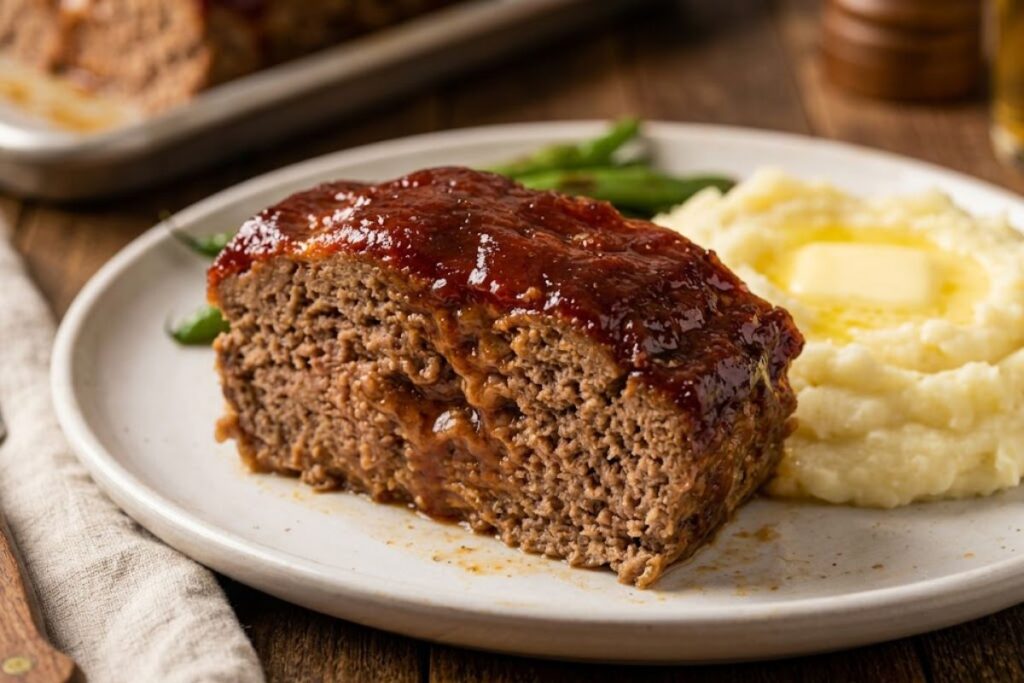
Meatloaf with Brown Sugar Glaze Frequently Asked Questions:
Can I use lean ground beef?
Yes, but 80/20 ground beef delivers the best results. Leaner options like 90/10 or 93/7 can produce a drier meatloaf unless you add extra moisture, such as a little more milk or finely grated vegetables. For the juiciest, most flavorful meatloaf, 80/20 is the preferred choice.
How do I prevent my meatloaf from swimming in grease?
The easiest solution is to avoid baking it in a traditional loaf pan. Instead, shape the meatloaf by hand and bake it on a parchment-lined rimmed baking sheet, allowing excess fat to drain away naturally while the outside develops a flavorful crust. Another excellent option is a two-piece broiler pan or perforated meatloaf pan, which lets grease drip into the bottom tray. This keeps the meatloaf from sitting in rendered fat and results in a better texture and cleaner slices.
Can I substitute the brown sugar in the glaze?
Absolutely. Dark brown sugar is the closest substitute because it contains more molasses, giving the glaze a richer, deeper flavor and slightly darker caramelization. If you’re out of brown sugar, honey or pure maple syrup can also be used in a pinch. They’ll provide sweetness and shine, but they won’t create quite the same sticky, caramelized finish as the classic combination of meatloaf glaze ketchup brown sugar. For the most traditional flavor and glossy appearance, the best meatloaf glaze with brown sugar still relies on light or dark brown sugar as its foundation.
Can I make the meatloaf ahead of time?
Yes. You can assemble and shape the meatloaf up to 24 hours in advance, cover it tightly, and refrigerate it until you’re ready to bake. You can also prepare the glaze ahead of time and store it separately in the refrigerator. When it’s time to cook, simply bake the meatloaf as directed, brush on the glaze during the final stage, and finish under the broiler for the best caramelized crust.
How should I store and reheat leftovers?
Store leftover meatloaf in an airtight container in the refrigerator for up to 4 days. For longer storage, wrap individual slices tightly and freeze for up to 3 months. To reheat, warm slices in a 325°F oven with a splash of beef broth or water and cover loosely with foil to keep them moist. Microwave reheating also works well for quick lunches, especially if you spoon a little extra glaze over the top before heating.
Can I freeze meatloaf before baking?
Yes. Shape the uncooked meatloaf, wrap it tightly in plastic wrap followed by aluminum foil, and freeze for up to 3 months. Thaw it overnight in the refrigerator before baking. This is a great meal-prep option because the meatloaf tastes just as fresh once baked, especially when finished with a freshly made brown sugar glaze.
Join the Conversation
Every family has a favorite way to serve meatloaf, and that’s part of what makes this classic so special.
Are you team mashed potatoes or team roasted veggies when it comes to the perfect meatloaf side dish? Let me know in the comments below!