
Few breakfasts feel as comforting as a skillet of bubbling shakshuka with perfectly set egg whites, jammy yolks, and plenty of warm bread for scooping. This shakshuka recipe brings those bold café flavors right into your kitchen with simple ingredients, balanced spices, and a foolproof method I’ve refined over years of making it.
Recipe at a Glance
Prep Time: 15 minutes
Cook Time: 25 minutes
Total Time: 40 minutes
Servings: 4
Flavor Profile: Smoky, aromatic, savory
Texture: Saucy, jammy yolks, creamy cheese
Difficulty: Easy
Freezer Friendly: No
Make-Ahead: Yes, sauce base only
Kitchen Notes & Testing Insights
I’ve cooked this shakshuka recipe through 10 separate test batches, changing just one variable at a time to find the version I’d happily serve for both a quiet Sunday breakfast and a table full of brunch guests. Some batches used canned whole tomatoes, others relied on fresh ripe tomatoes, and I experimented with everything from high heat to slow simmering. The biggest lesson was that the tomato base matters far more than the spice blend.
The most common mistake I ran into was using tomatoes that held too much water. Fresh tomatoes picked before peak ripeness or lower-quality canned diced tomatoes released so much liquid that the sauce stayed thin, even after the eggs were added. Instead of cradling the eggs, the sauce spread across the pan and left the whites unevenly cooked.
The fix turned out to be surprisingly simple. I switched to high-quality whole peeled tomatoes and crushed them by hand, then let the sauce simmer uncovered until it reduced naturally. When using fresh tomatoes, I seeded the juiciest ones before chopping. Those two changes transformed the consistency from watery to rich and spoon-coating, creating sturdy little wells that held each egg in place while the yolks stayed beautifully jammy.
The spices deserve just as much attention as the tomatoes. Rather than stirring them into a fully simmering sauce, I bloom the shakshuka spices in warm olive oil immediately after the onions and peppers soften. As the cumin, smoked paprika, and coriander hit the oil, the kitchen fills with a deep, earthy aroma layered with sweet pepper notes and a gentle smokiness. That brief minute of blooming unlocks flavors you simply won’t get by tossing dry spices into liquid later.
Another detail that consistently improved every batch was resisting the urge to rush the simmer. A patient 15-minute reduction gives the tomatoes time to mellow, the peppers to soften completely, and the spices to blend into a sauce that tastes full-bodied instead of sharp. By the time the eggs are nestled into the skillet, the sauce has a glossy finish, concentrated tomato sweetness, and enough body to support creamy crumbles of cheese without becoming heavy.
After those 10 rounds of testing, this is the version I keep coming back to. It delivers a deeply savory tomato sauce, fragrant spices, tender vegetables, perfectly set egg whites, and rich, jammy yolks that make every bite worthy of a favorite neighborhood brunch spot.
The Science of the Perfect Sauce
The best Israeli shakshuka recipe comes down to two key factors: balancing the tomatoes’ natural acidity and cooking the eggs just until the yolks reach their ideal setting point. As the sauce reduces and the yolks gently coagulate at about 149–158°F (65–70°C), you get a skillet with bold tomato flavor, silky sauce, and rich, jammy centers instead of chalky eggs.
A great shakshuka sauce isn’t supposed to taste like crushed tomatoes straight from the can. During a steady simmer, water evaporates while the tomatoes’ natural sugars, glutamates, and aromatic compounds become more concentrated. That slow reduction creates a thicker sauce that clings to the eggs rather than spreading across the pan. It also builds a deeper, naturally sweeter tomato flavor without relying on extra sugar.
Patience pays off here. If the heat is too high, the bottom can scorch before enough moisture cooks away. A gentle, uncovered simmer gives the vegetables time to soften, the onions to melt into the sauce, and the peppers to release their sweetness, creating a texture that’s rich and spoonable.
Olive oil plays a bigger role than simply preventing sticking. As it coats the onions, peppers, garlic, and spices, it captures and distributes fat-soluble flavor compounds throughout the skillet. Once the tomatoes are added, that layer of fat softens the sharp edges of their acidity, making the sauce taste rounder and more balanced without dulling its fresh character.
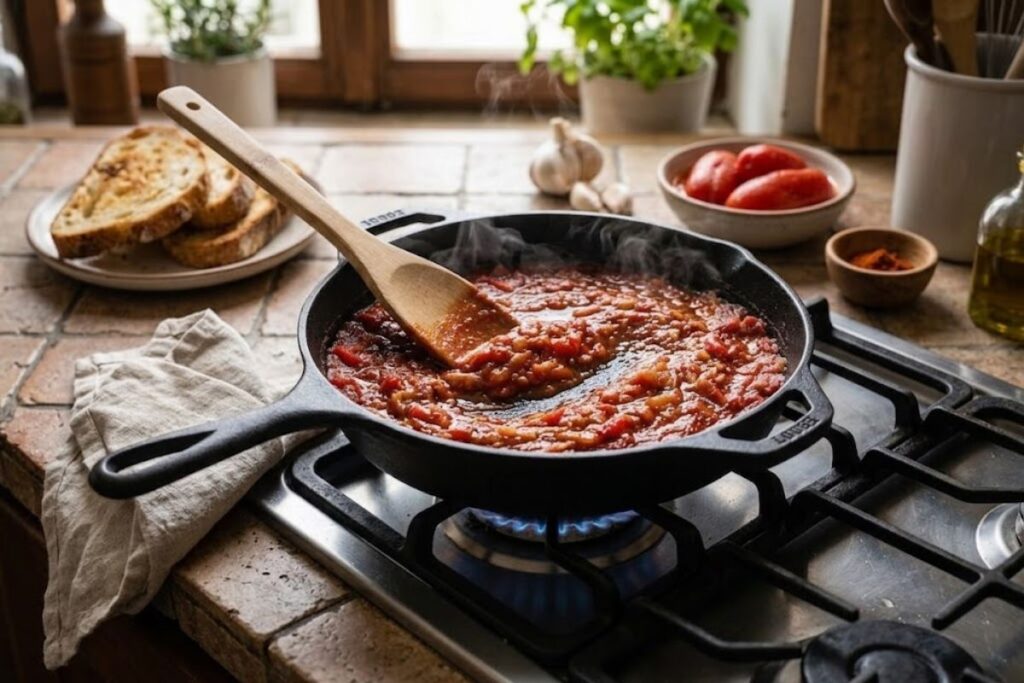
This is also why blooming the spices in warm olive oil before adding the tomatoes makes such a noticeable difference. Cumin, paprika, and coriander contain aromatic oils that dissolve into the cooking fat, allowing their flavors to spread evenly through the sauce instead of sitting on the surface. The finished dish tastes deeper, warmer, and more cohesive from the first bite to the last.
The final texture depends on timing the eggs correctly. Crack them into small wells in the reduced sauce, then cook gently until the whites are fully opaque while the yolks remain soft and creamy. The residual heat from the sauce continues to cook the eggs even after the skillet comes off the burner, so removing it just before the yolks reach your preferred consistency helps preserve that signature jammy texture.
Essential Kitchen Equipment
☐ Flat-edged wooden spoon — Ideal for scraping up the flavorful bits that develop on the bottom of the skillet, stirring without scratching the pan, and gently folding the sauce without crushing the vegetables.over the top.
☐ Heavy cast-iron skillet — Retains heat evenly, helping the tomato sauce reduce at a steady pace while creating gentle, consistent heat for evenly cooked eggs. It also keeps the shakshuka warm at the table.
☐ Sharp chef’s knife — Makes quick, uniform cuts of onions, peppers, and herbs so the vegetables cook evenly and develop a consistent texture throughout the sauce.
Ingredient Guide: Choosing the Right Ingredients for Exceptional Shakshuka
Whole Peeled San Marzano Tomatoes: The tomato base makes or breaks this shakshuka recipe, so it’s worth choosing carefully. Look for whole peeled San Marzano tomatoes packed in tomato juice, not heavy purée, since they deliver a naturally sweet flavor and silky texture after simmering. Crushing them by hand gives you control over the final consistency, leaving a few small pieces that add body to the sauce. Skip canned crushed tomatoes if possible. Many brands include calcium chloride or concentrated purée to hold their texture on the shelf, which can leave the sauce tasting slightly metallic or produce a thinner, less balanced finish once heated. Don’t rush the simmer, either—the tomatoes need time to reduce into a rich, spoon-coating sauce.
The Spice Trinity: Smoked Paprika, Cumin, and Coriander: Fresh shakshuka spices create the warm, savory backbone of the dish. Smoked paprika contributes gentle smokiness and color, cumin adds earthy depth, and coriander brings subtle citrus notes that brighten the tomatoes. Buy spices from stores with high turnover and check the expiration date before they go into your cart. Ground spices lose their essential oils over time, leaving the sauce flat no matter how good the tomatoes are. Avoid dumping the spices directly into liquid. Blooming them briefly in warm olive oil wakes up their aromas and creates a noticeably fuller flavor.
Farm-Fresh Eggs: Since the eggs are the star of the finished skillet, freshness matters. Choose Grade AA eggs whenever available, and check the carton for the latest pack date. Fresher eggs have firmer whites that stay neatly in their wells instead of spreading through the sauce, while sturdy yolks hold their shape and finish beautifully jammy. Avoid cold eggs straight from the refrigerator if you can. Letting them sit at room temperature for 10 to 15 minutes encourages more even cooking.
Feta Cheese and Fresh Herbs: The finishing touches add contrast rather than decoration. Choose a block of feta packed in brine instead of pre-crumbled varieties, which tend to be drier and less creamy. Crumble it just before serving so it softens slightly against the warm sauce without disappearing into it. Finish with chopped parsley or cilantro for freshness and color. Don’t overdo the garnish. Too much feta can overwhelm the tomatoes, while a heavy handful of herbs can mask the warm spice blend you’ve worked to build.
Phase 1: Sautéing the Aromatics & Toasting Spices (8 minutes)
Step 1: Build the Flavor Base
Heat 2 tablespoons of extra-virgin olive oil in a large cast-iron skillet over medium heat. Add 1 diced onion and 1 diced red bell pepper along with a small pinch of salt. Cook for 6 to 7 minutes, stirring every minute or so, until the onions are translucent and the peppers have softened.
Why this matters: Cooking the vegetables slowly releases their natural sugars and creates the sweet, savory foundation that balances the acidity of the tomatoes.
What to look for: The onions should appear glossy with lightly golden edges, and the peppers should be tender but still hold their shape. There shouldn’t be any dark brown spots.
Troubleshooting: If the vegetables start browning too quickly, lower the heat and add 1 to 2 tablespoons of water. If they’re still crunchy after 7 minutes, continue cooking for another 2 to 3 minutes before moving on.
Step 2: Toast the Spices
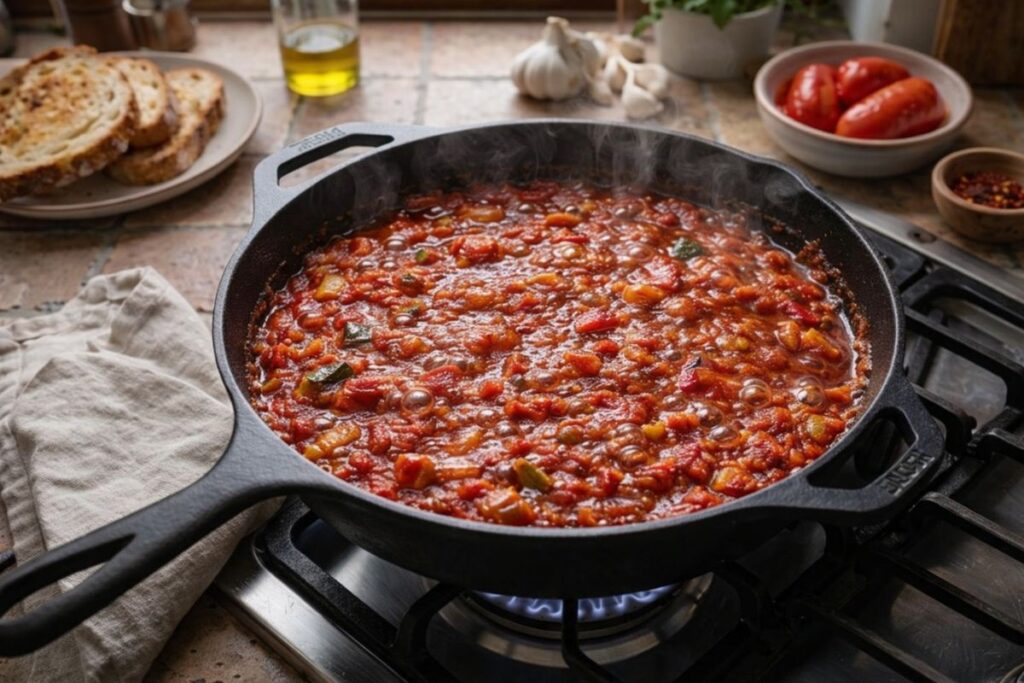
Add 3 minced garlic cloves, 2 teaspoons smoked paprika, 1 teaspoon ground cumin, and 1 teaspoon ground coriander. Stir constantly for 30 to 60 seconds until everything is evenly coated in the oil.
Why this matters: Blooming the spices in warm olive oil releases their essential oils, creating a deeper, more complex flavor than adding them directly to the tomatoes.
What to look for: The oil will turn a deep reddish-orange, and the kitchen should smell warm, smoky, and aromatic. The garlic should become fragrant without turning brown.
Troubleshooting: If the garlic begins to brown or the spices smell burnt, immediately remove the skillet from the heat and stir continuously. Burnt spices will make the entire sauce bitter.
Phase 2: Simmering and Reducing the Tomato Base (12 minutes)
Step 3: Build the Tomato Sauce
Pour in one 28-ounce can of whole peeled San Marzano tomatoes, crushing each tomato with your hands as it goes into the skillet. Add the juices from the can, season with salt and black pepper, and stir everything together. Bring the mixture to a gentle simmer.
Why this matters: Hand-crushing the tomatoes creates a rustic texture while allowing the sauce to reduce evenly without becoming overly smooth.
What to look for: The sauce should bubble gently across the surface with small, steady bubbles—not a vigorous boil.
Troubleshooting: If the sauce seems extremely thick right away, stir in a few tablespoons of water. If it’s splattering aggressively, reduce the heat to medium-low.
Step 4: Reduce the Sauce
Continue simmering the sauce uncovered for about 12 minutes, stirring every few minutes with a flat-edged wooden spoon. Scrape the bottom of the skillet occasionally to prevent sticking.
Why this matters: Reducing the sauce evaporates excess moisture, concentrates the tomatoes’ natural sweetness, and creates the thick consistency needed to support the eggs.
What to look for: The sauce should become glossy and thick enough that dragging a spoon through it leaves a trail for a second or two before filling back in.
Troubleshooting: If the sauce is still watery after 12 minutes, continue simmering for another 3 to 5 minutes. If it becomes too thick, stir in a splash of water until it loosens slightly.
Phase 3: Creating Wells and Poaching the Eggs (5 minutes)
Step 5: Add the Eggs
Using the back of a spoon, make four evenly spaced wells in the sauce. Crack one egg into each well. Cover the skillet with a lid and cook over low heat for about 5 minutes.
Why this matters: The wells keep each egg in place while the steam gently cooks the whites without overcooking the yolks.
What to look for: The egg whites should be fully opaque, while the yolks remain bright yellow, glossy, and slightly wobbly when the skillet is gently shaken.
Troubleshooting: If the whites are still translucent after 5 minutes, cover and cook for another 1 to 2 minutes. If the yolks are cooking faster than expected, remove the skillet from the heat—the residual warmth will finish the eggs gently.
Image Title: Cracking Fresh Eggs Into Shakshuka Sauce Wells
SEO Filename: cracking-eggs-into-shakshuka-wells.jpg
ALT Text: A close-up shot of raw eggs resting inside four perfectly spaced, intentional indentation wells made within a thick, simmering red tomato pepper base in a hot cast-iron pan.
Caption: Creating distinct wells ensures the egg whites cook evenly while the yolks remain protected and jammy.
Phase 4: The Finishing Garnishes
Step 6: Finish and Serve
Sprinkle crumbled feta cheese over the hot shakshuka, followed by freshly chopped parsley or cilantro. Finish with a light drizzle of extra-virgin olive oil and serve immediately with warm pita or crusty bread.
Why this matters: The creamy feta balances the rich tomato sauce, while fresh herbs add brightness and contrast to every bite.
What to look for: The feta should soften slightly from the heat without fully melting, and the herbs should stay vibrant green and fresh.
Troubleshooting: If the feta melts into the sauce, the skillet was too hot. Let the shakshuka rest for 2 to 3 minutes before adding the cheese and herbs. If the herbs wilt immediately, wait until just before serving to sprinkle them over the top.

Smart Pairings & Variations
Serve this Israeli shakshuka with warm sourdough, toasted pita, or a crisp cucumber salad for a balanced breakfast or relaxed brunch. If you’re planning a full weekend menu, pair it with our Easy Creamy Carbonara Recipe for a comforting dinner later in the day, then finish your baking session with our Delightful Sugar Cookies Recipe for an easy make-ahead dessert.
Want to change it up? Stir in baby spinach during the final few minutes of simmering, swap feta for creamy goat cheese, or add sliced roasted peppers for extra sweetness. If you enjoy a little heat, finish each serving with Aleppo pepper or red pepper flakes instead of increasing the spice in the sauce itself.
Food Safety Tip: Because this recipe features softly cooked egg yolks, always use fresh, properly refrigerated eggs and avoid leaving the finished dish at room temperature for more than 2 hours (1 hour if the temperature is above 90°F). For guidance on safe egg handling, storage, and recommended cooking practices, visit the USDA’s official egg safety resource.
Frequently Asked Questions
Can I make shakshuka ahead of time?
Yes. Prepare the tomato sauce up to 3 days in advance and refrigerate it. Reheat the sauce gently, then crack in fresh eggs just before serving.
Can I freeze shakshuka?
Freeze only the tomato sauce for up to 3 months. Eggs become rubbery after freezing and reheating, so they’re best cooked fresh.
Will acidic tomatoes damage my cast-iron skillet?
A well-seasoned cast-iron skillet handles a single batch of shakshuka without issue. After cooking, transfer leftovers to another container, wash the skillet, dry it thoroughly, and apply a light coat of oil to maintain the seasoning.
What can I substitute for San Marzano tomatoes?
High-quality whole peeled tomatoes are the best alternative. If using fresh tomatoes, choose ripe Roma tomatoes and simmer the sauce a little longer to remove excess moisture.
How do I keep the egg yolks runny?
Cook over low heat with the skillet covered until the whites are fully set. Remove the pan from the heat while the yolks still jiggle slightly, as they’ll continue cooking from the residual heat.
Recipe Card
Ultimate Israeli Shakshuka
Equipment
- 1 Large cast-iron skillet (10–12 inch) Provides even heat distribution and helps the tomato sauce reduce properly while gently cooking the eggs.
- 1 Chef’s knife For finely dicing onions, bell peppers, herbs, and mincing garlic.
- 1 Cutting board A stable surface for preparing vegetables and fresh garnishes.
- 1 Flat-edged wooden spoon Ideal for stirring the sauce, scraping flavorful bits from the skillet, and creating egg wells.
- 1 Measuring spoons Ensures accurate spice ratios for balanced shakshuka flavor.
- 1 Can opener — Needed for opening canned San Marzano tomatoes. Needed for opening canned San Marzano tomatoes.
- 1 Small bowls Useful for organizing spices, cracked eggs, and toppings before cooking.
Ingredients
- 2 tablespoons extra-virgin olive oil
- 1 medium onion diced
- 1 red bell pepper diced
- 3 garlic cloves minced
- 2 teaspoons smoked paprika
- 1 teaspoon ground cumin
- 1 teaspoon ground coriander
- 1 28-ounce can whole peeled San Marzano tomatoes
- Salt and freshly ground black pepper to taste
- 4 large eggs
- ½ cup crumbled feta cheese
- Fresh parsley or cilantro chopped
- Extra-virgin olive oil for serving
Instructions
- Sauté the onion and bell pepper until soft.
- Add garlic and bloom the spices in olive oil.
- Stir in the hand-crushed tomatoes and simmer until thickened.
- Create wells in the sauce and crack in the eggs.
- Cover and cook until the whites are set and the yolks are still jammy.
- Finish with feta, fresh herbs, and a drizzle of olive oil before serving.
Notes
Nutrition (Per Serving)
- Calories: 290 kcal
- Protein: 14 g
- Carbohydrates: 18 g
- Fat: 19 g