Introduction
Mastering how to choose chicken cuts is the foundation of becoming a confident, efficient home cook. Walking down the poultry aisle can feel overwhelming with options ranging from bone-in skin-on thighs to thin-cut cutlets, air-chilled breasts, and whole birds. Every cut features distinct ratios of fat, connective tissue, and muscle fiber density that dictate how it responds to heat.
Selecting the wrong cut for a specific preparation often leads to tough, dry meat or greasy, unrendered skins. Knowing whether to pick high-heat lean white meat or forgiving dark meat transforms your results. Understanding moisture retention, bone contribution, and heat tolerance empowers you to shop smarter, stretch your budget, and build flavorful dishes tailored to any cooking method.
Quick Answer
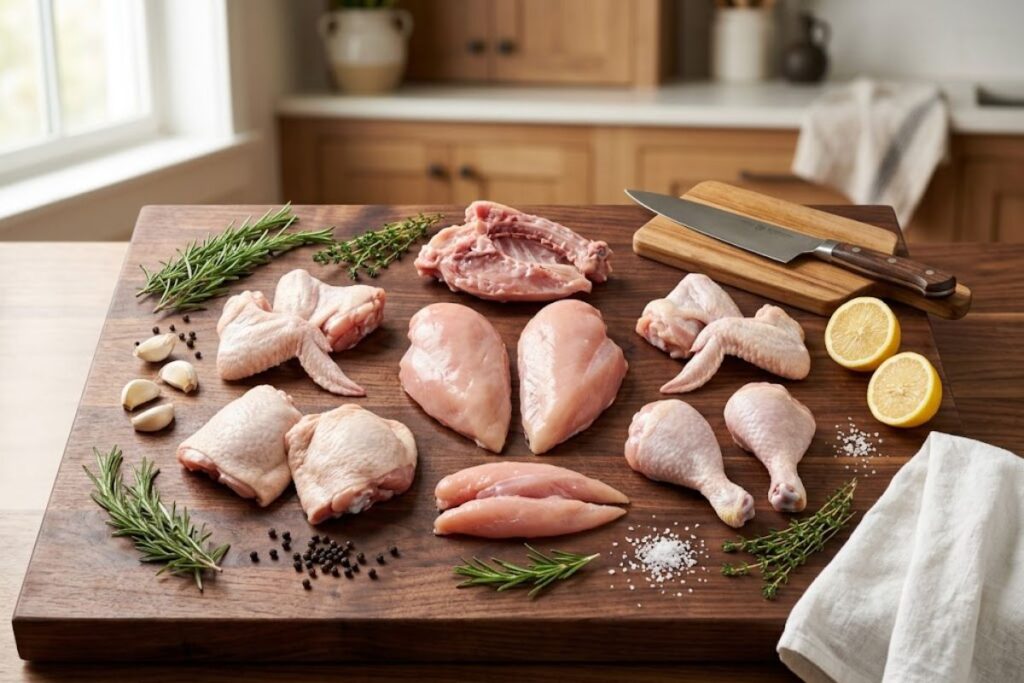
To learn how to choose chicken cuts, match muscle type to your cooking method: pick white meat (breasts, tenders) for quick, high-heat cooking like searing or stir-frying, and dark meat (th thighs, drumsticks) for low-and-slow methods like braising, roasting, or stewing.
What You’ll Learn
- White meat vs. dark meat chemistry and cooking speed.
- How bone-in and skin-on options affect flavor and moisture retention.
- The best cooking method for every specific chicken cut.
- How air-chilling affects meat texture and pan searing.
- Smart butchery strategies to save money on poultry.
What You’ll Need
Ingredients
| Selection Type | Best For | Cooking Characteristics |
|---|---|---|
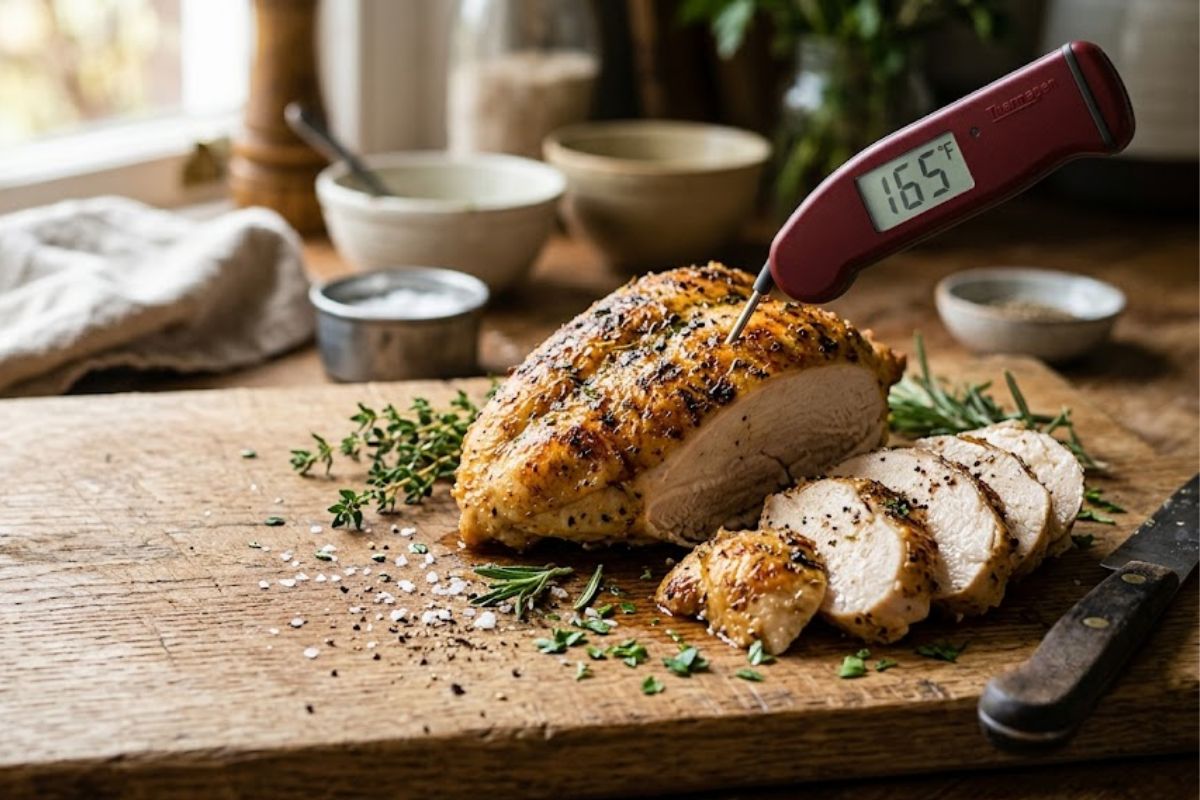
| Boneless, Skinless Chicken Breasts | Searing, stir-frying, poaching | Quick-cooking, ultra-lean, dries out easily if overcooked above 165°F (74°C). |
| Bone-In, Skin-On Thighs | Braising, roasting, slow-cooking | High intramuscular fat and collagen; remains juicy up to 175°F–180°F (80°C–82°C). |
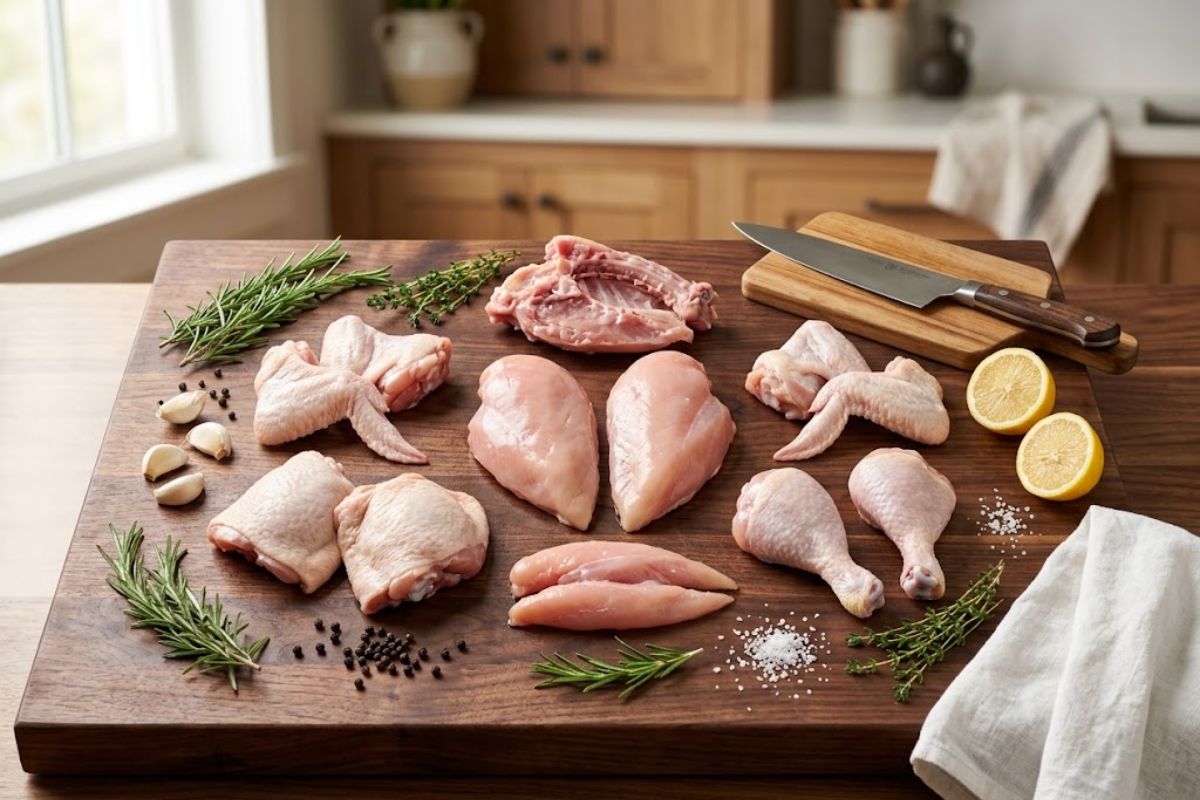
| Chicken Drumsticks & Wings | Grilling, baking, frying | Rich in skin and connective tissue; ideal for high-heat crisping and sauces. |
| Whole Chicken | Roasting, butchery practice | Economical; offers diverse cuts and bones for homemade stocks. |
Tools & Equipment
- Chef’s Knife or Boning Knife: For breaking down whole birds or trimming fat neatly.
- Kitchen Shears: Essential for spatchcocking and removing backbones easily.
- Instant-Read Digital Thermometer: The ultimate tool for preventing dry, overcooked poultry.
- Heavy-Duty Cutting Board: Plastic or wooden board dedicated exclusively to raw meat prep.
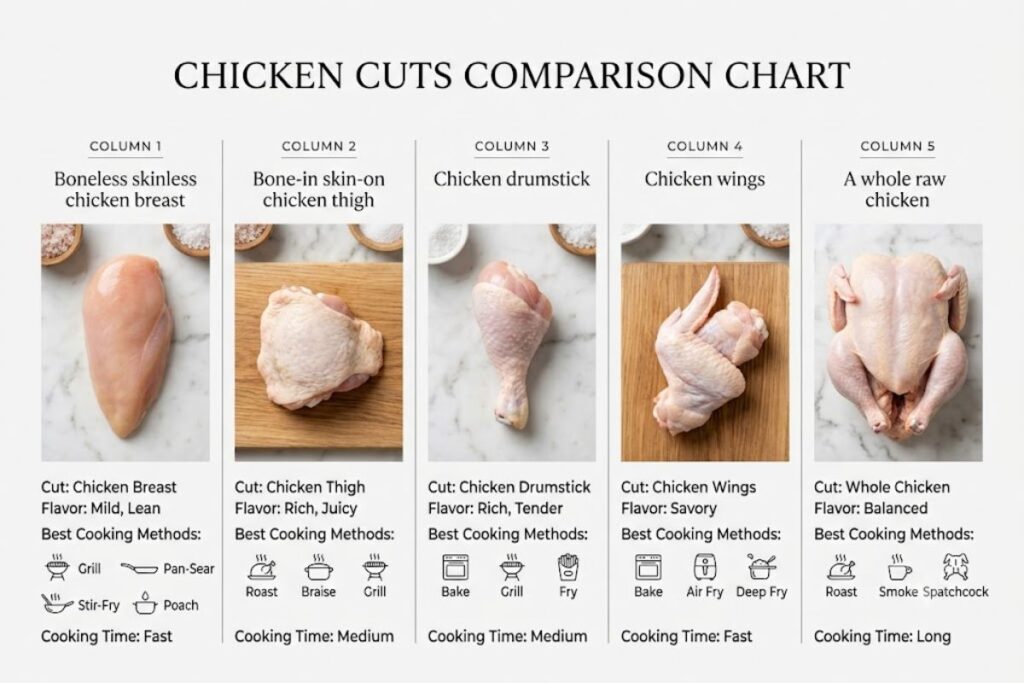
Chicken Cuts Cheat Sheet
| Chicken Cut | Flavor | Best Cooking Method | Beginner Friendly |
| Breast | Mild | Pan-sear, grill | ⭐⭐⭐⭐ |
| Thigh | Rich | Roast, braise | ⭐⭐⭐⭐⭐ |
| Drumstick | Rich | Bake, grill | ⭐⭐⭐⭐⭐ |
| Wing | Rich | Fry, bake | ⭐⭐⭐⭐ |
| Whole Chicken | Balanced | Roast | ⭐⭐⭐ |
Chicken Cuts Nutrition Comparison (per 100g cooked)
| Chicken Cut | Calories | Protein | Total Fat | Primary Culinary Advantage |
| Breast | 165 kcal | 31 g | 3.6 g | Ultra-lean, high protein density |
| Thigh | 209 kcal | 26 g | 10.9 g | Rich, juicy, and resists drying out |
| Drumstick | 172 kcal | 28 g | 5.7 g | Balanced fat profile, great for baking |
| Wing | 203 kcal | 30 g | 8.0 g | High skin-to-meat ratio, extra crisp |
Step-by-Step Guide
Step 1: Evaluate Cooking Method and Time
- What to do: Match the recipe’s cooking time and heat level to the correct cut before buying. Use lean cuts for rapid cooking and fatty cuts for long heats.
- Why it matters: White meat dries out quickly during long cooks, while dark meat requires time to break down tough connective tissue into gelatin.
- Signs you’re doing it correctly: Your chosen cut finishes cooking precisely when your pan sauce or braise reaches ideal density.
- Common mistakes: Braising boneless breasts in a slow cooker, which results in stringy, dry meat.
- Professional tip: If a recipe calls for cooking times over 30 minutes in liquid, always choose dark meat cuts like thighs or drumsticks.
Step 2: Choose Between Bone-In and Boneless
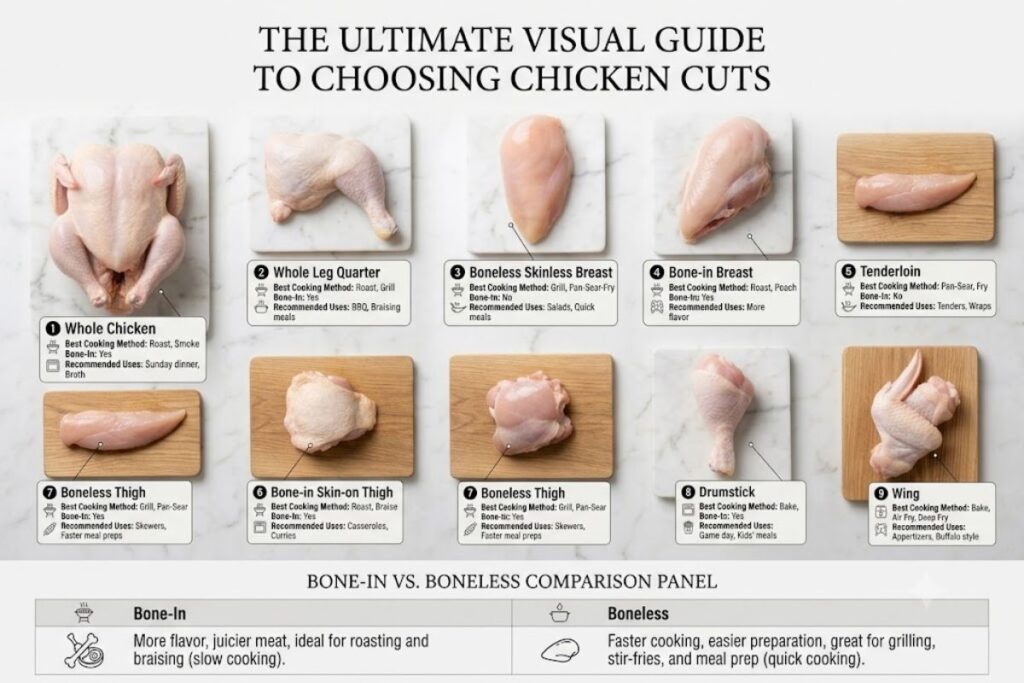
- What to do: Buy bone-in cuts for braises, soups, and long roasts; select boneless cuts for quick weeknight sautés, cutlets, or skewers.
- Why it matters: Bones slow heat transfer through the center of the meat, preventing sudden overcooking while releasing flavor-enhancing marrow.
- Signs you’re doing it correctly: Bone-in pieces maintain structural shape and juiciness throughout extended cook times.
- Common mistakes: Expecting boneless cutlets to survive long oven roasts without drying out.
- Professional tip: Bone-in thighs cost significantly less per pound than boneless alternatives; removing the bone yourself takes under 30 seconds.
Step 3: Inspect Packaging and Chilling Labels
- What to do: Check packaging for “air-chilled” labeling and inspect the tray for excess water accumulation.
- Why it matters: Water-chilled chicken absorbs up to 12% excess water weight, preventing proper pan searing and dilute natural flavor.
- Signs you’re doing it correctly: Air-chilled chicken displays firm skin, vibrant color, and little to no liquid sitting in the package bottom.
- Common mistakes: Paying for added water weight in cheap water-chilled poultry trays.
- Professional tip: Air-chilled chicken produces significantly crisper skin because the surface hasn’t been saturated during processing.
Step 4: Examine Meat Color and Fat Distribution
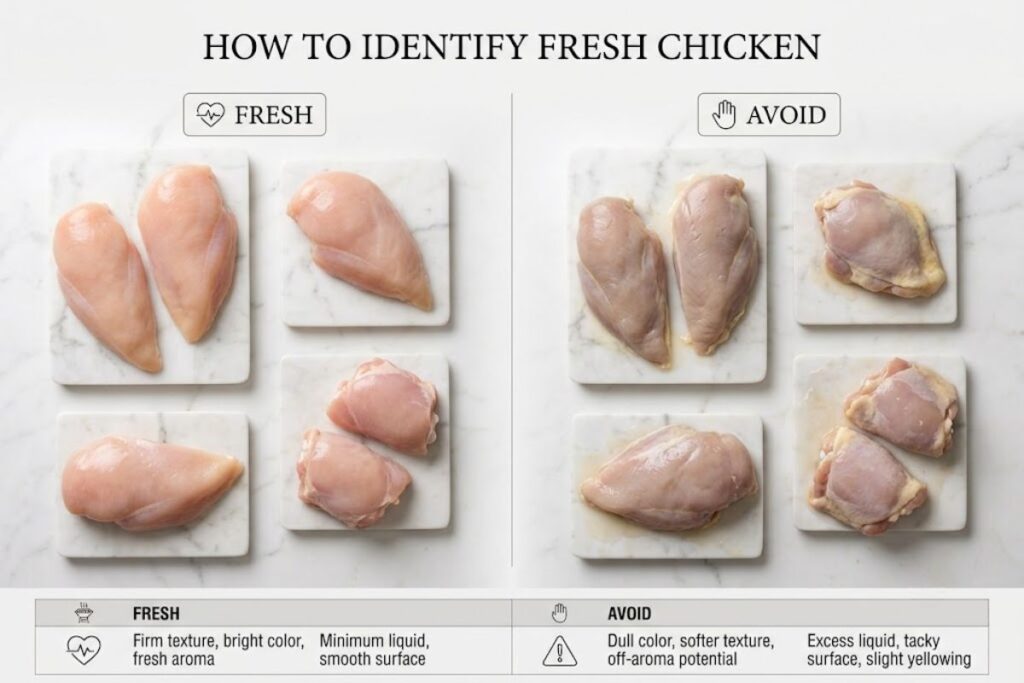
- What to do: Select white meat with a light pink color and dark meat with a deep, rosy pink hue. Look for clear white fat caps without yellowing or discoloration.
- Why it matters: Freshness dictates overall texture and aroma; discolored fat or greyish meat indicates oxidation and aging.
- Signs you’re doing it correctly: The meat feels firm to the touch through the plastic and springs back under gentle pressure.
- Common mistakes: Choosing cuts with pale, slippery, or tearing skin layers.
- Professional tip: Avoid packages with large ice crystals, which signal temperature fluctuations during storage.
Step 5: Trim and Prep According to Cut Type
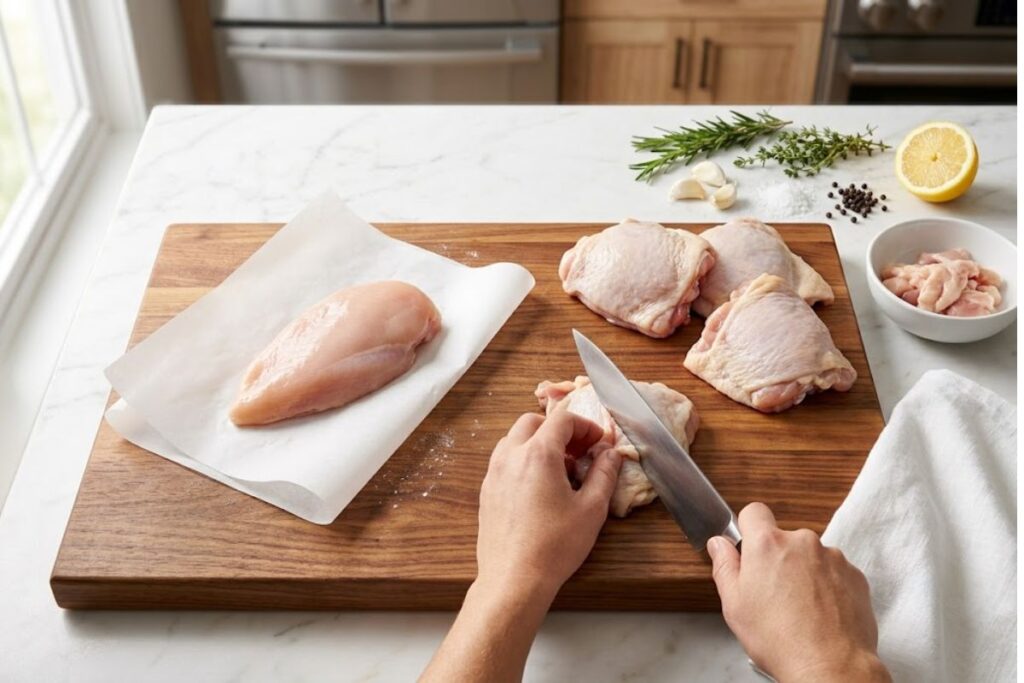
- What to do: Trim excess hanging skin and loose fat flaps before cooking. Pound boneless breasts to an even thickness using a meat mallet.
- Why it matters: Uneven cutlets cook at different speeds, leaving thin edges overcooked while thick centers remain undercooked.
- Signs you’re doing it correctly: The cutlet maintains a uniform thickness across its entire surface area.
- Common mistakes: Leaving large, unrendered fat pieces on boneless thighs that create greasy textures.
- Professional tip: Place chicken breasts inside a folded sheet of parchment paper before pounding to avoid tearing the delicate meat fibers.
Expert Tips
- Pound Breasts for Uniformity: Chicken breasts are naturally tapered; pounding them to a uniform 1/2-inch thickness ensures even browning without dry edges.
- Embrace Thighs for Flavor: Thighs contain more intramuscular fat and myoglobin, making them far more forgiving if left on the heat a few minutes too long.
- Dry Skin Thoroughly Before Cooking: Moisture is the enemy of browning; pat skin-on cuts completely dry with paper towels for crackling skin.
- Buy Whole Birds for Value: Purchasing a whole chicken and breaking it down yields two breasts, two thighs, two drumsticks, two wings, and a carcass for stock at a fraction of the cost.
- Salting in Advance Works Magic: Dry-brining chicken with Kosher salt 2 to 24 hours before cooking allows salt to penetrate deep into muscle tissues, locking in moisture.
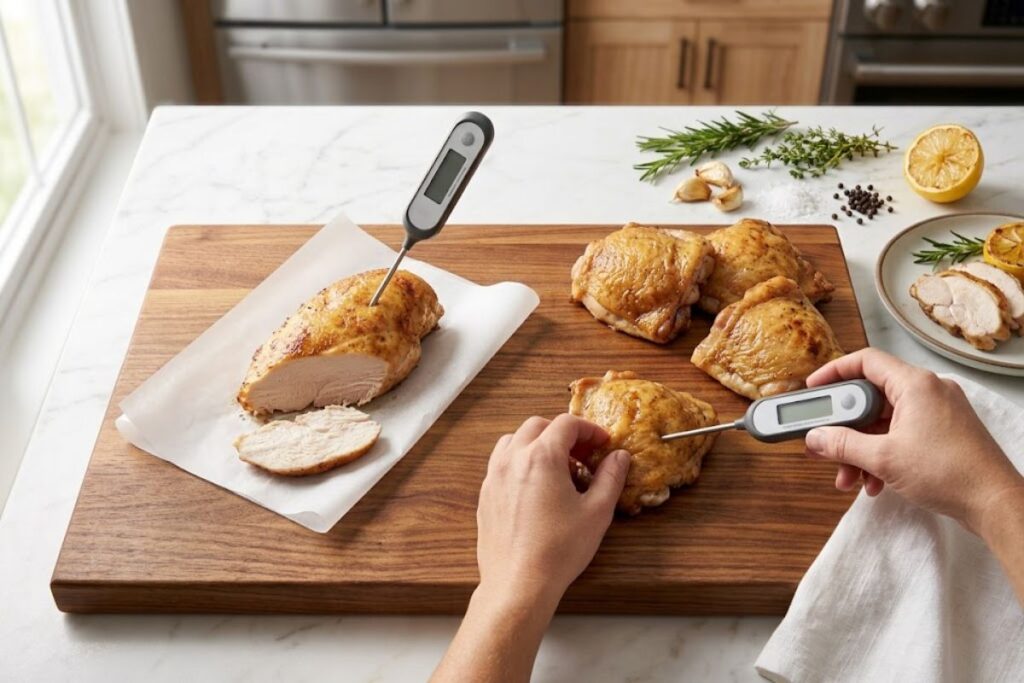
- Mind internal Cook Temperatures: Pull chicken breasts at 160°F (71°C) and let carryover cooking bring them to 165°F (74°C). Cook thighs to 175°F–180°F (80°C–82°C) to break down tough connective tissue.
- Score Thick Dark Meat Cuts: Slash skin-on drumsticks or thighs once or twice down to the bone so heat penetrates faster and marinades sink in deep.
- Save Bones in the Freezer: Store leftover bones, wing tips, and backbones in a freezer bag until you have enough to make rich, homemade bone broth. For another comfort food classic built on deep savory foundations, check out our Loaded Baked Potato Soup to learn how rich broths build incredible soup bases.
- Use Kosher Salt Over Fine Salt: Coarse Kosher salt spreads evenly over raw cuts without over-salting specific spots.
- Let Meat Rest After Cooking: Rest cooked chicken cuts for 5–10 minutes before slicing to allow internal juices to redistribute throughout the muscle fibers.
Common Mistakes
- Overcooking Chicken Breasts: Cooking white meat past 165°F causes muscle fibers to contract tightly, squeezing out moisture and leaving behind a rubbery texture.
- Braising Skin-On Cuts in Liquid: Submerging chicken skin in cooking liquid makes it soft, rubbery, and flaccid. Keep skin elevated above liquid levels during braises to maintain crispness.
- Crowding the Pan: Packing too many chicken cuts into a skillet lowers pan temperature dramatically, causing meat to steam in its own juices rather than sear.
- Washing Raw Chicken: Rinsing raw chicken in the sink splashes bacteria across countertops and utensils. High cooking temperatures destroy bacteria safely without washing.
Troubleshooting
| Problem | Possible Cause | Solution |
|---|---|---|
| Breast Meat is Dry and Chalky | Overcooked or cooked over prolonged low heat. | Slice thinly against the grain and toss with a warm pan sauce, compound butter, or olive oil coat. |
| Chicken Skin is Soft and Rubbery | Trapped steam or pan crowded during cooking. | Finish cuts under the oven broiler for 2–3 minutes to crisp skin surfaces rapidly. |
| Dark Meat Feels Tough / Chewy | Undercooked connective tissue (collagen). | Return dark meat to heat until internal temperature reaches 175°F–180°F (80°C–82°C) to fully melt collagen. |
| Chicken Steams Instead of Browning | Surface wetness or excess liquid in package. | Pat meat thoroughly dry with paper towels and sear in smaller batches in a preheated hot skillet. |
Storage Guide
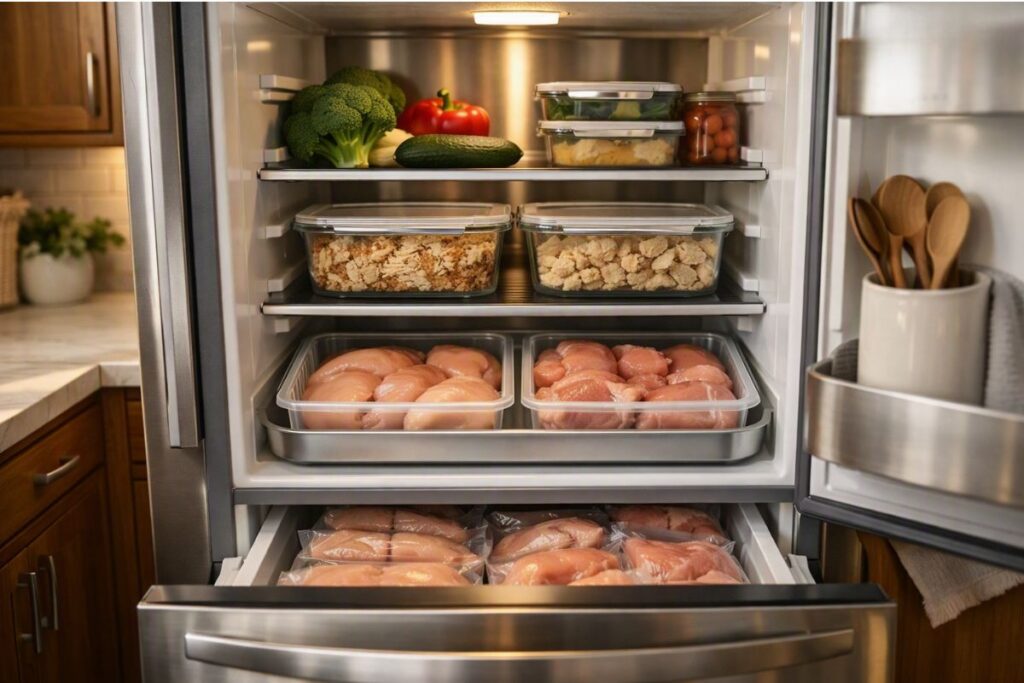
- Refrigerator: Raw chicken cuts should be stored on the lowest shelf of your refrigerator (at or below 40°F / 4°C) for 1–2 days. Always keep packaged chicken on a rimmed tray to catch drips.
- Freezer: Wrap cuts tightly in plastic wrap and heavy-duty aluminum foil, or vacuum-seal to prevent freezer burn. Store at 0°F (-18°C) for up to 9 months for optimal quality.
- Reheating: Reheat cooked chicken gently in a 350°F (175°C) oven with a splash of broth covered in foil to preserve moisture. Avoid high-power microwaving.
- Meal Prep: Cooked chicken cuts can be shredded or diced and safely stored in airtight containers for up to 4 days for easy weeknight assembly.
Variations
- Split Chicken Breasts (Bone-In): Perfect for oven roasting; the bone protects delicate white meat from drying out during high-heat baking.
- Airline Chicken Breast: A boneless breast with the drumette attached; highly favored by restaurants for crisp skin presentation and juicy meat.
- Spatchcocked Whole Bird: A whole chicken with the backbone removed, flattened for fast, uniform roasting with extra crisp skin.
- Chicken Tenderloins: Thin strips attached to the inner breast; extremely tender and ideal for quick pan-searing or breading.
- Boneless Skinless Thighs: The ultimate versatile weeknight cut; cooks quickly while retaining moisture and high flavor depth.
- Chicken Boneless Cutlets: Thinly sliced breast portions designed for ultra-fast searing dishes like chicken piccata or schnitzel.
- Quartered Chicken (Leg Quarters): An economical combination of thigh and drumstick attached; excellent for slow roasting or smoking.
Frequently Asked Questions
Which chicken cut is healthiest?
Boneless, skinless chicken breasts and tenderloins are the leanest cuts, offering the highest protein-to-fat ratio with minimal saturated fats.
Why are chicken thighs more flavorful than breasts?
Thighs are dark meat from active muscles, containing more myoglobin and higher intramuscular fat, which delivers deeper flavor and moisture retention.
Is air-chilled chicken worth the extra cost?
Yes. Air-chilled chicken is cooled with cold air rather than ice-water baths, meaning you pay for pure meat rather than absorbed water weight, resulting in better browning.
Can I substitute chicken thighs for breasts in recipes?
Yes! Thighs make an excellent substitute in stews, curries, and braises because they resist drying out during longer cooking times.
How do I know when chicken is fully cooked?
Always use an instant-read digital thermometer inserted into the thickest part of the meat without touching bone. Safe internal temperature is 165°F (74°C).
Should I buy bone-in or boneless chicken?
Choose boneless for rapid weeknight meals under 20 minutes. Choose bone-in for longer roasts, braises, or when cooking on a budget.
What is the best cut for chicken soup?
Whole chickens or bone-in leg quarters are best. The bones, joints, and dark meat yield rich gelatin and deep savory broth impossible to get from breasts alone.
Why does my cooked chicken breast have a rubbery texture?
Rubbery texture (“woody breast”) stems from rapid bird growth in modern agriculture. Look for organic, heritage, or pasture-raised birds for finer grain textures.
Is it safe to cook chicken straight from the freezer?
Yes, but cooking times will increase by about 50%. It is best suited for oven roasting or braising rather than pan searing.
How long can raw chicken sit at room temperature before cooking?
Never leave raw chicken at room temperature for more than 2 hours (or 1 hour if room temperature exceeds 90°F / 32°C). To review safe food handling practices, check the USDA Fresh Poultry Guidelines.
Related Recipes
- Lemon Garlic Chicken | Easy Sheet Pan Recipe
- Easy Creamy Carbonara Recipe – A Classic Italian Spaghetti Dish
- Easy Gochujang Salmon Recipe with a Korean Twist
- Authentic Kacchi Biryani Recipe (Better Than Takeout)
- Easy Yemeni Chicken Mandi Recipe
- Loaded Baked Potato Soup (Dutch Oven Recipe)
Conclusion
Understanding how to choose chicken cuts removes guesswork from your grocery shopping and elevates every dish you prepare. By recognizing the structural differences between white and dark meat, leveraging bone-in cuts for deep flavor, and selecting air-chilled poultry for superior browning, you set your kitchen up for consistent success.
Always match your selected cut to your cooking technique: utilize lean breasts and tenders for rapid, high-heat sears, and save rich thighs and leg quarters for forgiving, low-and-slow preparations. With these foundational rules in mind, you can shop confidently, maximize your grocery budget, and consistently serve tender, perfectly cooked chicken dishes every time.
After cooking hundreds of chicken dishes over the years, I’ve found that choosing the correct cut has a bigger impact on the final result than most seasonings or marinades.