
Creamy Loaded Baked Potato Soup with Steakhouse-Style Flavor
If you’re craving the comfort of a warm baked potato in soup form, this loaded baked potato soup delivers every time. It’s thick, velvety, and packed with fluffy potatoes, smoky bacon, sharp cheddar, and a touch of garlic. Every spoonful delivers the flavor of a fully loaded baked potato fresh from the oven, only creamier and ready in under an hour.
Kitchen Notes & Testing Insights
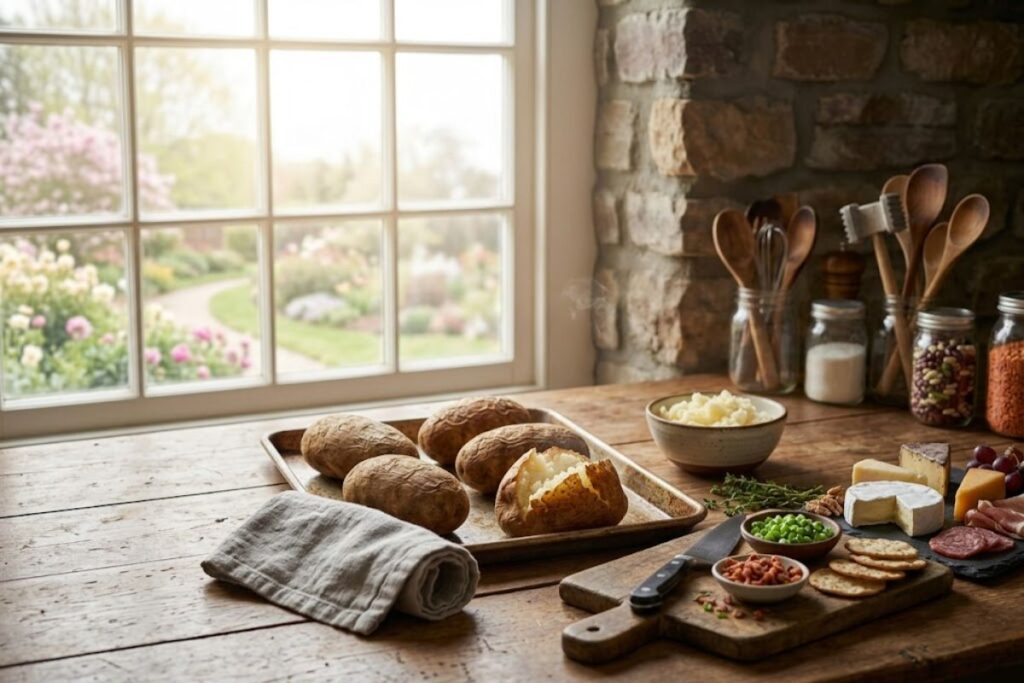
This recipe went through 14 test batches in the DishStories kitchen before we settled on the version you’ll find here. We tried russet potatoes that were baked, boiled, steamed, and even pressure-cooked. Baking won every time. It gives the potatoes a deeper, roasted flavor while keeping the flesh light and fluffy instead of waterlogged. That extra flavor is what makes this soup taste like a true loaded baked potato soup, not just potato soup with toppings.
One of the biggest mistakes we ran into during testing was over-processing the potatoes. Running them through a blender or food processor released too much starch, turning the soup gluey instead of silky. The best texture came from gently mashing some of the baked potatoes while leaving plenty of bite-sized chunks intact. That combination creates a naturally thick, velvety base without sacrificing texture.
Another lesson was to add the cheddar gradually over low heat. High heat can cause the cheese to seize, creating a grainy soup instead of a smooth, creamy finish. The same goes for the dairy—once the cream is added, keep the soup at a gentle simmer rather than a rolling boil.
The final recipe strikes the balance we were after: rich without feeling heavy, creamy without relying on excess flour, and loaded with the classic baked potato flavors that make every bowl satisfying.
The Science of the Perfect Texture
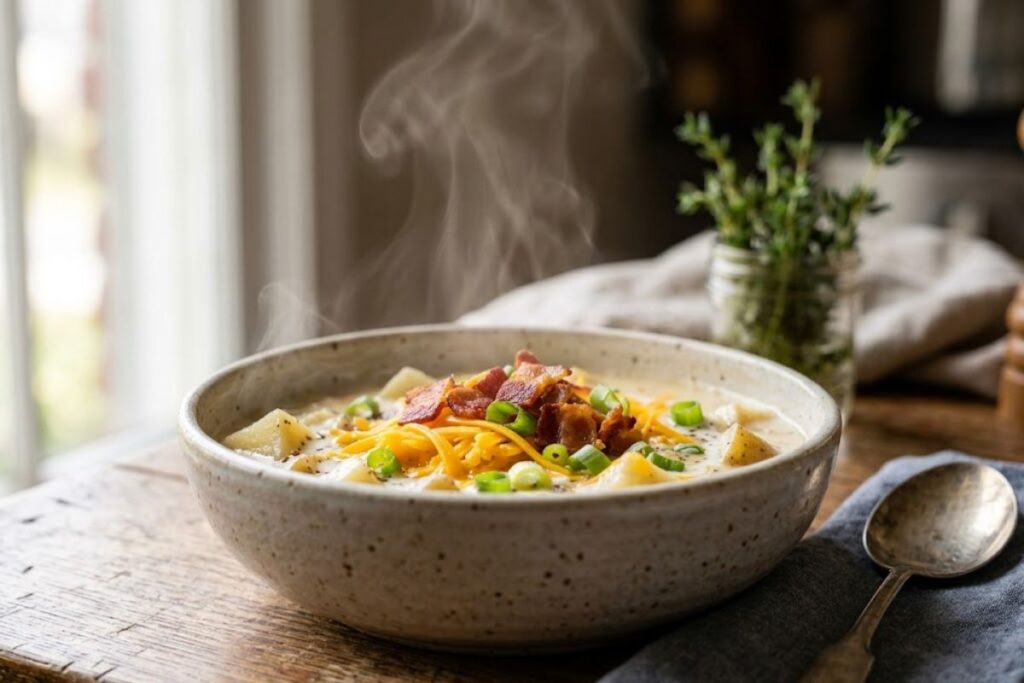
Why This Soup Has the Perfect Texture
The secret to ultra-creamy baked potato soup is using baked Russet potatoes, which retain concentrated starches that naturally thicken the soup. Adding sour cream properly helps stabilize the dairy base, allowing sharp cheddar to melt smoothly without becoming greasy or grainy.
The texture of a great loaded baked potato soup comes down to how you treat the potatoes and dairy. Russet potatoes are naturally high in starch, and baking them keeps those starches concentrated inside the potato flesh. When you mash the baked potatoes into the soup, those starches help create a thick, velvety body without needing a heavy amount of flour or a long simmer. Boiling potatoes, on the other hand, allows some of that starch to escape into the cooking water, which can leave the potato flavor diluted.
The dairy balance matters just as much. Sharp cheddar brings the bold, savory flavor we expect from a loaded potato, but cheese can separate when exposed to high heat. Sour cream plays an important role because its acidity and fat content help stabilize the mixture, allowing the cheddar to melt into the soup smoothly. Adding it gently at the end keeps the soup creamy, rich, and perfectly cohesive instead of oily or broken.
Essential Kitchen Equipment
A few reliable tools make this loaded baked potato soup easier to prepare and help achieve the best texture:
- Large heavy-bottomed Dutch oven — for even heat and gentle simmering
- Potato masher — creates a creamy base while keeping potato chunks
- Sharp chef’s knife — for quick, even ingredient prep
- Wooden spoon — ideal for stirring without scratching your pot
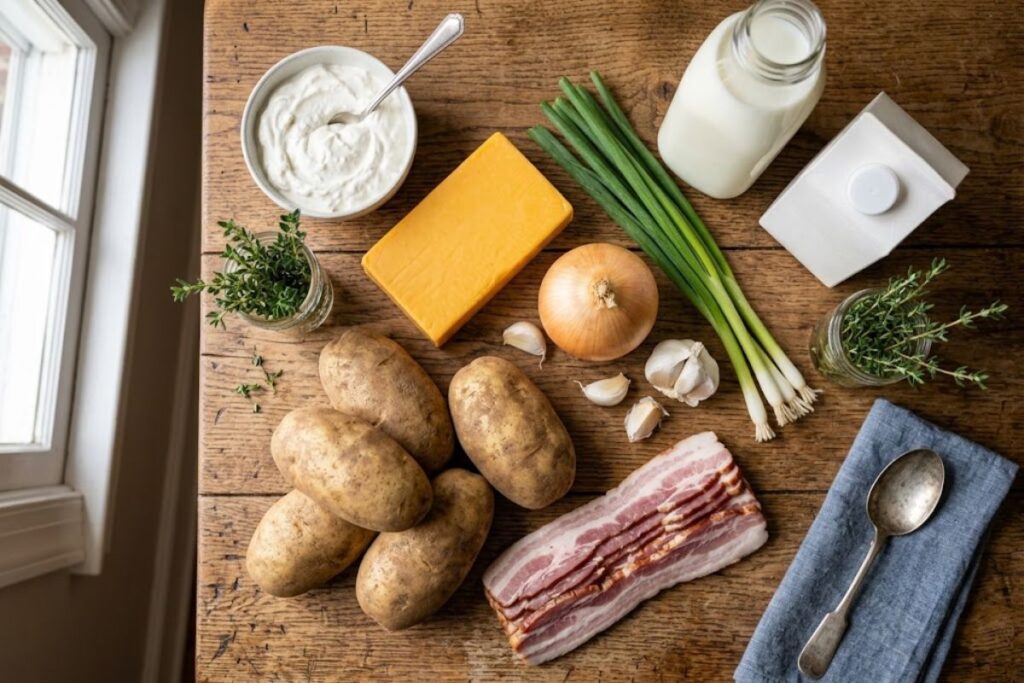
The Pantry Ingredient Guide
The best loaded baked potato soup starts with choosing ingredients that build flavor and texture from the ground up. Each component has a specific job, and small swaps can make a noticeable difference in the final bowl.
Russet Potatoes: The Starch Powerhouse
Russet potatoes are the gold standard for this recipe because their high starch content creates the fluffy, creamy texture that makes baked potato soup so satisfying. After baking, the potato flesh breaks down beautifully and naturally thickens the soup while still leaving room for tender chunks. A common mistake is reaching for waxy potatoes like red potatoes or even some Yukon Gold varieties. While delicious in other dishes, their lower starch and firmer structure can create a heavier, slightly gummy texture instead of that light, velvety potato base.
Thick-Cut Applewood Smoked Bacon: Flavor Foundation
Bacon does much more than add a crunchy topping. Cooking thick-cut applewood smoked bacon first creates a layer of rendered fat that carries smoky flavor throughout the soup. That seasoned bacon fat becomes the foundation for sautéing aromatics and building richness before the dairy goes in. Save some crispy pieces for the final garnish—they add the salty crunch that makes each bite taste like a fully loaded potato.
The Dairy Blend: Creamy Structure
The combination of whole milk, heavy cream, and sour cream creates the right balance of richness and stability. Whole milk keeps the soup smooth without becoming too heavy, heavy cream adds luxurious body, and sour cream brings a subtle tang that cuts through the richness while helping the cheese blend smoothly.
Sharp Cheddar Cheese: The Bold Finish
Sharp cheddar is the best choice here because aging develops a deeper, more pronounced flavor than mild cheddar. It melts into the soup with a satisfying cheese-forward taste while complementing the smoky bacon and creamy potatoes. Adding it gradually over gentle heat helps maintain a smooth, creamy texture.
Step-by-Step Instructions with Media Integration
1. Render and Crisp the Bacon (10 minutes)
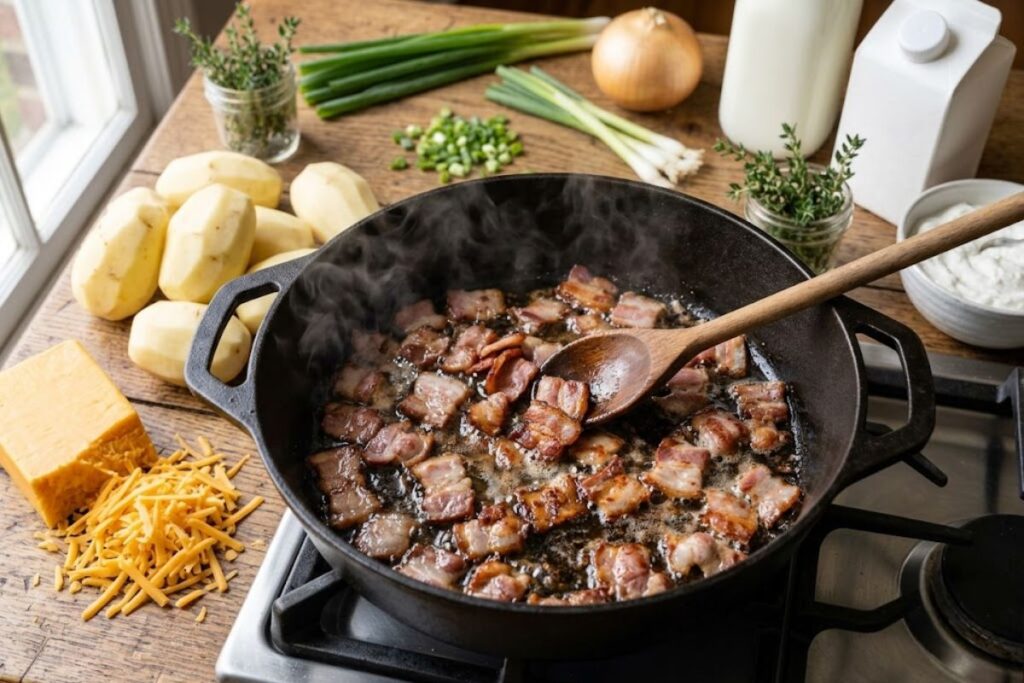
Start by cooking the chopped thick-cut applewood smoked bacon in a large heavy-bottomed Dutch oven over medium heat. Let the bacon slowly render until the pieces turn deeply browned and crisp. This step builds the smoky foundation for the entire soup, so don’t rush it.
Remove the bacon with a slotted spoon and transfer it to a paper towel-lined plate. Leave 3 tablespoons of bacon fat in the Dutch oven for the flavor base.
What to look for: The bacon fat should have small foamy bubbles as the fat renders, and the bacon pieces should feel firm and golden when stirred. Watch the browned bits at the bottom of the pot—those flavorful pieces are important, but burnt sediment will make the soup bitter.
How to fix it: If the bacon starts browning too quickly before the fat has fully rendered, lower the heat and give it more time. Slow rendering creates crisp bacon and flavorful cooking fat.
2. Build the Flavor Base and Roux (8 minutes)
Add the diced yellow onion directly into the warm bacon grease. Cook until softened and translucent, then stir in the minced garlic and cook briefly until fragrant.
Sprinkle the all-purpose flour over the vegetables and bacon fat. Stir constantly for about 2 minutes to create a smooth roux and cook away the raw flour flavor. This step gives the soup structure and helps create that thick, creamy consistency.
Troubleshooting: If the flour absorbs all the fat and turns into a dry, clumpy paste, immediately stir in 1 teaspoon of butter to loosen the mixture before adding liquid.
What to look for: The roux should look smooth and slightly golden, coating the onions without feeling dry or chalky.
3. Simmer and Build the Potato Base (12 minutes)

Slowly pour in the warm chicken broth while whisking continuously, then add the whole milk. Take your time during this step—the gradual addition prevents flour lumps and creates a silky soup base.
Bring the mixture to a gentle simmer, then add the scooped insides of the baked Russet potatoes. Use a potato masher directly in the Dutch oven to break down some of the potatoes while leaving a few chunks intact for texture.
What to look for: The soup should begin thickening as the potato starch releases. It should coat the back of a spoon but still flow easily.
How to fix it: If the soup becomes thicker than you like, add a splash of warm milk or broth until you reach your preferred consistency.
4. Temper and Fold in the Dairy (5 minutes)
Reduce the heat to low before adding the heavy cream and sour cream. Stir gently until the dairy is fully incorporated into the soup.
Add the shredded sharp cheddar cheese one handful at a time, stirring until each addition melts completely before adding more. This slow process keeps the cheese smooth and prevents separation.
Critical Fix: Never allow the soup to boil after adding the cheese. High heat causes the milk proteins in the dairy and cheese to tighten, which can lead to a grainy texture or oily separation.
What to look for: The finished soup should look glossy, creamy, and evenly blended. Top each bowl with the reserved crispy bacon, extra cheddar, and your favorite baked potato toppings before serving.
Troubleshooting & Common Pitfalls
Why is my soup gummy?
A gummy texture usually means the potatoes were overworked. Using a hand blender or food processor can release too much starch, creating a gluey consistency instead of a creamy one. For the best loaded baked potato soup texture, use a potato masher and leave some tender potato chunks intact.
Why did my soup separate or turn greasy?
The most common cause is overheating after adding the cheese and dairy. High temperatures can cause the fats and proteins to split. Remove the pot from the heat immediately and whisk in a small splash of warm milk to help bring the texture back together.
Why is my soup too thin?
Let it simmer gently for a few extra minutes, or mash a few more potato pieces directly into the soup to naturally thicken the base without adding more flour.
Smart Pairings & Variations
This rich loaded baked potato soup is at its best when balanced with something fresh or crisp. Serve it with a bright salad like our Authentic Lebanese Fattoush Salad to cut through the creamy richness, or make it part of a cozy comfort-food dinner alongside our Easy Creamy Carbonara.
For a complete holiday-inspired meal, pair this creamy soup with our Holiday Pasta Bake with Brie & Roasted Peppers for a comforting table spread filled with rich flavors and seasonal ingredients. It also works beautifully alongside our Herb Butter Turkey Recipe, where the savory roasted flavors complement the smoky bacon and cheddar notes in the soup.
For variations, add roasted broccoli for extra vegetables or stir in a little diced jalapeño for gentle heat. Finish each bowl with crispy bacon, green onions, extra cheddar, or a dollop of sour cream for that classic fully loaded baked potato flavor.
For safe storage, refrigerate leftover baked potato soup promptly and reheat it gently to maintain the creamy texture. Follow the USDA Food Safety and Inspection Service guidelines for leftovers and safe food storage to ensure cooked bacon, dairy-based soups, and other refrigerated foods are handled safely.
Frequently Asked Questions
Can I make this soup ahead of time?
Yes. This loaded baked potato soup can be made up to 3 days ahead and stored in an airtight container in the refrigerator. Reheat gently over low heat, stirring often, and avoid boiling to keep the dairy smooth.
What are the best potatoes for baked potato soup?
Russet potatoes are the best choice because their high starch content creates a fluffy texture and naturally thickens the soup. They produce the classic baked potato flavor and creamy consistency this recipe is known for.
Why did my cheese clump up instead of melting smoothly?
Cheese usually clumps when it is added over high heat or added too quickly. Lower the temperature before adding cheddar, then stir it in gradually by the handful until fully melted.
Can I use leftover boiled potatoes instead of baked?
Yes, but the flavor and texture will be slightly different. Boiled potatoes contain more moisture and less concentrated starch, so the soup may be thinner and less intensely potato-flavored.
How do I reheat cream-based soups without separating?
Warm the soup slowly over low to medium-low heat, stirring frequently. If it becomes too thick, loosen it with a splash of warm milk or broth. Avoid microwaving at high power or bringing the soup to a boil, as extreme heat can cause separation.
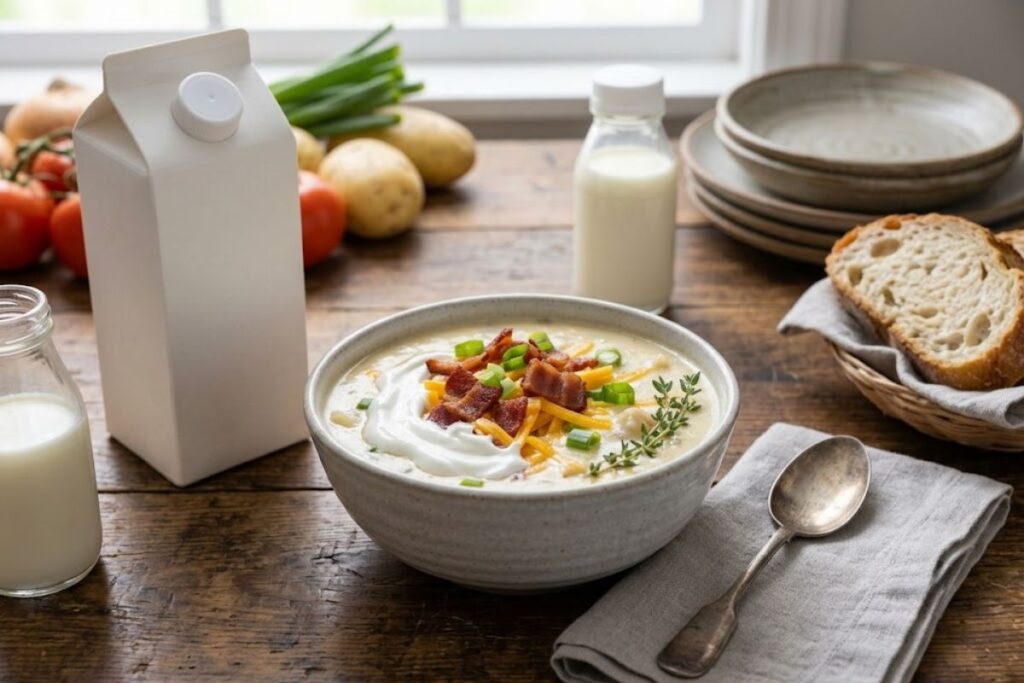
Recipe Card

Loaded Baked Potato Soup
Equipment
- 1 Large heavy-bottomed Dutch oven
- 1 Sharp chef’s knife
- 1 Potato masher,
- 1 – Wooden spoon
- 1 Slotted spoon
- 1 Measuring cups and spoons
- 1 Cheese grater
- 1 Paper towel-lined plate
Ingredients
Soup Base
- 6 large Russet potatoes baked until tender and insides scooped out
- 8 ounces thick-cut applewood smoked bacon chopped
- 1 medium yellow onion finely diced
- 4 cloves garlic minced
- ⅓ cup all-purpose flour
- 4 cups warm chicken broth
- 2 cups whole milk
- 1 cup heavy cream
- 1 cup sour cream
- 2 cups freshly shredded sharp cheddar cheese
- 1 teaspoon kosher salt or to taste
- 1 teaspoon black pepper
Toppings
- Reserved crispy bacon pieces
- Extra shredded sharp cheddar cheese
- Sliced green onions
- Sour cream optional
Instructions
Cook the Bacon
- Add chopped bacon to a large Dutch oven over medium heat. Cook until deeply browned and crisp, allowing the fat to slowly render.
- Remove the bacon with a slotted spoon and place it on a paper towel-lined plate. Leave about 3 tablespoons of bacon fat in the pot.
- Note: Look for small foamy bubbles as the bacon renders. Avoid burning the browned bits at the bottom of the pan because they add flavor but can turn bitter if scorched.
Make the Flavor Base
- Add diced onion to the bacon grease and cook until softened and translucent, about 3–4 minutes. Add minced garlic and cook until fragrant.
- Sprinkle flour over the mixture and stir constantly for about 2 minutes to create a smooth roux.
- Note: If the flour absorbs the fat and becomes a dry paste, stir in 1 teaspoon of butter to loosen it before adding liquids.
Build the Potato Soup Base
- Slowly pour in warm chicken broth while whisking continuously. Add whole milk and continue stirring until smooth.
- Bring the mixture to a gentle simmer. Add the baked Russet potato flesh and use a potato masher directly in the pot to break down some potatoes while leaving small chunks for texture.
- Note: Do not use a blender or food processor. Over-processing releases excess starch and can make the soup gummy.
Add Dairy and Cheese
- Reduce heat to low. Stir in heavy cream and sour cream until fully combined.
- Add shredded sharp cheddar cheese one handful at a time, stirring until melted before adding more.
- Note: Never allow the soup to boil after adding cheese. High heat can cause the dairy proteins to separate and create a grainy or greasy texture.
Finish and Serve
- Season with salt and black pepper. Ladle the soup into bowls and top with crispy bacon, extra cheddar cheese, green onions, and additional sour cream if desired.
- Note: For the best flavor, allow the soup to rest for a few minutes before serving so the flavors fully settle.
Notes
Nutrition Information (Per Serving)
- Calories: 480 kcal
- Protein: 14g
- Carbohydrates: 32g
- Fat: 28g
- Fiber: 3g
Save this cozy Loaded Baked Potato Soup recipe for the ultimate creamy comfort bowl—packed with crispy bacon, sharp cheddar, and steakhouse-style flavor made right in your Dutch oven.

I