That Set Perfectly Every Time
Jump to Recipe: 1. Lemon Lavender No-Bake Cookies , 2. Pastel Soft-Batch Sugar Cookies , 3. Strawberry Shortcake Oatmeal Cookies , 4. White Chocolate Macadamia Spring Blooms , 5. Peanut Butter “Bird’s Nest” No-Bake Cookies
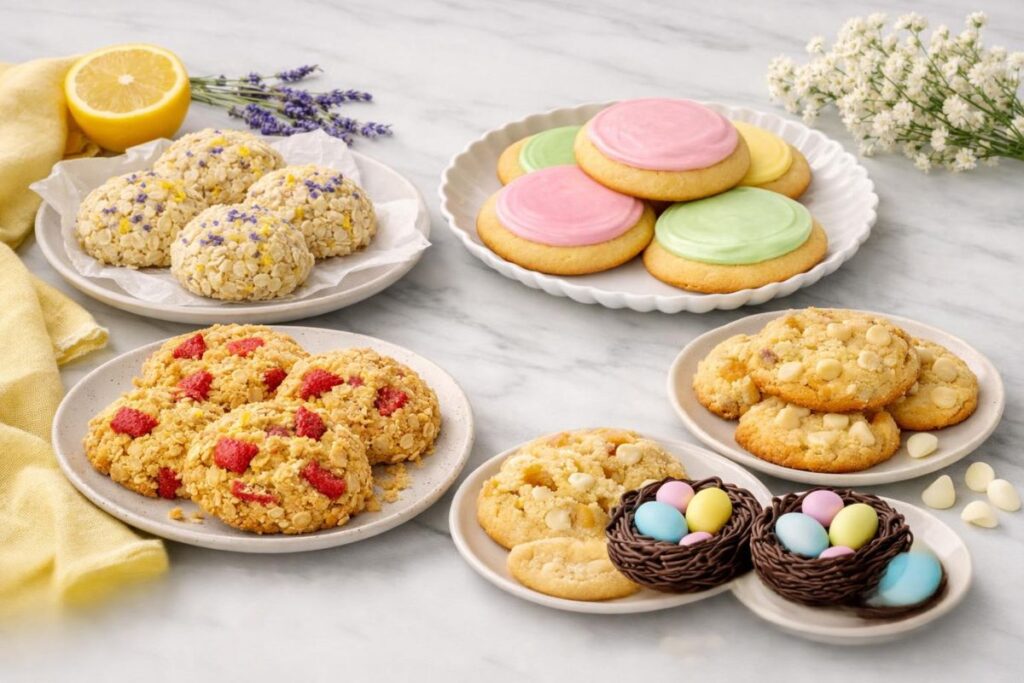
The First Sunny Tuesday
It always begins with a scent.
Not the predictable vanilla-and-cinnamon cloud that defined winter baking, but something sharper—almost electric. On that first truly warm Tuesday of the year, the kitchen window cracks open, and suddenly everything changes. The air carries a brightness: lemon zest, crushed mint, maybe even the faint whisper of blooming jasmine from somewhere outside.
Last year, that Tuesday arrived with a small disaster.
I had planned an ambitious batch of cookies—oven blazing, butter browning, spices blooming—only to realize halfway through that the house felt suffocating. The warmth that once comforted in December now clung to the walls. The cookies were good. But they weren’t right for the moment.
That was the turning point.
Because spring doesn’t ask for heaviness. It asks for light, for immediacy—for desserts that don’t require preheating an entire room just to feel indulgent.
That’s where no bake cookies quietly become the hero.
They are the modern heirloom—rooted in grandmother’s practicality but elevated with today’s ingredients: floral infusions, premium chocolates, delicate salts. And when done properly, they aren’t shortcuts. They are precision.
Alongside them, spring cookies take on a different identity entirely—soft pastel tones, citrus-forward profiles, textures that dissolve rather than crumble.
This isn’t just baking.
It’s seasonal architecture.
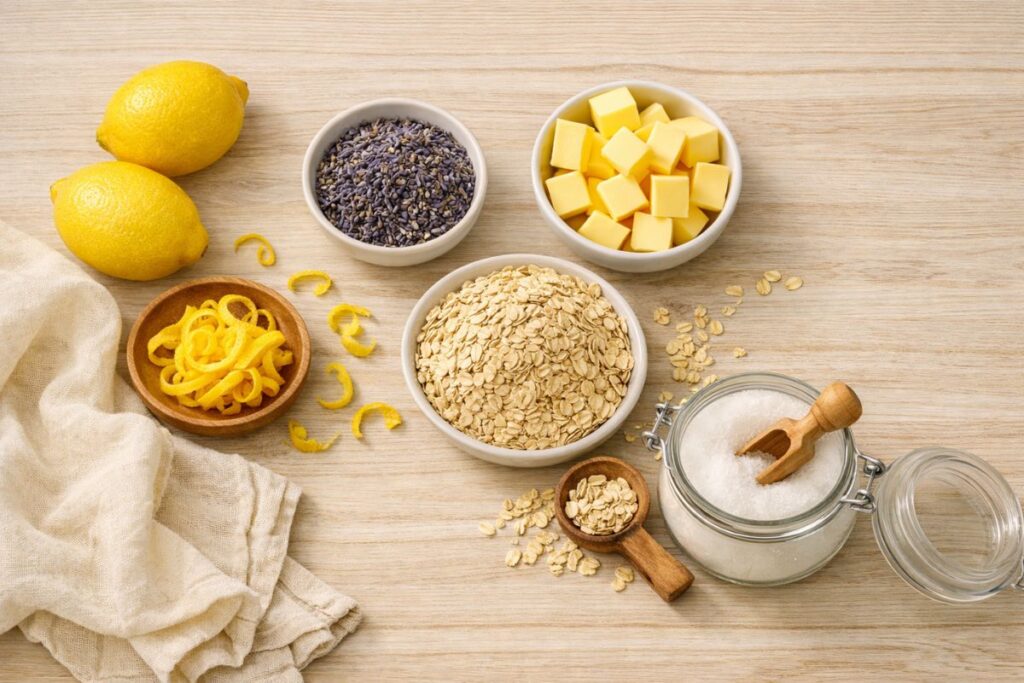
Tips for Perfect No-Bake Cookies Every Time
No-bake cookies are quick and fun, but a few simple tips can make a huge difference:
- Measure carefully: Too much liquid or sugar can make cookies too soft or sticky.
- Choose quality ingredients: Nut butters, chocolate, and oats impact texture and flavor.
- Let them set properly: Patience is key — letting cookies chill fully ensures they hold their shape.
- Experiment with add-ins: Dried fruit, nuts, or seeds can give texture and flavor twists.
- Use parchment or silicone mats: This prevents sticking and makes cleanup easy.
Follow these tips to ensure your no-bake cookies turn out soft, chewy, and delicious every time!
Why No-Bake Cookies Work
No-bake cookies rely on simple chemistry: sugar, fat, and binding ingredients like peanut butter or oats. Understanding this helps you tweak recipes without worry:
- Binding agents: Peanut butter, nut butters, or cream bind dry ingredients.
- Sweeteners: Chocolate or sugar syrup adds structure and sweetness.
- Texture: Oats absorb moisture, giving chewy consistency.
Knowing these principles lets you experiment confidently — swap nuts, try dried fruit, or add seeds — without compromising cookie shape or flavor.
Cookie Architecture: The Science Behind Effortless Elegance
Before we step into the recipes, we need to talk about structure. Because no-bake cookies—and even the softest spring batches—are built, not improvised.
The Chemistry of the “Set”
“No-bake” is a misleading term. Nothing about these cookies is passive.
At their core, no-bake cookies rely on two scientific mechanisms:
1. Sugar Phase Transition
When sugar dissolves in a heated liquid (butter, milk, cream), it reaches a stage where it can recrystallize into structure. If you’ve ever wondered why some no bake cookies stay glossy while others crumble, the answer lies in temperature precision.
The sweet spot? Around 230–235°F (soft-ball stage).
Too low: cookies never set.
Too high: dry, crumbly texture.
2. Starch Gelatinization (Especially with Oats)
Oats aren’t just filler—they are structural agents. When hydrated properly, they absorb moisture and create a cohesive network that stabilizes the cookie as it cools.
Understanding oat structure is essential—this breakdown of rolled vs. quick oats explains why texture varies.
Ingredient Science: Fat is Flavor—and Texture
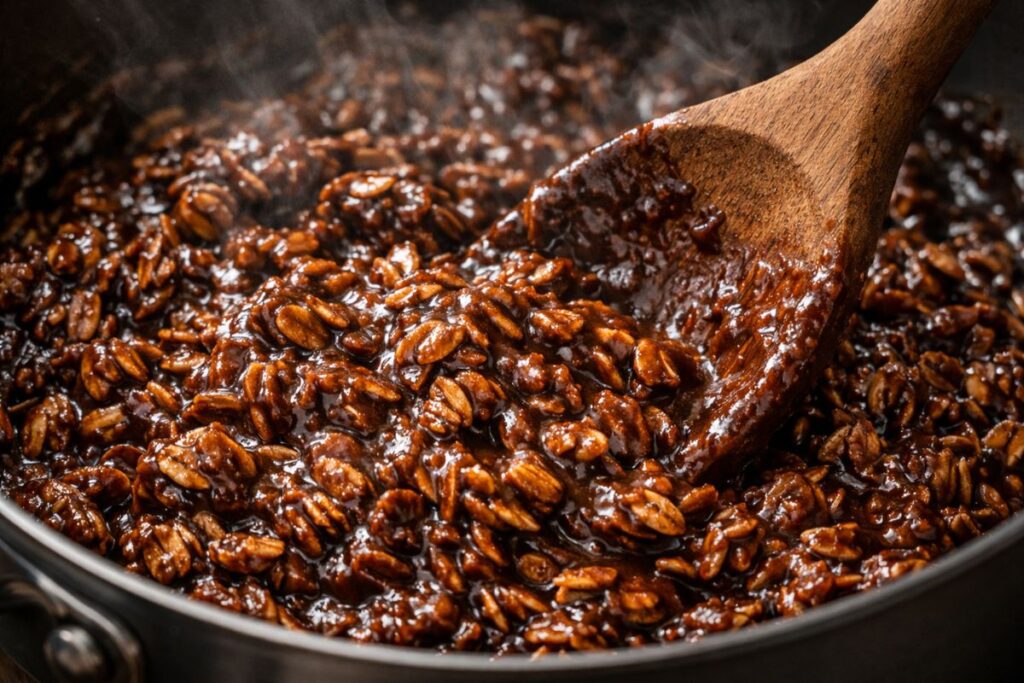
Fat determines everything: mouthfeel, aroma retention, and even perceived sweetness.
Butter (especially in All-Clad saucepans):
- Rich, dairy-forward
- Encourages caramelization
- Ideal for classic depth
Coconut Oil:
- Cleaner, lighter finish
- Faster setting at room temperature
- Perfect for citrus or tropical profiles
Pro Tip:
Bloom your spices or botanicals in warm fat before mixing. This unlocks fat-soluble flavor compounds, making even subtle ingredients like lavender or cardamom more pronounced.
Emulsification: The Hidden Skill
A successful no-bake cookie is an emulsion—a stable mixture of fat and water.
If you’ve ever had cookies that separate or appear oily, the emulsion broke.
How to prevent it:
- Add dry ingredients gradually
- Stir continuously while warm
- Avoid temperature shock (don’t add cold ingredients too quickly)
Floral & Citrus Infusions: Spring’s Signature
Spring baking thrives on aromatics.
How to Zest Properly
Use a microplane and remove only the colored outer layer. The white pith beneath is bitter and will overpower your cookies.
Infusing Sugar
Combine granulated sugar with dried lavender, rose petals, or citrus peel. Let sit for 24–48 hours.
Result: A perfumed sweetness that feels layered—not artificial.
The No-Bake Advantage
There’s also a philosophical shift here.
No-bake desserts don’t rely on transformation through heat—they rely on precision, timing, and restraint.
For another masterclass in texture control without heat, see the zero-dilution principle explored in my Mango Smoothie guide.
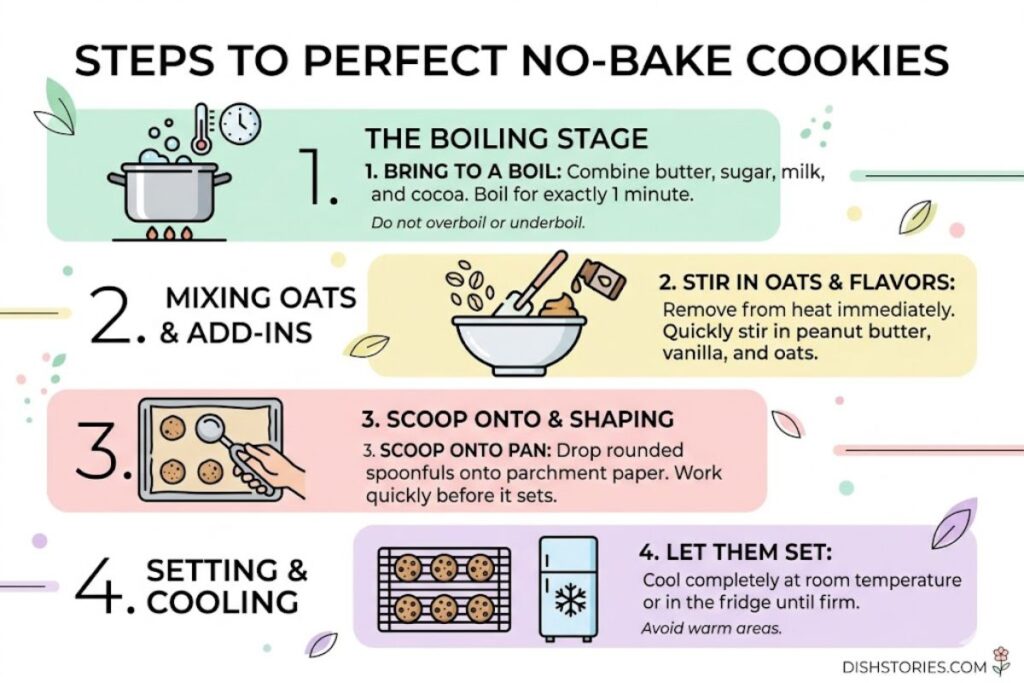
Mastering the Boil—The 60-Second Science
If there is one moment where a no-bake cookie is won or lost, it is at the surface of the saucepan.
Many recipes casually suggest “bringing the mixture to a boil,” but in the world of professional confectionery, a boil is not just a state of bubbles—it is a countdown. When you combine your butter, sugar, and milk in a heavy-bottomed All-Clad saucepan, you are initiating a sugar phase transition.
The Rolling Boil vs. The Simmer A common mistake that leads to “Discovered – not indexed” results in the kitchen (and on the plate) is timing the wrong kind of heat. You are looking for a rolling boil—a state where the bubbles cannot be stirred away. This is the precise moment when the temperature reaches the “Soft-Ball Stage” (approximately 234°F).
- Under-boiling (The “Gooey” Trap): If you stop the timer at 45 seconds, the sugar molecules haven’t bonded enough to create a structure. Your cookies will taste delicious but will remain a puddle on your Silpat mat.
- Over-boiling (The “Crumble” Trap): If you let it go to 90 seconds, the water content evaporates too much, leaving you with a grainy, dry texture that cracks when you take a bite.
Altitude and Ambient Humidity We must also consider the atmosphere. On a humid “Sunny Tuesday,” the sugar may absorb moisture from the air, requiring an extra 10 seconds of heat. If you are baking at a higher altitude, your boiling point is lower, meaning you might need to adjust your timing to ensure the starch gelatinization in the oats occurs correctly.
Professional Tip: Don’t start your timer when the first bubble appears. Wait until the entire surface of the liquid is a frothy, moving mass. Only then do you count to sixty. This precision is what separates a “snack” from a “Modern Heirloom.”
The Oat Selection—Choosing Your Structural Foundation
In the world of no-bake architecture, not all oats are created equal. While they may look similar in the canister, their molecular behavior when hitting a hot sugar-emulsion is vastly different. Choosing the wrong oat is the most common reason for a “modern heirloom” turning into a “modern mess.”
1. Quick Oats: The Structural Glue
For the recipes in this guide—especially the Lemon Lavender and Peanut Butter Bird’s Nests—Quick Oats are your best friend. Because they are steamed longer and rolled thinner during processing, they have a high surface-area-to-volume ratio.
- The Result: They absorb the liquid syrup almost instantly, creating a tight, cohesive bond that allows the cookie to set firmly at room temperature.
2. Rolled Oats (Old Fashioned): The Chewy Traditionalist
If you prefer a cookie with a distinct, “toothy” bite, Rolled Oats are an option, but they require a technique adjustment. Because they are thicker, they don’t hydrate as quickly as Quick Oats.
- Pro Tip: If using Rolled Oats, increase your “Rolling Boil” time by an extra 10 seconds to ensure the heat penetrates the grain, or let the mixture sit in the saucepan for 2 minutes before scooping to allow for full hydration.
3. Steel-Cut Oats: The Forbidden Grain
In no-bake baking, Steel-Cut oats are a non-starter. Because they are minimally processed, they require long-term simmering to soften.
- The Risk: Using these in a no-bake recipe will result in a cookie that feels like eating gravel. Save these for your slow-cooker morning porridge, not your spring dessert table.
4. Gluten-Free Considerations
Oats are naturally gluten-free, but cross-contamination in processing facilities is common. To maintain the integrity of your Appetizers and Snacks category for health-conscious readers, always specify Certified Gluten-Free Oats. The structural chemistry remains the same, but the peace of mind for your guests is priceless.
1. Lemon Lavender No-Bake Cookies
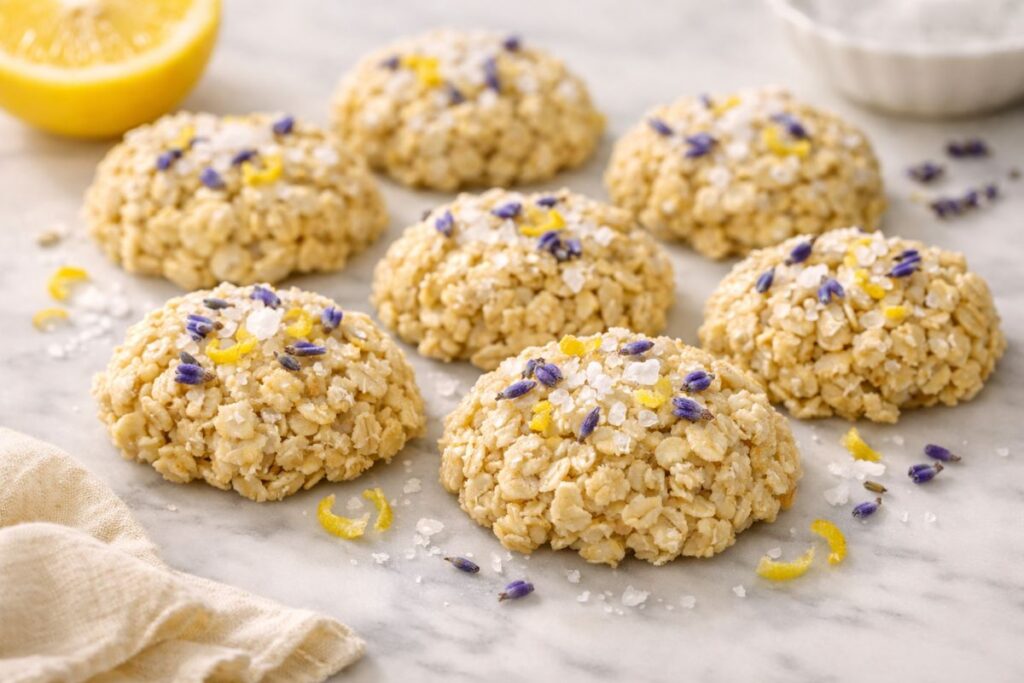
The first bite is quiet.
Then the lemon arrives—bright, almost sparkling. And just behind it, lavender lingers like a memory you can’t quite place.
These are not nostalgic cookies. They are deliberate.
If you love citrus-forward profiles, my Strawberry Lemonade Refresher pairs beautifully with our Grilled Lemon Herb Chicken.
For a sophisticated side, pair this with our Roast Pumpkin Salad.
Recipe Card of Lemon Lavender No-Bake Cookies
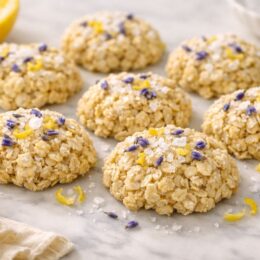
Lemon Lavender No-Bake Cookies
Equipment
- 1 All-Clad heavy-bottomed saucepan
- 1 Silpat baking mat
- 1 Professional cookie scoop
Ingredients
- 1/2 cup unsalted butter
- 2 cups sugar
- 1/2 cup milk
- 3 cups quick oats
- 1 tbsp lemon zest
- 1 tsp culinary lavender finely crushed
- 1/2 tsp vanilla extract
- Maldon sea salt for finishing
Instructions
- In saucepan, melt butter over medium heat.
- Add sugar and milk; bring to a controlled boil for 60–90 seconds.
- Remove from heat immediately.
- Stir in oats, lemon zest, lavender, and vanilla.
- Scoop onto Silpat-lined surface.
- Finish with a light sprinkle of Maldon salt.
- Let set at room temperature for 30 minutes.
Video
Notes
- Oats: Provide fiber and slow-digesting carbs.
- Dried strawberries: Natural sweetness, antioxidants.
- Butter & cream: Adds richness, but can be swapped for coconut oil or nut milk for lighter options.
Calories: ~140 per cookie (Carbs: 18g, Fat: 7g, Protein: 2g)Calories: ~140 per cookie (Carbs: 18g, Fat: 7g, Protein: 2g)
How to Store Your No-Bake Cookies
- Room Temperature: 2–3 days in an airtight container.
- Refrigerator: 1–2 weeks; keeps chocolate and peanut butter stable.
- Freezer: Up to 3 months; separate with parchment to prevent sticking.
Make It Your Own: Cookie Customization Ideas
- Swap nuts: almonds, pecans, or walnuts instead of macadamia.
- Mix-in chocolate: dark, milk, or white chips for texture variety.
- Add flavors: a pinch of cinnamon, vanilla, or citrus zest.
- Dietary swaps: use gluten-free oats or sugar alternatives to suit preferences.
Culinary Science Note
From a molecular perspective, oats provide the structural matrix, absorbing liquid and stabilizing the cookie. By blooming lavender in warm butter, volatile aromatic compounds are preserved, creating a deeper floral profile. Professional Tip: Use finely crushed lavender—large pieces create uneven flavor pockets.
2. Classic Pastel Soft-Batch Sugar Cookies
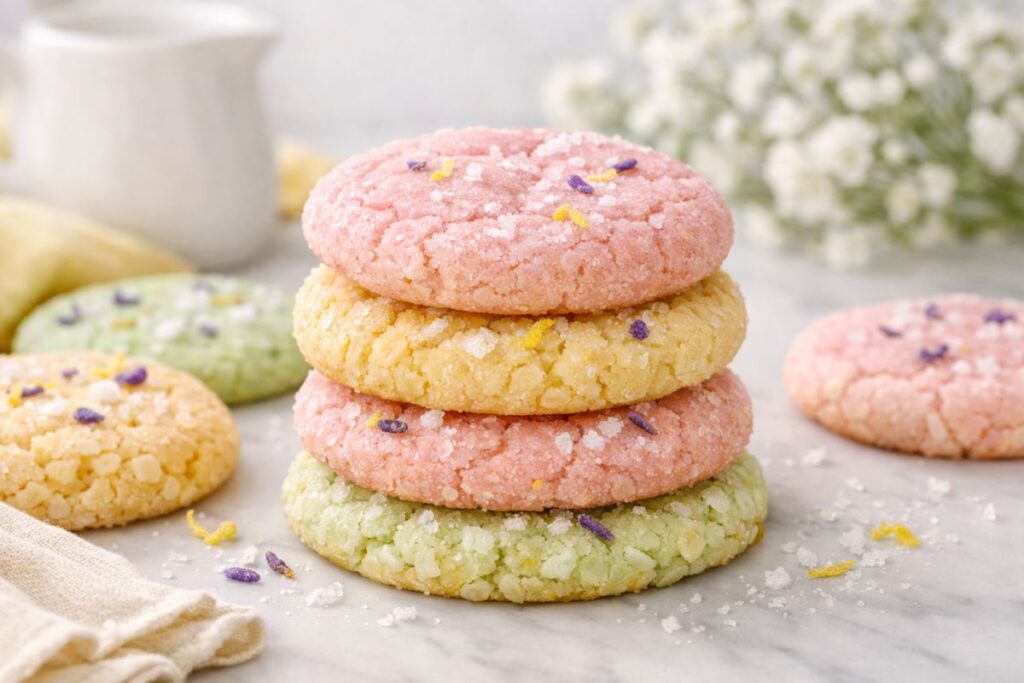
These are the cookies that disappear first at a spring table.
They don’t snap—they yield.
Soft-batch is not a trend. It’s a technique.
Recipe Card of Pastel Soft-Batch Sugar Cookies
Pastel Soft-Batch Sugar Cookies
Equipment
- 1 KitchenAid stand mixer
- 1 Nordic Ware baking sheets
- 1 Parchment paper
Ingredients
- 1/2 cup butter
- 4 oz cream cheese
- 1 cup sugar
- 1 pcs egg
- 2 cups flour
- 2 tbsp cornstarch
- Food coloring pastel shades
Instructions
- Cream butter and cream cheese until smooth.
- Add sugar, then egg.
- Mix in flour and cornstarch.
- Divide dough, color lightly.
- Scoop onto sheet.
- Bake at 350°F for 10 minutes.
Video
Notes
- Oats: Provide fiber and slow-digesting carbs.
- Dried strawberries: Natural sweetness, antioxidants.
- Butter & cream: Adds richness, but can be swapped for coconut oil or nut milk for lighter options.
How to Store Your No-Bake Cookies
- Room Temperature: 2–3 days in an airtight container.
- Refrigerator: 1–2 weeks; keeps chocolate and peanut butter stable.
- Freezer: Up to 3 months; separate with parchment to prevent sticking.
Make It Your Own: Cookie Customization Ideas
- Swap nuts: almonds, pecans, or walnuts instead of macadamia.
- Mix-in chocolate: dark, milk, or white chips for texture variety.
- Add flavors: a pinch of cinnamon, vanilla, or citrus zest.
- Dietary swaps: use gluten-free oats or sugar alternatives to suit preferences.
Culinary Science Note
Cornstarch reduces gluten formation, creating a tender crumb. Cream cheese adds fat and acidity, enhancing softness. Professional Tip: Underbake slightly—the residual heat finishes the structure without drying.
These pastel batches are the perfect finish after a holiday meal like my Herb Butter Turkey.
3. Strawberry Shortcake Oatmeal Cookies
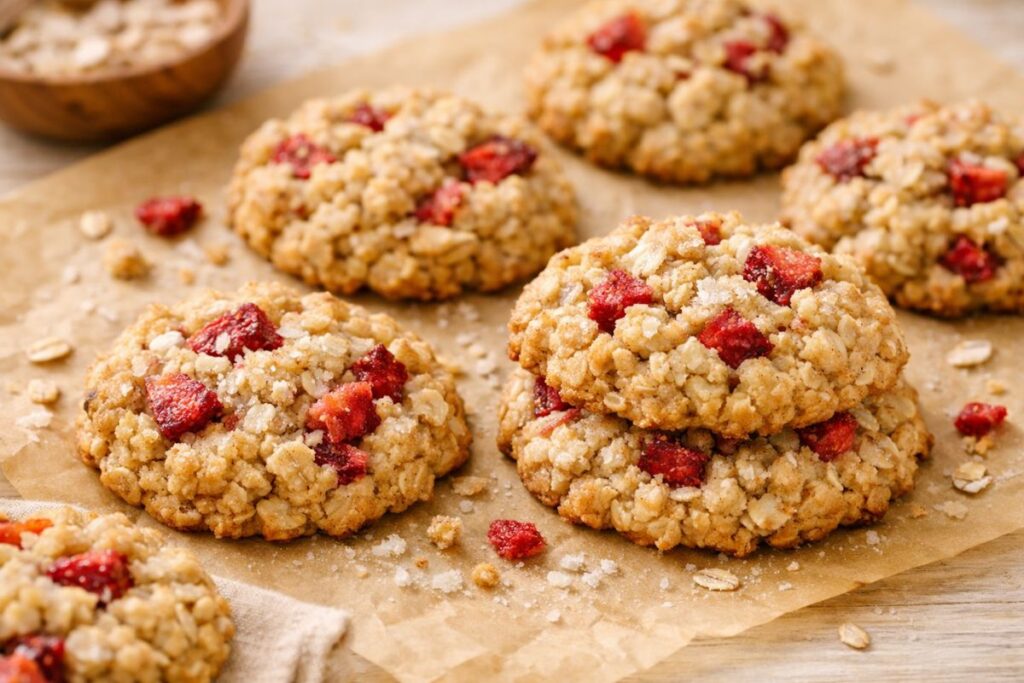
These sit somewhere between dessert and memory.
Recipe Card of Strawberry Shortcake Oatmeal Cookies
Strawberry Shortcake Oatmeal Cookies
Equipment
- 1 All-Clad saucepan
- 1 Cookie scoop
Ingredients
- 2 cups oats
- 1/2 cup dried strawberries
- 1/3 cup butter
- 1 cup sugar
- 1/4 cup cream
Instructions
- Heat butter, sugar, cream to boil.
- Stir in oats and strawberries.
- Scoop and set.
Video
Notes
- Oats: Fiber, complex carbs, small protein boost
- Dried strawberries: Natural sugars, slight fiber
- Butter & cream: Main fat source, adds richness
- Sugar: Primary contributor to calories and sweetness
Notes
- Using unsalted vs salted butter won’t significantly change calories
- Swapping cream for milk can slightly reduce fat
- Reducing sugar or using alternatives will lower overall calories
How to Store Your No-Bake Cookies
- Room Temperature: 2–3 days in an airtight container.
- Refrigerator: 1–2 weeks; keeps chocolate and peanut butter stable.
- Freezer: Up to 3 months; separate with parchment to prevent sticking.
Make It Your Own: Cookie Customization Ideas
- Swap nuts: almonds, pecans, or walnuts instead of macadamia.
- Mix-in chocolate: dark, milk, or white chips for texture variety.
- Add flavors: a pinch of cinnamon, vanilla, or citrus zest.
- Dietary swaps: use gluten-free oats or sugar alternatives to suit preferences.
- Calories: ~2,150 kcal
- Carbohydrates: ~300 g
- Protein: ~30 g
- Fat: ~95 g
- Sugar: ~190 g
- Fiber: ~32 g
Per Cookie (1 of 16)
- Calories: ~135 kcal
- Carbohydrates: ~19 g
- Protein: ~2 g
- Fat: ~6 g
- Sugar: ~12 g
- Fiber: ~2 g
Culinary Science Note
Dehydrated strawberries prevent excess moisture, preserving structure. Professional Tip: Fresh fruit requires pre-drying to avoid soggy cookies.
Oats are also linked to heart health and sustained energy, making them a smart dessert base.
4. White Chocolate Macadamia Spring Blooms
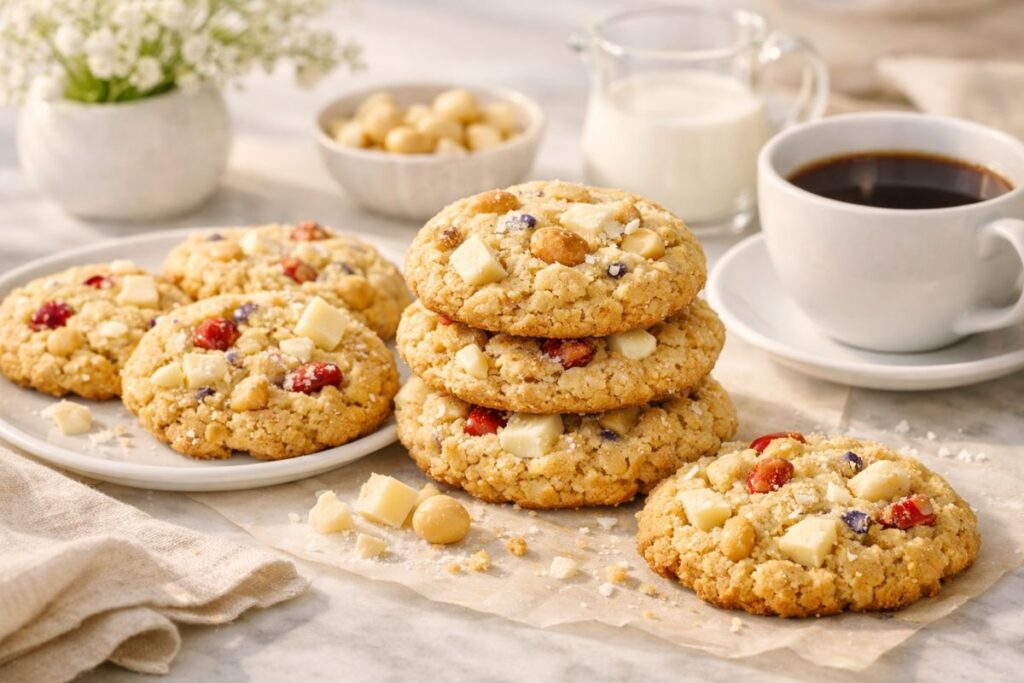
These belong at brunch beside sparkling drinks.
White Chocolate Macadamia Spring Blooms Recipe Card
White Chocolate Macadamia Spring Blooms
Equipment
- 1 KitchenAid mixer
- 1 Nordic Ware sheets
Ingredients
- 1 cup butter
- 1 cup sugar
- 2 cups flour
- White chocolate chunks
- Macadamia nuts
Instructions
- Cream butter and sugar.
- Add flour and mix-ins.
- Bake.
Video
Notes
- Butter: Major fat source → rich, soft texture
- White chocolate: Adds sugar + creamy sweetness
- Macadamia nuts: High in healthy fats, boosts calories
- Flour & sugar: Main carb base
Quick Notes
- Macadamia nuts make these higher in fat and calories than typical cookies
-
You can reduce calories by:
- Using ½ cup butter instead of 1 cup
- Cutting white chocolate slightly
- Adding a bit of oats for fiber
- Pro Tip: Toasting oats lightly enhances flavor and chewiness, even in no-bake cookies.
How to Store Your No-Bake Cookies
- Room Temperature: 2–3 days in an airtight container.
- Refrigerator: 1–2 weeks; keeps chocolate and peanut butter stable.
- Freezer: Up to 3 months; separate with parchment to prevent sticking.
Make It Your Own: Cookie Customization Ideas
- Swap nuts: almonds, pecans, or walnuts instead of macadamia.
- Mix-in chocolate: dark, milk, or white chips for texture variety.
- Add flavors: a pinch of cinnamon, vanilla, or citrus zest.
- Dietary swaps: use gluten-free oats or sugar alternatives to suit preferences.
- Calories: ~4,200 kcal
- Carbohydrates: ~420 g
- Protein: ~40 g
- Fat: ~260 g
- Sugar: ~230 g
- Fiber: ~12 g
Per Cookie (1 of 16)
- Calories: ~260 kcal
- Carbohydrates: ~26 g
- Protein: ~2–3 g
- Fat: ~16 g
- Sugar: ~14 g
- Fiber: ~1 g
Culinary Science Note
Macadamia fats enhance mouthfeel, while white chocolate adds sweetness without bitterness. Professional Tip: Chill dough for thicker cookies.
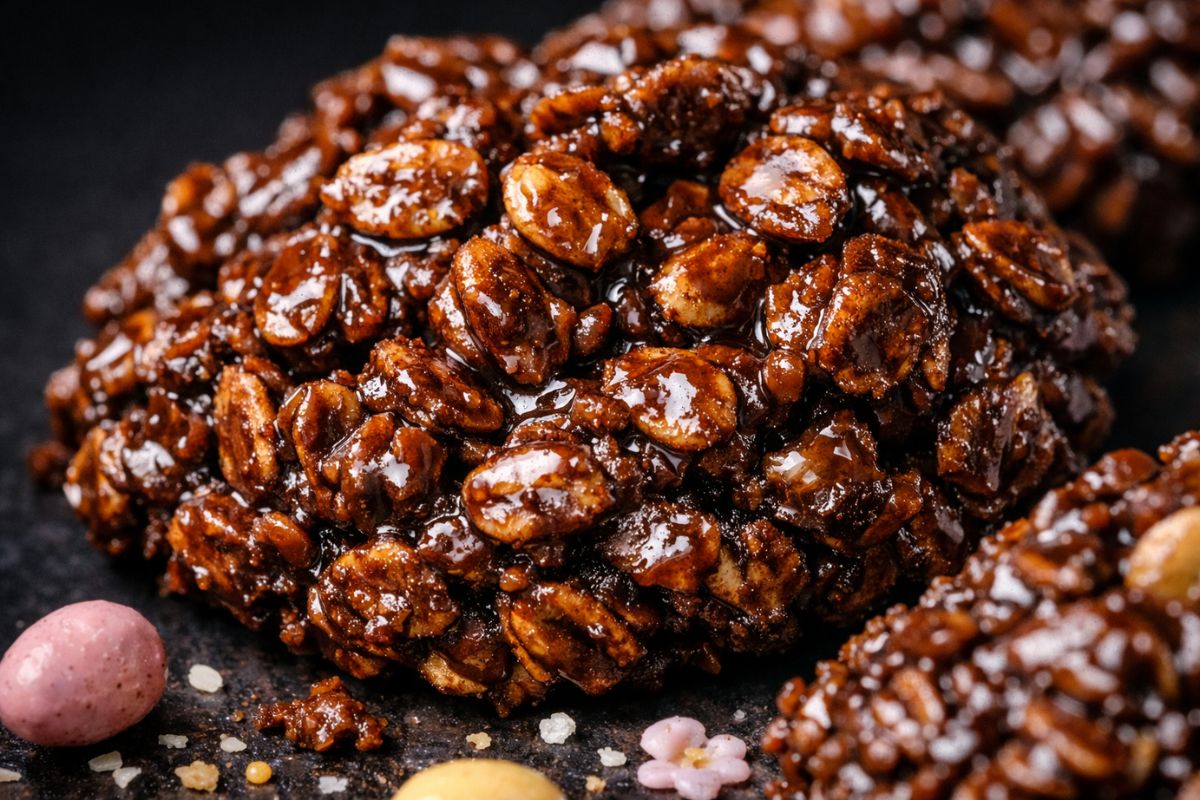
5. Peanut Butter “Bird’s Nest” No-Bake Cookies
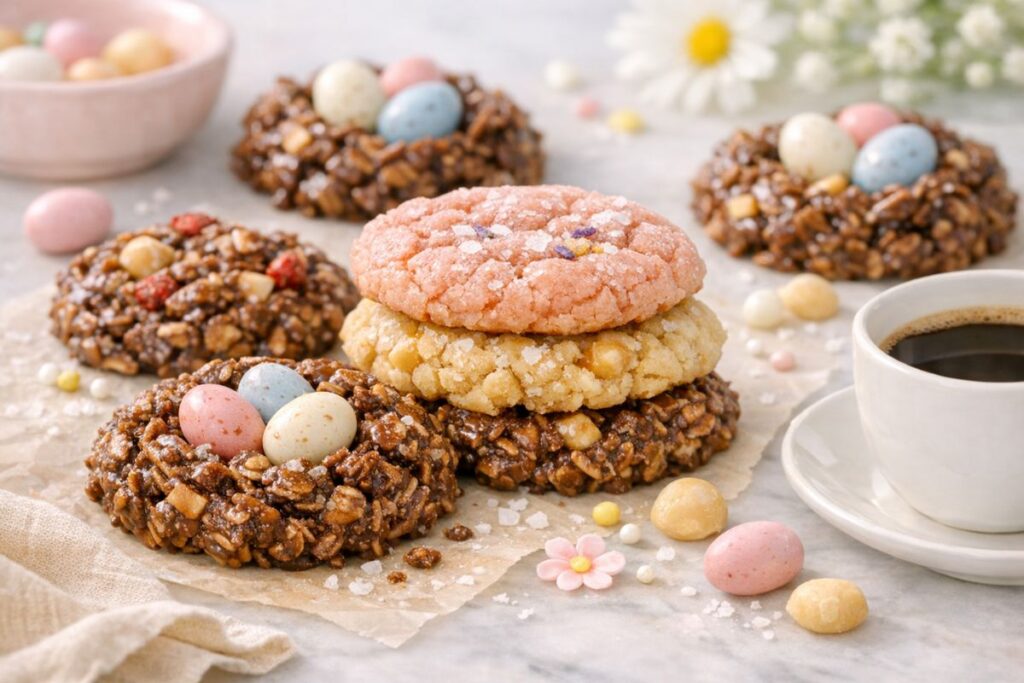
[IMAGE: Nest-shaped cookies with chocolate eggs]
Playful, but sophisticated.
Peanut Butter “Bird’s Nest” No-Bake Cookies Recipe Card
Peanut Butter “Bird’s Nest” No-Bake Cookies
Equipment
- Saucepan
- Scoop
Ingredients
- 1/2 cup peanut butter
- 70 % dark chocolate
- oats
Instructions
- Melt chocolate and peanut butter.
- Mix oats.
- Shape into nests.
Video
Notes
- Oats: Provide fiber and slow-digesting carbs.
- Dried strawberries: Natural sweetness, antioxidants.
- Butter & cream: Adds richness, but can be swapped for coconut oil or nut milk for lighter options.
- These are more nutrient-dense than typical cookies (thanks to oats + peanut butter)
- Using natural peanut butter lowers added sugar
- Increasing oats slightly can improve fiber and reduce calorie density
How to Store Your No-Bake Cookies
- Room Temperature: 2–3 days in an airtight container.
- Refrigerator: 1–2 weeks; keeps chocolate and peanut butter stable.
- Freezer: Up to 3 months; separate with parchment to prevent sticking.
Make It Your Own: Cookie Customization Ideas
- Swap nuts: almonds, pecans, or walnuts instead of macadamia.
- Mix-in chocolate: dark, milk, or white chips for texture variety.
- Add flavors: a pinch of cinnamon, vanilla, or citrus zest.
- Dietary swaps: use gluten-free oats or sugar alternatives to suit preferences.
- Calories: ~1,900 kcal
- Carbohydrates: ~150 g
- Protein: ~45 g
- Fat: ~125 g
- Sugar: ~55 g
- Fiber: ~25 g
Per Cookie (1 of ~12)
- Calories: ~160 kcal
- Carbohydrates: ~12–13 g
- Protein: ~3–4 g
- Fat: ~10–11 g
- Sugar: ~4–5 g
- Fiber: ~2 g
Culinary Science Note
High-cacao chocolate stabilizes structure while reducing sweetness. Professional Tip: Use tempered chocolate for glossy finish.
FAQ: Precision Answers for Perfect Cookies
How do I make no-bake cookies without peanut butter?
Use sunflower seed butter or tahini. They maintain fat structure without allergens.
Why didn’t my no-bake cookies set?
The sugar likely didn’t reach soft-ball stage. Temperature control is critical.
Best way to store spring cookies?
Airtight containers, layered with parchment. Chill delicate varieties.
Can I use frozen strawberries?
Yes—but thaw and dry thoroughly first.
How do you get soft-batch texture?
Cornstarch + underbaking + fat balance.
Are uncooked oatmeal cookies safe?
Color, flavor (citrus/floral), and light texture.
Can I substitute honey for sugar?
Yes—but reduce liquid elsewhere to maintain structure.
Closing Thought
The first sunny Tuesday isn’t about abandoning tradition.
It’s about refining it.
Taking what worked—and making it lighter, brighter, more intentional.
Because the best cookies aren’t just baked.
They’re designed.