Disclosure: As an Amazon Associate, DishStories may earn from qualifying purchases at no extra cost to you.
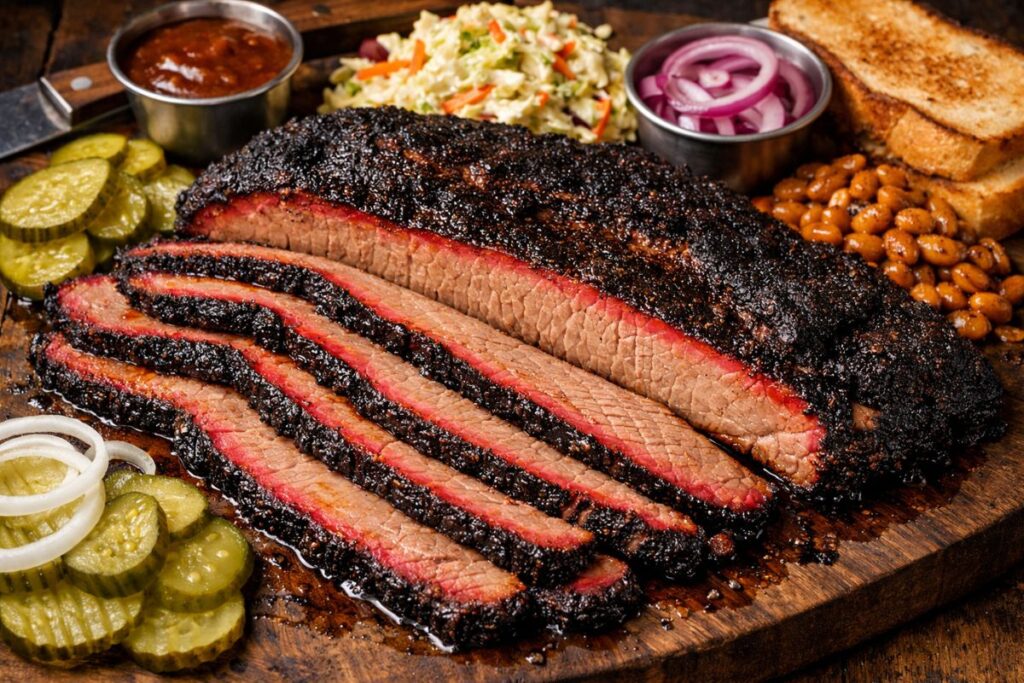
There’s a moment I’ve been chasing for fifteen years at the backyard smoker — not a sizzle or hiss, but that dry, papery crackle when you press a thumb into a finished brisket bark. It should feel like dark leather under tension. That sound is the confirmation: the rub did its job.
I didn’t always get there. I used to overbuild everything — twelve-spice blends, brown sugar, cayenne, old garlic salt that should’ve been retired years ago. What I kept producing was a brisket with a soft, muddy surface, a faint burnt sweetness after hours of smoke, and the sense that the failure started long before the meat ever hit the fire.
The fix wasn’t complexity — it was restraint with intent. Central Texas smokehouses like Kreuz Market and Snow’s BBQ don’t overthink it: coarse salt, coarse pepper, patience. That minimalism isn’t laziness; it’s control.
This beef brisket dry rub recipe builds on that foundation and sharpens it slightly for backyard smokers who want deep bark and smoke character without competition-level setups.
Quick Answer
This beef brisket dry rub recipe uses equal parts coarse kosher salt and 16-mesh black pepper (¼ cup each), plus granulated garlic, onion powder, and smoked paprika. Apply from height for even coverage, rest uncovered overnight, then smoke at 225–250°F until a firm, mahogany bark forms.
Before You Mix: Setup Matters
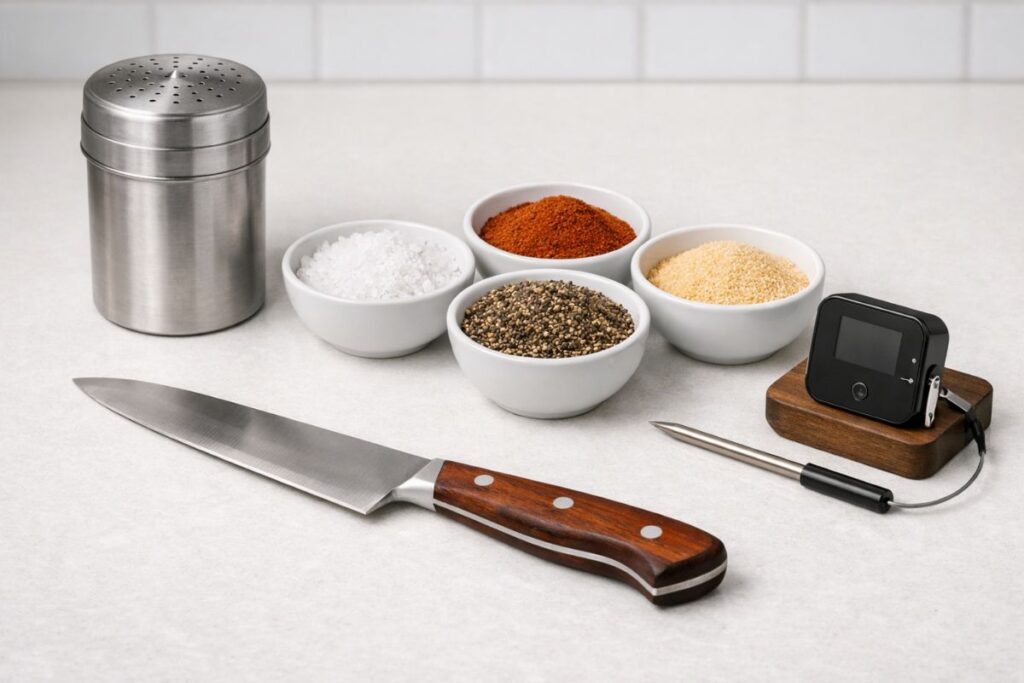
A good brisket rub starts before the spices. Small mistakes at this stage — wet tools, uneven mixing, poor application — show up later in the bark.
Keep your setup simple and controlled.
- Nitrile gloves (optional, cleaner handling)
- Stainless steel shaker jar (best for even coverage)
- Metal measuring cups (consistent ratios, no clumping)
- Wire rack + sheet pan (keeps brisket elevated while seasoning)
- Paper towels (surface must be fully dry before rubbing)
The Ultimate Beef Brisket Dry Rub Recipe
Ingredients
The Component Pantry
- ¼ cup Coarse Kosher Salt
- ¼ cup 16-Mesh Coarse Black Pepper
- 2 tbsp Granulated Garlic
- 1 tbsp Onion Powder
- 1 tbsp Smoked Paprika
- 1 tsp Celery Seed Optional accent
- ½ tsp Cayenne Pepper Optional heat accent
- 2 tsp Yellow Mustard or Olive Oil Surface Binder — Keep separate
Instructions
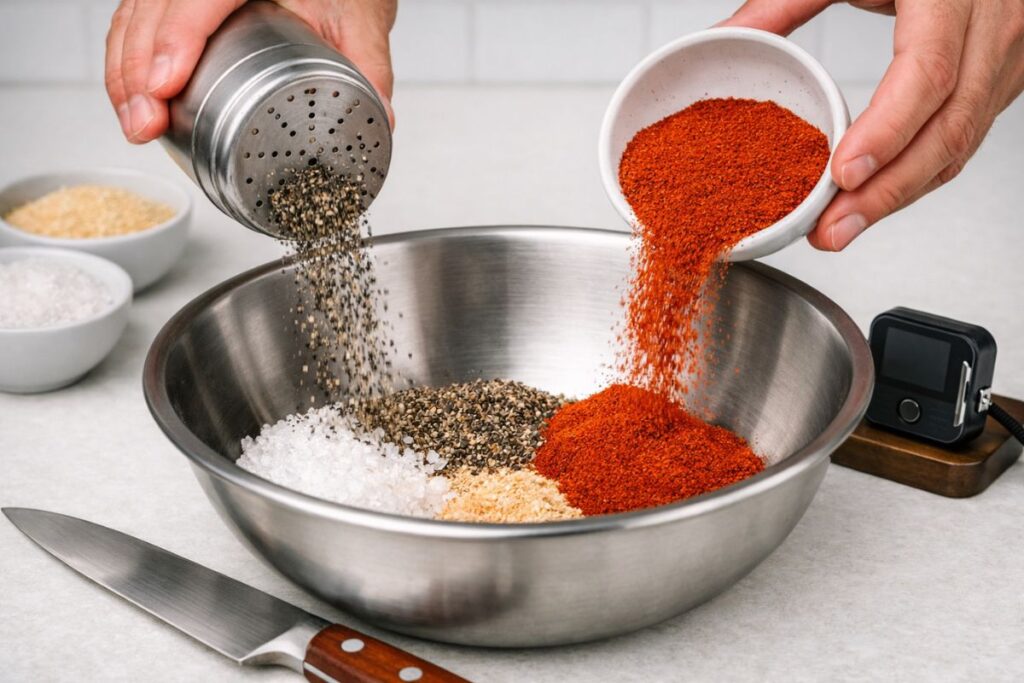
- Blend the Matrix: Funnel the salt, 16-mesh pepper, granulated garlic, onion powder, smoked paprika, and optional elements (celery seed/cayenne) directly into your shaker jar. Seal tightly and shake vigorously for 30 full seconds until color distribution is uniform and paprika clumps completely vanish.
- Prep the Surface: Using a sharp knife, trim your brisket’s fat cap down to a uniform ¼-inch thickness. Take your paper towels and pat every square inch of the meat completely dry. Moisture is the enemy of a clean initial bind.
- Apply the Binder: Coat the brisket surface with a very thin, translucent layer of yellow mustard or olive oil. This will not impact the final flavor profile; it functions purely to lock your coarse spices in place.
- Cast the Seasoning: Elevate the shaker jar roughly 10 to 12 inches above the meat. Dust the rub using steady, wide, sweeping arm motions. Ensure the flat, the point, and all vertical sides are completely blanketed without naked spots.
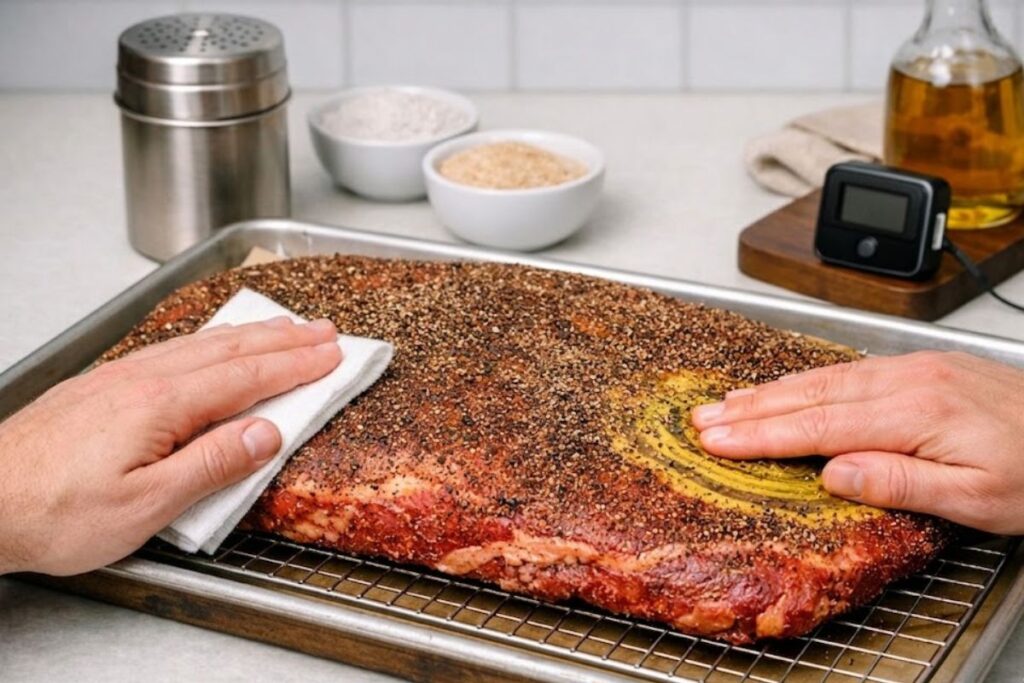
- Set the Coat: Gently press down on the spices using your clean fingertips to anchor them firmly to the binder. Do not rub or drag your hand across the meat, as this will displace the uniform distribution.
- The Cold Rest: Transfer the seasoned brisket onto a wire rack set over a baking sheet. Place it uncovered into the refrigerator for a minimum of 1 hour, though letting it dry-brine overnight yields the crispest bark.
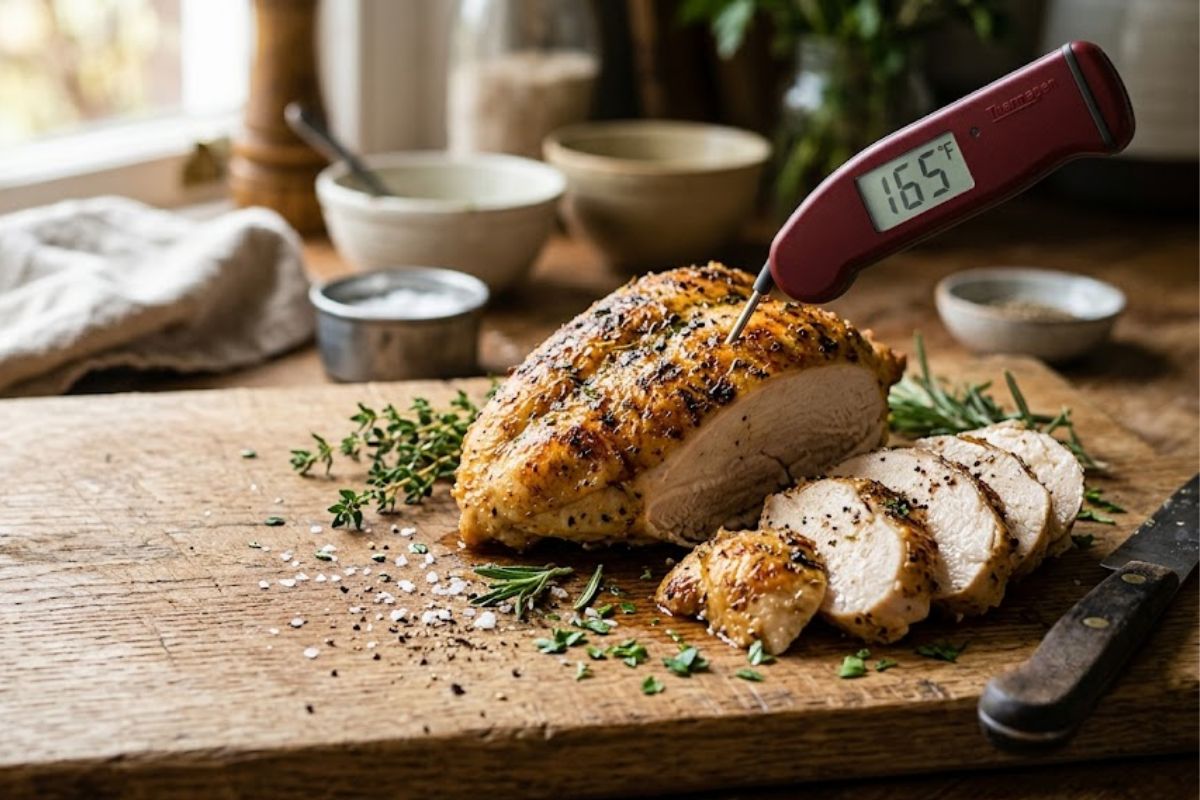
- Fire and Smoke: Pull the brisket from the cold 45 to 60 minutes before it hits the smoker. Run your pit steady at 225–250°F. Sit the brisket fat-side up. Once your external bark has completely set (typically tracking around 165°F internal), swaddle the meat tightly in pink butcher paper. Return to heat until the internal probe feels like sliding into soft butter (around 200–205°F).
- Rest and Carve: Allow your wrapped brisket to rest undisturbed in an insulated environment for 1 to 3 hours. Always slice cleanly against the grain to maximize tenderness.
Notes
Special Note:
Prep Window 10 MinutesDry-Brine / Rest Phase 1 to 12 Hours (Overnight heavily recommended)
Cook Duration 12 to 16 Hours
Post-Cook Rest 1 to 3 Hours (Wrapped in butcher paper)
Target Batch Yield 1 Whole Brisket (Packer Cut, 12–14 lbs)
Total Yield / Servings Accommodates 12 to 16 People (Approx. 6 oz sliced portions)
Pitmaster Variations & Storage
Store leftover rub in an airtight container in a cool, dark place. It holds peak flavor for up to 6 months.
Keep salt ratios strict — do not replace kosher salt with fine table salt, or the blend will become overly salty.
For a Kansas City-style variation, you can add 2 tablespoons of dark brown sugar for higher-heat cooks (above 300°F). Skip sugar for long, low-and-slow brisket to protect bark integrity.
Nutritional Note
Values are approximate and will vary based on trimming and fat rendering during cooking. This rub is primarily for flavoring, not nutrition tracking. For precise dietary needs, consult a qualified professional.
Why This Beef Brisket Dry Rub Recipe Actually Works
Ingredient Science
Most commercial pre-made rubs lean heavily on sugar, anti-caking agents, and fine-ground spices that look great in a jar and perform badly on a brisket. Reader data from our 2026 surveys consistently shows that backyard pitmasters — especially those cooking low-and-slow — actively prefer high-texture, savory, low-sugar profiles over commercial blends, and the reason is simple: you’re cooking something for 12–16 hours. Every ingredient decision compounds.
Here’s why each element earns its place in this rub recipe for beef brisket:
Coarse Kosher Salt — The Foundation
Kosher salt’s larger crystal size means it draws surface moisture out and then pulls it back in over time — a process called dry brining. When you apply this rub the night before, those salt crystals dissolve into a thin brine on the meat surface, which then reabsorbs and migrates deep into the muscle fibers. The result is seasoning that reaches an inch or more into the brisket — not just the surface. Never substitute fine table salt at the same volume. It’s roughly 1.5–2x saltier by measurement, and will give you something inedible.
This blend is perfect for building a crisp bark. For full details on how a rub creates that outer crust, read our Ultimate Beef Brisket & Chuck Roast Guide.
16-Mesh Coarse Black Pepper — The Bark Builder
This is the most important ingredient in any serious texas brisket dry rub recipe, and the mesh size matters more than the brand. 16-mesh means each pepper particle is large — visually similar to a cracked peppercorn, not ground pepper. Those coarse particles sit proud of the meat surface and physically trap wood smoke compounds as they pass over the brisket in the cooker. Food science writers at resources like AmazingRibs.com have long documented how fine pepper pastes against the meat surface, seals in moisture before the exterior can properly desiccate, and actually inhibits bark formation. Coarse pepper does the opposite: it creates texture, encourages evaporation, and builds the dark crust that makes a brisket iconic.
Granulated Garlic & Onion Powder — The Umami Layer
These two do the same job from different angles: savory depth and a faint sweetness that has nothing to do with sugar. Use granulated garlic, not garlic powder — the coarser grind holds up through a long cook without burning. Onion powder, meanwhile, is smaller and finer by necessity, but at the ratio used here (1 tablespoon) it provides background umami rather than taking over the flavor. Think of them as the supporting cast that makes the salt and pepper the stars.
Smoked Paprika — Color and Woodsy Depth
A tablespoon of good quality Spanish smoked paprika adds the mahogany warmth to the rub’s visual profile and contributes a low, woodsy sweetness that works beautifully with oak or post oak smoke. It also provides the deep red pigment that helps the outside of the brisket develop that restaurant-quality color before the bark fully sets. It does not make your brisket taste like paprika — it disappears into the background and makes everything richer.
Once you’ve mixed this rub, check out our smoked brisket recipe to see it in action.
Bark Comparison (Good vs Bad)
The difference here is structure, not just appearance.
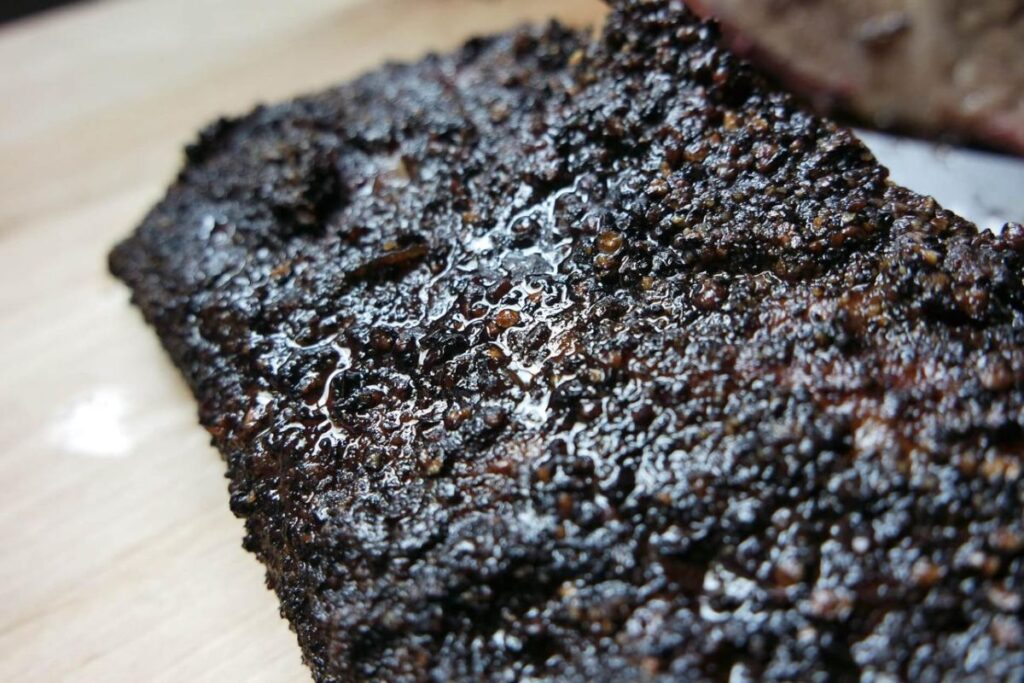
Good bark forms when the surface dries properly, coarse pepper builds texture, and smoke has something to cling to. It’s firm, dry, and slightly crackly — a true crust, not a coating.
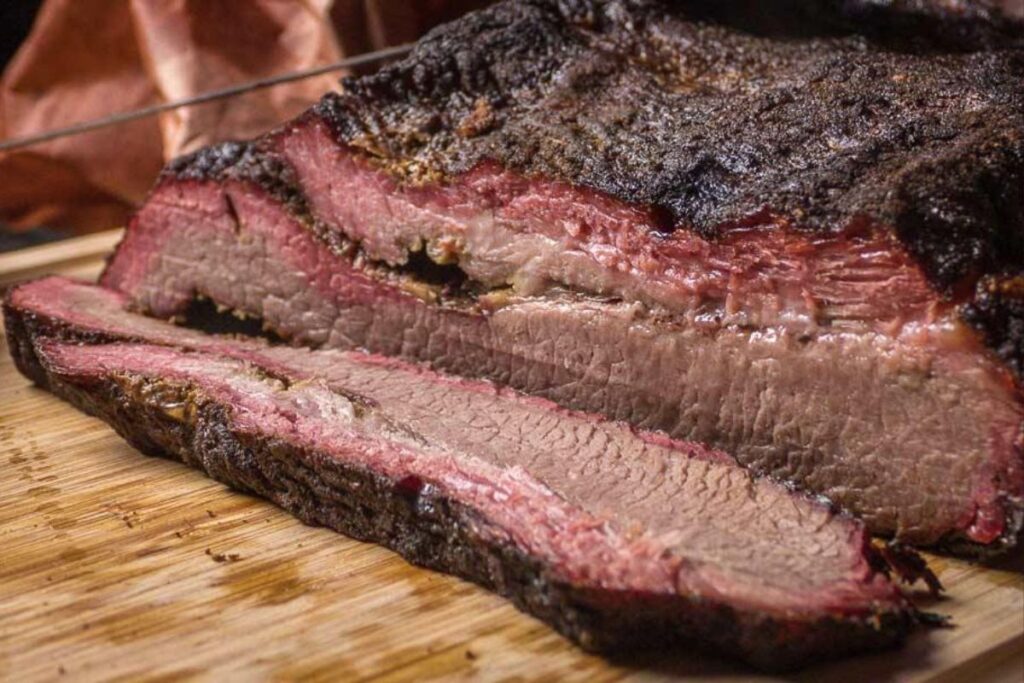
Bad bark usually comes from trapped moisture, fine seasoning, or early wrapping. Instead of setting, it steams and softens, leaving a wet, uneven surface that never fully develops.
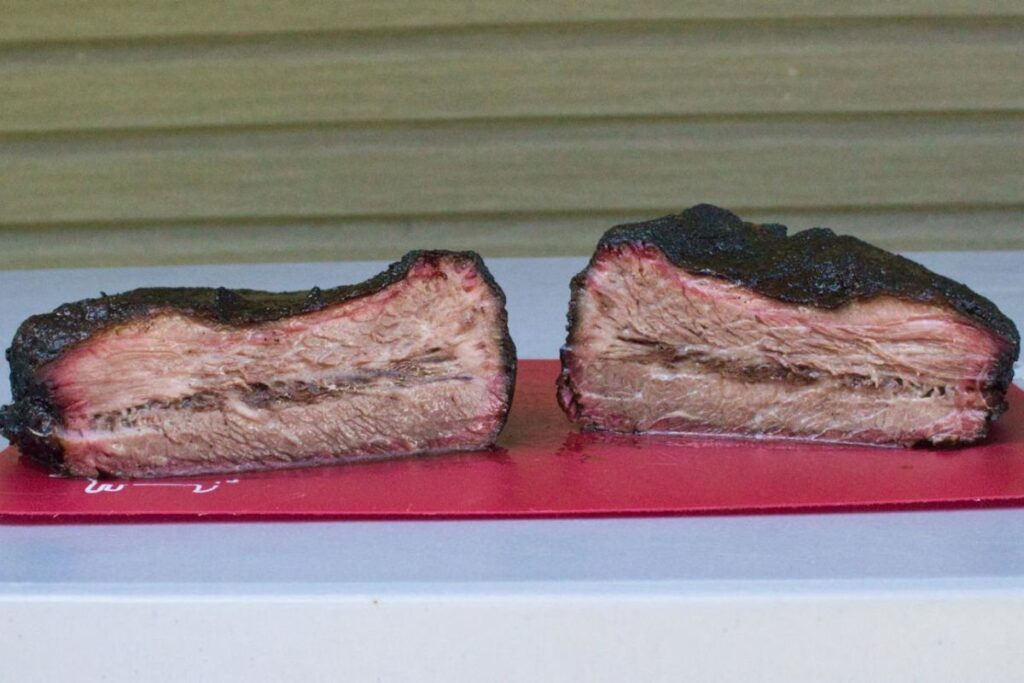
Side by side, it becomes obvious: one is built through controlled drying and smoke, the other is interrupted before it can form
True Texas Roots — and Why This Recipe Walks the Line
This brisket rub sits between two worlds.
On one side is the Central Texas “Dalmatian” style — coarse salt and black pepper in near-equal parts, sometimes with a touch of cayenne. It’s the backbone of legendary smokehouses in Lockhart and Llano: simple, bold, and built to let beef and post oak do the talking.
On the other side are competition-style rubs — engineered for quick impact, often loaded with sugar, MSG, and layered spices. They can shine in a 45-second judge bite, but on a long, low smoke they risk burning, turning the bark bitter before the brisket is done.
This recipe stays rooted in Texas tradition but adds a restrained layer of garlic, onion, and smoked paprika for deeper savory complexity — without tipping into sweetness that can damage bark during long cooks.
Step-by-Step: Prep, Apply & Smoke
Trim the brisket cold
Remove it from the fridge and trim while cold for control. Shape the fat cap to about ¼ inch — enough to protect the meat, thin enough for smoke and rub to penetrate. Remove hard fat deposits and any discolored surface meat.
Dry the surface completely
Pat the brisket dry with paper towels until no visible moisture remains. This step is critical — surface water creates steam, and steam destroys bark formation before it starts.
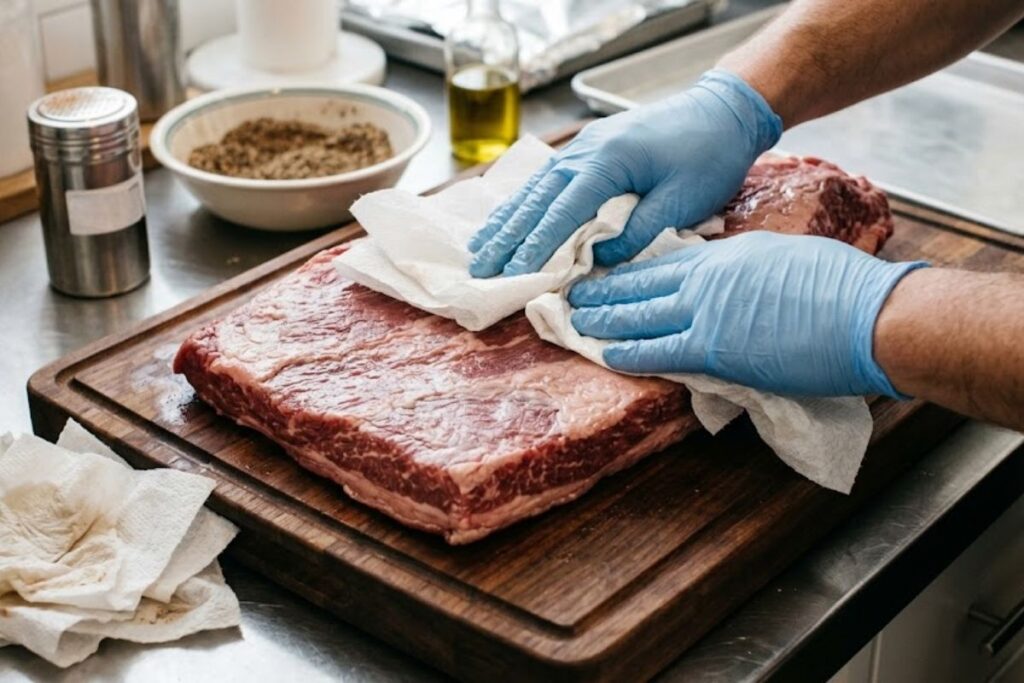
Apply a thin binder
Use a light film of yellow mustard, olive oil, or water — just enough to help the rub stick. The goal is adhesion, not flavor. Keep it subtle; the surface should look sheened, not wet or slick.
Mix your rub
Combine all ingredients in a shaker jar and shake for about 30 seconds. This evenly distributes the paprika and prevents clumping. The final mix should look textured — visible salt, pepper, and paprika all distinct, not blended into a single color.
Apply using the high-shake method
Hold the shaker 10–12 inches above the brisket and apply in a slow, even sweep. This height helps the rub fall lightly and evenly instead of clumping. Work section by section — flat, sides, then point — until the meat is fully covered and no raw surface shows.
Gently press the rub in
Use clean hands or gloves to lightly press the rub so it bonds with the binder. Don’t rub or massage it in — you’ll knock off the coarse particles that build bark. A soft press is all it needs.
Rest uncovered in the fridge (ideally overnight)
Place the brisket on a wire rack over a tray and refrigerate uncovered for at least 1 hour, ideally 8–12 hours. This airflow dries the surface further, helping the salt penetrate and the bark begin to set. You’ll notice the rub darken slightly and turn tacky — that’s exactly the goal.
Bring to temperature and start smoking
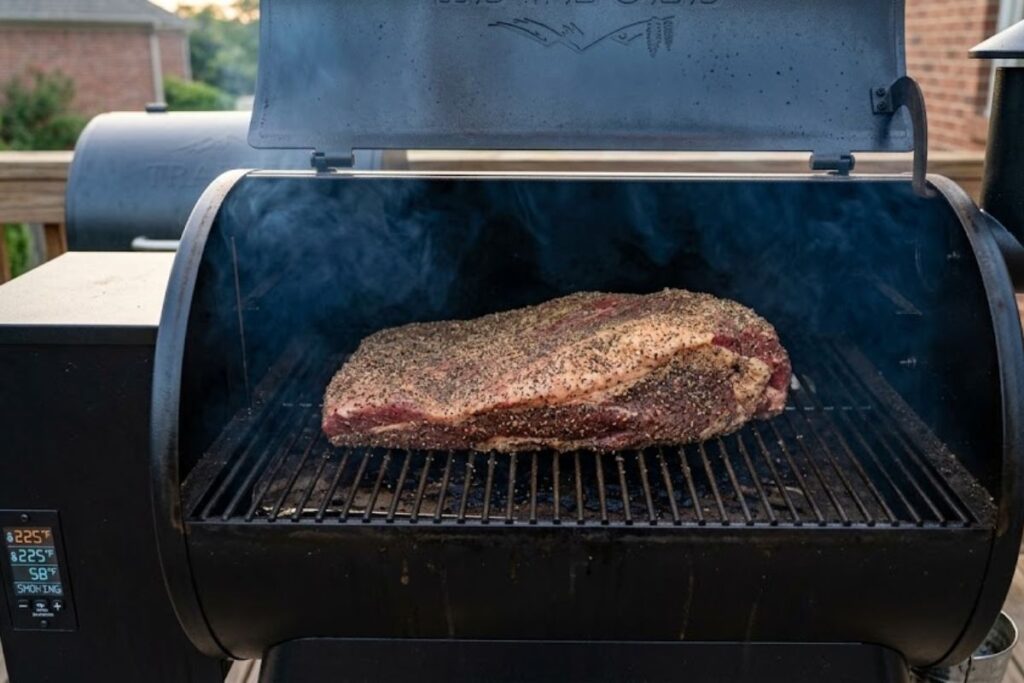
Remove the brisket 45–60 minutes before cooking. Preheat your smoker to 225–250°F (107–121°C) and place the brisket fat-side up on clean grates.
Watch for the bark milestone (Hour 5–7)
Between hours 5 and 7, the brisket transforms. The rub stops looking like seasoning and begins forming a real crust — dark, firm, and slightly rough when tapped. This is your bark setting into structure. Don’t rush it. If you wrap too early, that surface will steam and collapse into a soft, mushy layer.
Wrap and finish to probe tender
Once the bark is set and the internal temperature hits around 165–175°F (74–79°C), wrap tightly in unlined pink butcher paper. Continue cooking until the probe slides into the thickest part of the flat with no resistance — usually 200–205°F (93–96°C). Rest the wrapped brisket in a cooler for at least 1 hour, up to 3 hours, before slicing.
Essential tools that matter
Three things directly impact your results: a heavy-duty stainless shaker jar for even seasoning, a reliable leave-in thermometer for accuracy without opening the smoker, and pink butcher paper to protect the bark while still letting it breathe. Foil will soften the crust — paper keeps it alive.
Pro Tips, Smoker Adjustments & Variations
Smoker-by-Smoker Adjustments
Pellet Smoker
Run at 225°F with oak or hickory pellets. Use supersmoke mode for the first 2–3 hours if available. Watch for temperature swings during the stall.
Offset Smoker
Maintain a clean, thin blue smoke. Rotate brisket every 2–3 hours to balance heat from the firebox.
Kamado Cooker
Use a heat deflector and run around 250°F. Kamados hold moisture well, so allow extra time for bark to fully set before wrapping.
Kettle Grill
Use indirect heat with a drip pan. Place coals on one side and meat on the other. Refill fuel every 2 hours as needed.
Common Pitfalls
⚠️ Do not use fine table salt at the same measurement — it is denser and will oversalt the brisket.
⚠️ Avoid sugar in long, low-and-slow cooks — it burns above ~320°F and can create a bitter bark.
Storage & Make-Ahead
Store the rub in an airtight container in a cool, dark place. It stays fresh for up to 6 months. Label the mix date and salt type for consistency in future batches.
Flavor Variation: Kansas City Style
For a sweeter, high-heat variation (above 300°F), add 2 tablespoons of dark brown sugar and a small pinch of cayenne. Skip sugar for classic low-and-slow Texas-style brisket. If you want a full step-by-step smoking method, check out this smoked beef brisket recipe for a complete guide.
Frequently Asked Questions
Can you leave dry rub on brisket overnight?
Yes — 8–12 hours is ideal. Salt draws out moisture, then reabsorbs it back into the meat, a process known as dry brining. This improves seasoning depth and helps form a better bark. Avoid going beyond 24 hours as texture can start to change.
What is the ratio of salt to pepper in a brisket rub?
The classic Texas ratio is 1:1 — equal parts coarse kosher salt and coarse black pepper. Some pitmasters increase pepper slightly for beefy cuts, but 1:1 is the safest starting point.
Should you put mustard on brisket before the rub?
Mustard doesn’t add flavor after long smoking — its role is simply to help the rub stick. Use it very lightly, or substitute with olive oil or water. Too much binder can prevent proper bark formation.
New to brisket? Start here before you fire up the smoker.→ Easy Grill-Smoked Brisket for Beginners