Beef brisket recipe meets slow-cooked comfort in this guide where tough cuts like brisket and chuck roast transform into tender, flavorful meals. From backyard smokers to slow-simmered pots, this is where patience turns into richness.
This guide shows you how to master a beef brisket recipe using smoked, dry rub, and slow cooker methods, while also applying the same techniques to chuck roast for equally juicy, fall-apart results.
Whether you want deep smoky bark or effortless spoon-tender comfort, this approach gives you full control over flavor, texture, and cooking style.
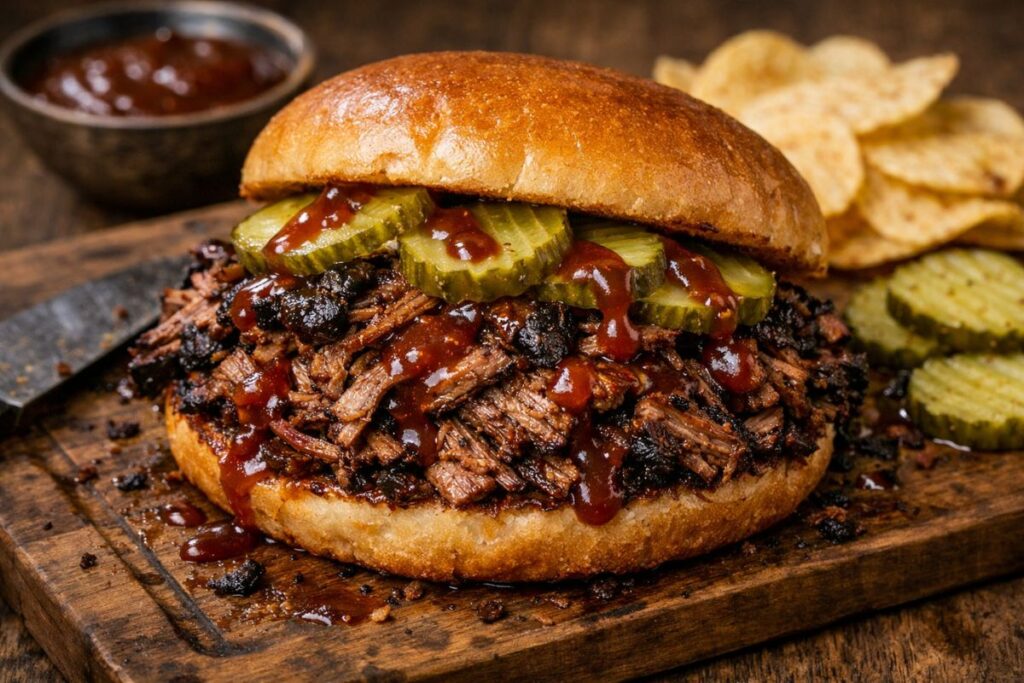
Why Brisket & Chuck Roast Deserve Respect
Beef brisket and chuck roast are not “quick dinner” cuts. They are slow-build characters — the kind that reward patience with deep flavor, tender texture, and smoky richness.
Most cooking failures happen because these cuts are rushed. But when treated correctly, they transform into restaurant-level dishes using simple tools: heat, time, salt, and technique.
This guide breaks everything into practical methods: smoking, dry rub preparation, and slow cooker techniques — so you can choose your path based on your kitchen setup.
Looking for more comfort recipes? Check our slow-cooked beef collection.
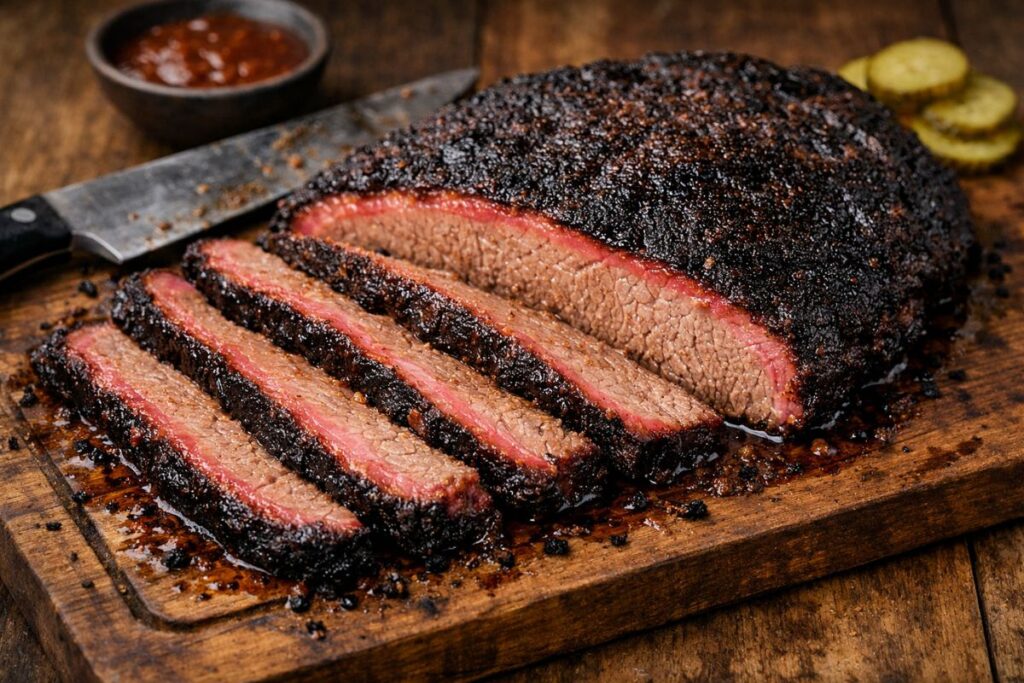
Understanding the Cuts: Brisket vs Chuck Roast
Brisket
Brisket comes from the lower chest of the cow. It has dense connective tissue that breaks down slowly during long cooking, creating that signature sliceable tenderness.
- Best method: smoking or low oven roast
- Flavor profile: rich, beefy, slightly fatty
- Ideal outcome: sliceable with bark crust
Learn more about brisket structure from Beef. It’s What’s For Dinner.
Chuck Roast
Chuck roast is more forgiving and versatile. It comes from the shoulder area and has more marbling, making it perfect for shredding.
- Best method: slow cooker or braising
- Flavor profile: rich, juicy, slightly sweet beef fat
- Ideal outcome: pull-apart shredded beef
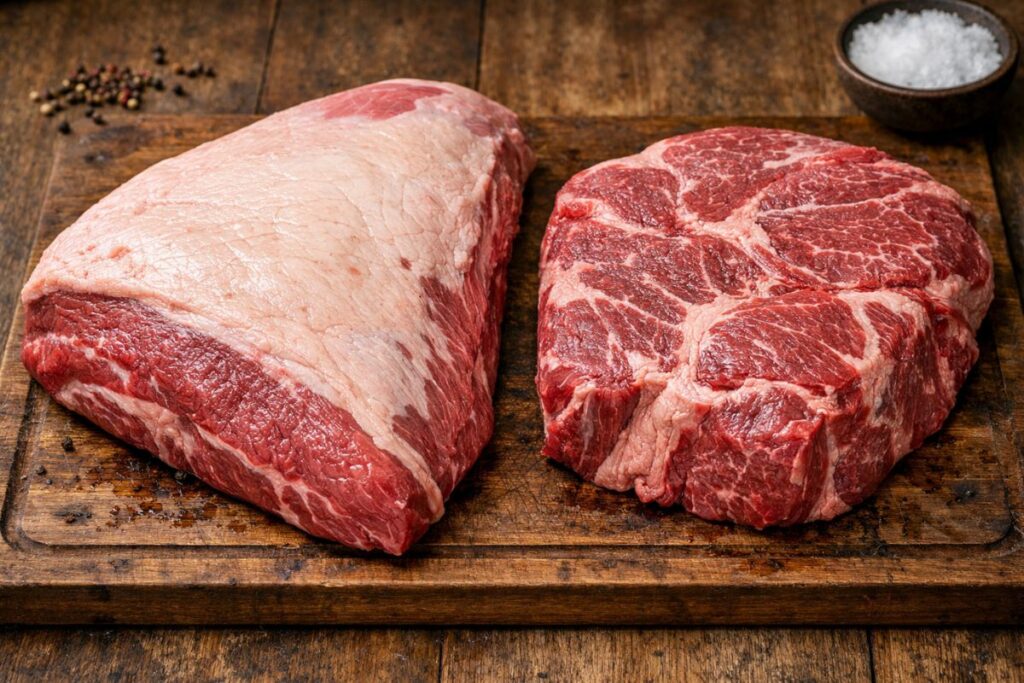
The Foundation: Building a Perfect Dry Rub
A great brisket or chuck roast starts long before heat hits the meat. The dry rub is where flavor engineering begins.
Core Dry Rub Formula
- 2 tbsp kosher salt
- 2 tbsp coarse black pepper
- 1 tbsp smoked paprika
- 1 tbsp garlic powder
- 1 tbsp onion powder
- 1 tsp brown sugar (optional for caramelization)
This balance creates a crust that turns into a flavorful bark during slow cooking.
See more seasoning ideas in our beef dry rub guide.
Application Technique
Pat the meat dry first. Moisture is the enemy of bark formation.
Then coat evenly, pressing the rub into the surface instead of sprinkling it lightly. This ensures deep flavor adhesion during long cooking hours.
Before You Cook: Setup Matters More Than You Think
Cooking brisket or chuck roast is not just heat management — it’s environment control.
- Let meat rest at room temperature for 30–45 minutes
- Use a wire rack for airflow (prevents steaming)
- Maintain consistent heat, avoid temperature spikes
At this stage, discipline matters more than creativity. Small mistakes here multiply later in texture and bark quality.
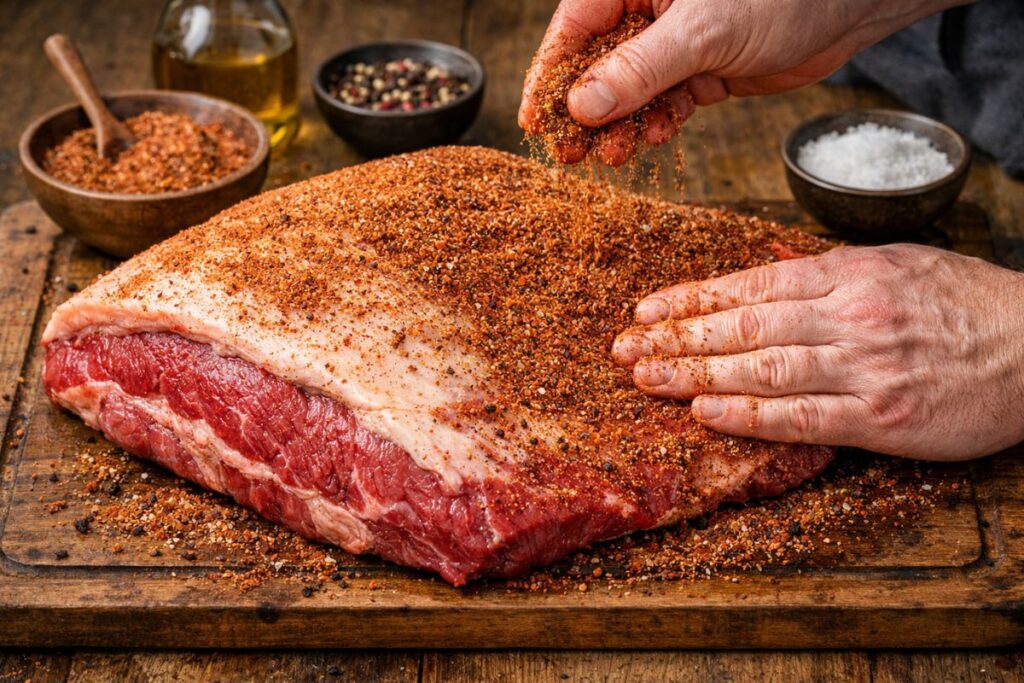
Beef Brisket Recipe: Smoking Low and Slow Method
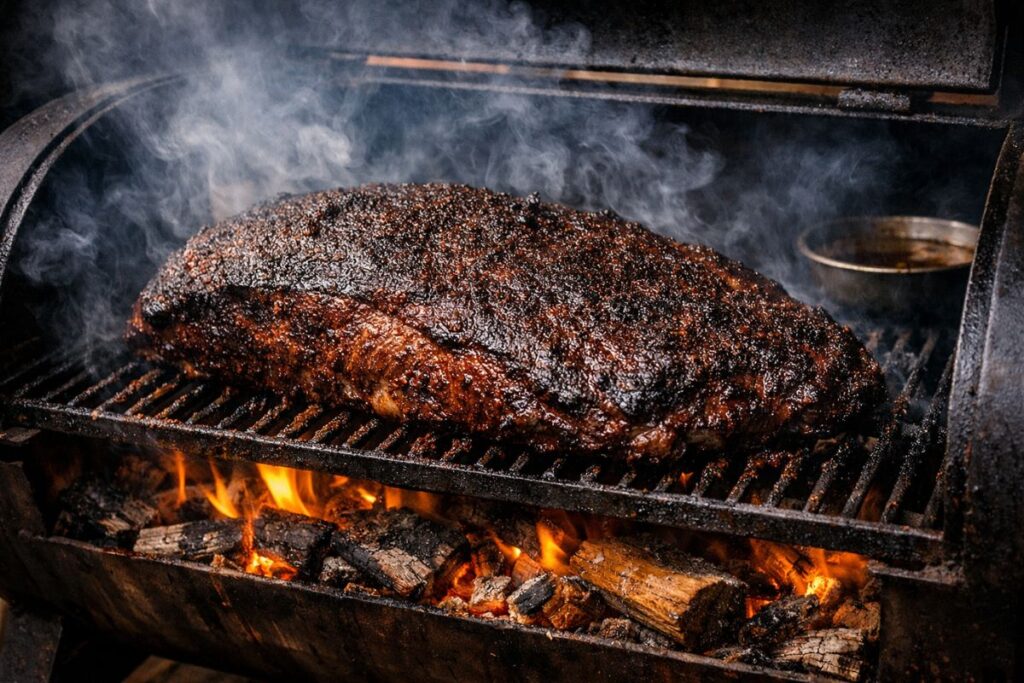
Smoking brisket is not cooking — it’s negotiation with time. The goal is simple: break down collagen slowly without drying the meat.
Temperature & Timing
- Ideal smoker temperature: 225°F (107°C)
- Cooking time: 1 to 1.25 hours per pound
- Internal target: 195°F–203°F (90°C–95°C)
The magic happens during the “stall” phase, where internal temperature pauses due to moisture evaporation. This is normal — do not panic, do not rush.
Smoking technique reference: Serious Eats BBQ Guide
Wood Choice Matters
- Oak: balanced, classic BBQ profile
- Hickory: strong smoky depth
- Apple: slightly sweet finish layer
Chuck Roast Slow Cooker Method: The Easy Route
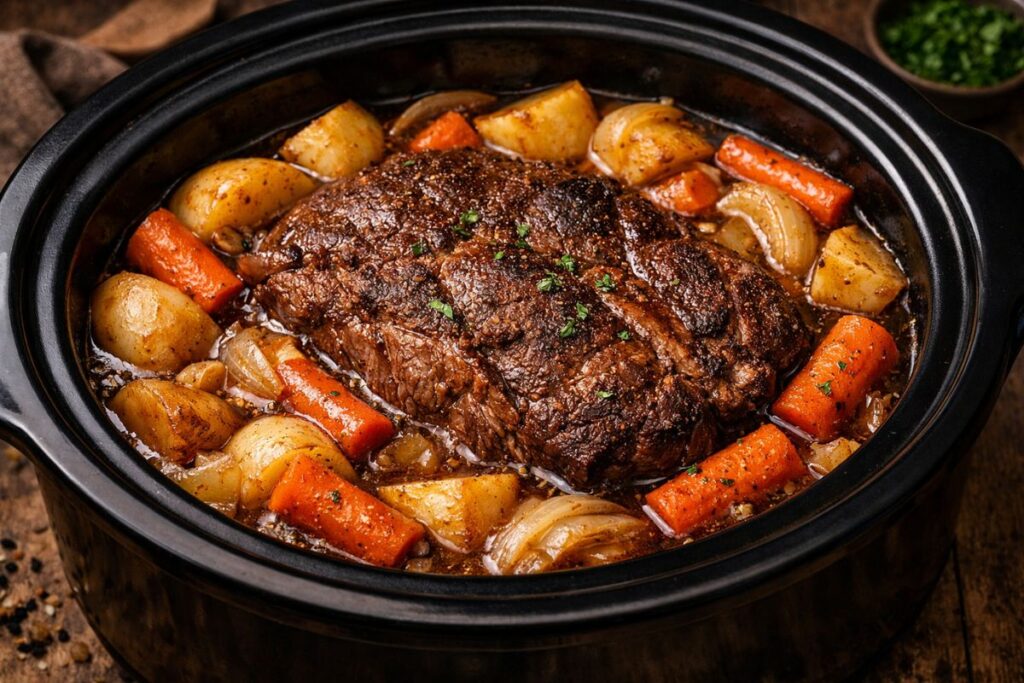
If brisket is discipline, chuck roast is comfort. This method is forgiving, flexible, and perfect for everyday cooking.
Ingredients Base
- Chuck roast (2–3 lbs)
- Onions, sliced
- Garlic cloves
- Beef broth
- Carrots & potatoes (optional)
Cooking Steps
- Sear beef on high heat until brown crust forms
- Place vegetables in slow cooker base
- Add beef and broth
- Cook on LOW for 8 hours
The result is beautifully tender, succulent beef that absorbs its own rich cooking juices like a sponge.
Get the full step-by-step instructions: Slow Cooker Beef Chuck Roast Recipe
The Bark: Where Flavor Becomes Identity
The bark is the outer crust of brisket — a fusion of smoke, spice, fat, and heat reaction. It’s what separates “good meat” from “memorable meat.”
Key factors that create strong bark:
- Proper dry rub adhesion before cooking
- Stable low heat (no temperature spikes)
- Airflow around the meat
- No excessive moisture during cooking
Think of bark as edible armor — crunchy, smoky, deeply seasoned, and slightly bitter in the best possible way.
Common Mistakes (and How to Fix Them)
1. Dry Meat
Cause: cooking too fast or too hot. Fix: always stay under 250°F and allow resting time after cooking.
2. No Bark Formation
Cause: too much moisture or insufficient rub. Fix: pat dry before seasoning and avoid wrapping too early.
3. Tough Texture
Cause: undercooking collagen. Fix: don’t stop at “done temperature” — wait until probe-tender softness.
Serving Ideas: Turning Meat Into a Meal
- Brisket sandwiches with pickled onions
- Shredded chuck roast tacos
- BBQ rice bowls with smoky drizzle sauce
- Loaded baked potatoes topped with beef chunks
Pairing matters — acidity (pickles, vinegar slaw) balances fat richness beautifully.
Storage & Reheating Tips
- Store in airtight container with cooking juices
- Refrigerate up to 4 days
- Freeze up to 3 months
- Reheat low and slow with added broth
Never microwave aggressively — it destroys the texture architecture you worked so hard to build.
Beef Brisket Recipe FAQ
What is better for beginners, brisket or chuck roast?
Chuck roast is easier due to its forgiving fat structure and shorter cooking tolerance.
Why does brisket take so long to cook?
Because collagen needs extended low heat to convert into gelatin, which creates tenderness.
Can I cook brisket in a slow cooker?
Yes, but you lose bark formation and smoke depth. Oven or smoker is preferred.
Recipe Card
Beef Brisket Recipe: Juicy Texas Style & Rub
Equipment
- Charcoal or pellet grill / smoker
- Smoker box (if using gas grill)
- Meat thermometer (instant-read or probe)
- Aluminum foil or butcher paper
- Large cutting board
- Sharp carving knife
- Spray bottle (optional for moisture control)
Ingredients
Main Brisket
- 14 lb whole packer beef brisket
Dry Rub
- 2 tbsp kosher salt
- 2 tbsp coarse black pepper
- 1 tbsp garlic powder
- 1 tbsp onion powder
- 1 tbsp paprika
- 2 tbsp brown sugar optional
Optional Spritz
- 1 cup apple juice
- 1 cup water
- 2 tbsp apple cider vinegar
Instructions
Prepare the Brisket
- Trim excess fat from the brisket, leaving about a ¼-inch fat cap. Remove hard fat pockets that will not render during cooking.
Season Generously
- Mix dry rub ingredients and coat the brisket evenly on all sides. Press seasoning into the meat. Let it rest uncovered in the refrigerator for at least 4 hours or overnight for best flavor.
Preheat the Grill
- Set grill or smoker to 225°F–250°F. Add wood chips or chunks (oak, hickory, or mesquite blend recommended).
Start Smoking
- Place brisket fat side up on the grill grates. Close lid and maintain steady temperature. Smoke for several hours without opening frequently.
Maintain Moisture
- (Optional) Spritz brisket every 1–2 hours with apple juice mixture to help keep surface moist and enhance bark formation.
The Stall Phase
- When internal temperature reaches around 160°F, the brisket will stall. This is normal. Continue cooking patiently.
Wrap the Brisket
- Once bark is set, wrap brisket tightly in foil or butcher paper. Return to grill and continue cooking.
Finish Cooking
- Continue cooking until internal temperature reaches 195°F–203°F and probe feels tender like butter.
Rest the Brisket
- Remove from grill and rest wrapped for 1–2 hours in a cooler or warm oven. This locks in juices.
Slice and Serve
- Slice brisket against the grain into pencil-thick slices. Serve immediately with BBQ sides.
Notes
- Calories: 520 kcal
- Protein: 48 g
- Fat: 35 g
- Carbohydrates: 2 g
Final Thoughts
Beef brisket and chuck roast are not just recipes — they are slow transformations. One rewards patience with slices of smoky precision, the other with spoon-soft comfort.
Master both, and you essentially unlock two different philosophies of cooking: control and comfort.
Ready to explore more? Check our full beef recipe collection for next-level slow-cooked inspiration.